












-
 宗祠文化 Ancestral temple culture宗祠文化 Ancestral temple culture
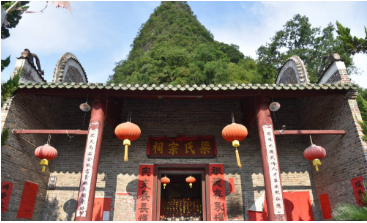
黄姚古镇祠堂颇多,几乎每个大姓都有自己的宗祠,充分显示出宗族的势力。
在古镇内居住的人们生活富裕,财力充足。特别是清康熙至乾隆年间,古镇人口迅猛发展,经济空前发达。各氏族之间为了加强势力扩充,团结一致对外,更为求得人财兴旺、泽被后代,让自己的势力和财富能世代相传,均纷纷筹集资金在古镇选址建造宗祠。古镇内现有各姓氏宗祠11座,结构规模雄伟壮丽、装饰豪华考究。古家祠、吴家祠、梁家祠、郭家祠、司马第等都是其中的佼佼者。
各宗祠门前修建石阶,然后是宽阔的门廊、进入大门两旁建有厢房,正中是一个大天井,两旁小花园,天井正面是高大宽阔的正座,安放列代先祖牌位和祭祀用品。由于当时建筑工匠都来自湖南,各姓氏宗祠建筑风格基本一致,均采用砖石结构,虽历经百年沧桑,仍然金碧辉煌。
祠内最耐看的当属那些精美的古壁画,虽历经千年却不退色。看祠堂的老伯用清水去擦拭那些壁画,结果却越擦就越新越漂亮!
黄姚的姓氏宗祠有:梁氏宗祠、古氏宗祠、郭氏宗祠、劳氏宗祠、莫氏宗祠、仙山莫公祠、天佑古公祠、吴氏宗祠、黄氏宗祠、叶氏宗祠。


-
 天佑古公祠 Tianyou ancient temple天佑古公祠 Tianyou ancient temple
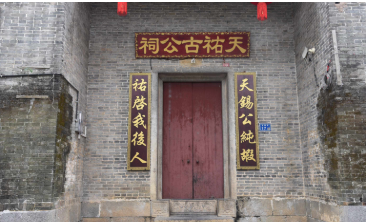
在黄姚建立宗祠的古氏共有两支,一支是天佑公支,一支是凤信公支。其中天佑公支的宗祠称为天佑古公祠,凤信公支的称为古氏宗祠。为二层楼三开间二进深建筑,硬山顶结构。垂脊为灰沙脊,正脊为叠瓦脊,墙为青砖清水墙。大门处有两层踏步大门处有两层踏步。底层踏步共五级,上层踏步共二级。
邻近兴宁庙,大门两边为“天锡公纯瑕,祜启我后人”,大厅内两侧有“规行”(左)和“矩步”(右)。
There are two ancient clans who established ancestral temples in Huangyao, one is Tianyou gongzhi and the other is Fengxin gongzhi. Among them, the ancestral temple of Tianyou gongzhi is called Tianyou ancient ancestral temple, and the ancestral temple of Fengxin gongzhi is called Gu's ancestral temple. It is a two-story, three Bay, two-way deep building with hard peak structure. The vertical ridge is gray sand ridge, the main ridge is tile ridge, and the wall is green brick clear water wall. There are two steps at the gate. There are five steps on the bottom floor and two steps on the upper floor.
It is adjacent to Xingning temple. On both sides of the gate are "pure flaws of Tianxi Gong, Hu Qi my descendants". On both sides of the hall are "regular line" (left) and "rectangular step" (right).

-
 吴氏宗祠 Wu ancestral temple吴氏宗祠 Wu ancestral temple
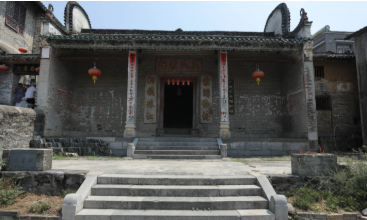
位于金德街,始建于清末。三间两进,镬耳硬山顶,青砖清水墙。前檐柱为青石柱。祠内有壁画四十八幅,是黄姚古镇内壁画较多的一座建筑。 1944年秋,广西省立艺术馆疏散到黄姚时,曾在吴氏宗祠上课和开展抗日救国等宣传活动。已故著名戏剧艺术家欧阳予倩和现代画家蔡迪之、易琼等人也曾以此为工作室。
1983年,昭平县人民政府将“吴氏宗祠”公布为“广西省艺术馆旧址”。
Located in Jinde street, it was built in the late Qing Dynasty. Three rooms, two in, wok ears, hard peak, green brick clear water wall. The front eave column is bluestone column. There are 48 murals in the temple, which is a building with more inner wall paintings in Huangyao ancient town. In the autumn of 1944, when the Guangxi provincial art museum was evacuated to Huangyao, it had classes in Wu's ancestral temple and carried out publicity activities such as anti Japanese and national salvation. The late famous dramatic artist Ouyang Yuqian and modern painters Cai dizhi and Yi Qiong also used this as their studio.
In 1983, Zhaoping County People's government announced the "Wu ancestral temple" as the "former site of Guangxi Art Museum".

-
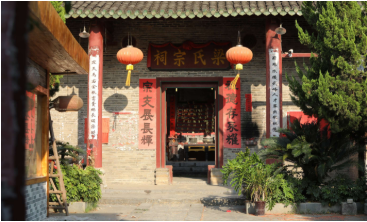 梁氏宗祠 Liang family ancestral temple梁氏宗祠 Liang family ancestral temple
梁家宗祠主座为三开间一进深的硬山顶建筑。墙体为青砖清水墙,梁架为穿斗式。山头为镬耳形。瓦面盖小青瓦,瓦头筒瓦和滴水盖绿色琉璃瓦。
位于中兴街上,大门两边对联为:“祖德存永辉,宗支展长辉”。
The main seat of Liangjia ancestral temple is a hard peak building with three bays and one depth. The wall is green brick clean water wall, and the beam frame is bucket type. The hill is shaped like a wok ear. The tile surface is covered with small green tiles, tile head tube tiles and dripping green glazed tiles.
Located on Zhongxing Street, the couplets on both sides of the gate are: "Zude cunyonghui, Zongzhi zhanchanghui".


-
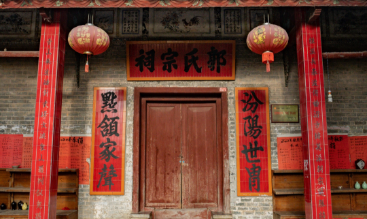 郭氏宗祠 Guo's ancestral temple郭氏宗祠 Guo's ancestral temple
位于吴氏宗祠的对面,1928年重修。宗祠大门两侧写道“汾阳世胄,点领家声”。两边石柱上的对联为“绿涨长春波俯曲沼方塘万派朝宗通,青山来远口对武峰文峡众山罗列似儿孙”。入口处有门,前面柱子上的对联为“贻燕翌启鸿图念乃祖积厚流光旷世相传绵德业,焕人文绳先武原诸昆笄来继往大家振奋铭书香”,后边石柱上为“支笄众郡本溯羊城八百里乔木高迁系谱重天潢东粤渊源西粤衍,春荐豚羔秋行摩积万千年馨椒永祀报功崇大兴前人统诸后人承”,后面也有一联,已浸漶不清。大厅上写有“世代荣昌,合族平安,富贵双全”,右边有“房房兴旺”,左边有“百子千孙”。
主座三间两进,镬耳硬山顶,青砖清水墙。二层楼高,但无楼面,内空只有一层。盖小青瓦,瓦头原为石灰膏,无滴水,现被改建为绿色琉璃釉筒瓦和滴水。前檐廊有砖砌檐柱,现檐柱上加贴有红色瓷砖。
It is located opposite the Wu ancestral temple and was rebuilt in 1928. On both sides of the gate of the ancestral hall, "Fenyang Shizhou, point to lead the voice of the family". The couplet on the stone columns on both sides is "green rising Changchun wave overlooking quzhao fangtang, all schools of chaozongtong, and the mountains of Wufeng Wenxia are listed like children and grandchildren from the far mouth of green mountain". There is a door at the entrance. The couplet on the front column reads "Yi Yan Yi Qi Hong Tu Nian is the ancestor's accumulated wealth and fleeting glory. It is said that miandeye is a great cause, and the cultural rope is first used to excite everyone's Ming calligraphy fragrance from the original Kun hairpins". On the rear stone column is "Zhiji counties are originally located in Yangcheng, and the trees move up eight hundred miles. The genealogy emphasizes the decoration of the sky, the origin of eastern Guangdong and western Guangdong, the recommendation of dolphin lambs in spring and autumn, the accumulation of thousands of years, the permanent worship of sweet pepper, and the great rejuvenation of achievements. There is also a couplet behind it, which has been unclear. On the hall is written" prosperity from generation to generation, peace and security of the family, wealth and wealth ", on the right is" prosperity of houses ", and on the left is" hundreds of sons and thousands of grandchildren ".
The main seat has three rooms and two entrances, the wok ear is hard on the top of the mountain, and the green brick clean water wall. The second floor is high, but there is no floor, and the inner space is only one floor. Cover small green tiles. The tile head was originally lime paste without dripping water. Now it has been transformed into green glazed tube tiles and dripping water. The front eaves Gallery has brick eaves columns, and the existing eaves columns are pasted with red tiles.


-
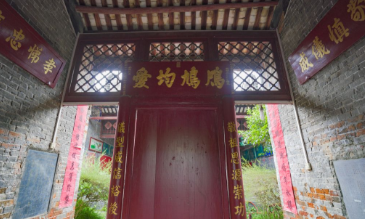 劳氏宗祠 Lloyd's ancestral hall劳氏宗祠 Lloyd's ancestral hall
三间两进,镬耳硬山顶,青砖清水墙。前座正立面外墙在原清水墙之上加批一层假清水。二层楼高,但无楼面,盖小青瓦,无瓦头,无滴水。正脊以垒叠树瓦压脊,垂脊以砖和灰沙压脊。前檐廊以斗形挑手出檐,无檐柱。
始建于乾隆二十年(1716年),位于安乐街劳家巷内。以劳元锡为远祖,以劳敷巧黄姚支系始祖。1995年在祭祀活动上宣读的祭文就有:“一九九五年十月一日,黄姚劳氏宗祠举行首次大祭。元锡公子孙后代众多,兄弟叔侄、婶嫂姐妹等人,谨陈淡酒粗肴,恭敬与历代宗灵钱敬拜“等语。
位于安乐街上。初建于乾隆二十年间(1716年),纪念敷巧公。大门外石柱上对联为“元祖源流远,威公世泽长”,进门正中有“敬慎仪威”的牌匾,后面为“孝悌忠信”,两边柱子上的对联为“敬祖思源崇功德,义型威信裕后昆”。中间院子两边有图画,右边为“春
游青草地,,和“夏赏绿荷池”图,中间为“冬夜读书:古人求学问,一生不放松。少壮下功夫,到老方成功。纸上求知识,终觉浅和空。要有真本事,亲身去学用。”诗一首;左边为“秋饮黄菊酒”和“冬吟冬雪诗”,中间为“锄禾”诗一首。大厅正中有“松阳堂”的牌匾,两边为“祖孙学士,兄弟中丞”。两边柱子上的对联前边为“文章光世德孝友振家声,上绍中丞业常传学士名’,,后边为“祖泽宏敷祚胤千秋远锡,孙猷广著本支百世联芳”。
Three rooms, two in, wok ears, hard peak, green brick clear water wall. A layer of false clean water is added to the original clean water wall on the facade of the front seat. The second floor is high, but there is no floor, covered with small green tiles, no tile heads and no dripping water. The main ridge is pressed with stacked tree tiles, and the vertical ridge is pressed with bricks and lime sand. The front eaves gallery is bucket shaped, with no eaves columns.
Founded in the 20th year of Qianlong (1716), it is located in laojia lane, Anle street. Lao Yuanxi is the distant ancestor and Lao Fuqiao is the ancestor of Huangyao branch. In 1995, the sacrificial text read out at the sacrificial activities included: "on October 1, 1995, the first great sacrifice was held in the Lao's ancestral temple in Huangyao. There are many descendants of master Xi of the Yuan Dynasty, including brothers, uncles, nephews, aunts and sisters, who sincerely present light wine and coarse food, respectfully worship and worship the spirit money of all dynasties".Located on Anle street. It was first built in the 20th year of Qianlong (1716) to commemorate Fu Qiaogong. The couplet on the stone column outside the gate is "Yuanzu has a long history, and the prestige of the public is long". In the middle of the entrance is a plaque of "respect, care and honor", followed by "filial piety, loyalty and faith". The couplet on the columns on both sides is "respect for the ancestors, think of the source, respect merit and morality, and have righteous prestige and rich houkun". There are pictures on both sides of the middle yard, with "spring" on the right
In the middle of the picture is "reading on a winter night: the ancients sought knowledge and never relaxed all their life. Young people worked hard to succeed in the old. They sought knowledge on paper and eventually felt shallow and empty. They should have real skills and learn to use them in person." one poem is "drinking yellow chrysanthemum wine in autumn" and "singing winter snow in winter" on the left, and one poem is "hoeing grass" in the middle of the hall On both sides of the plaque of "Songyang hall" are "grandson scholar, brother Zhongcheng". On the front of the couplets on the columns on both sides are "article guangshide, filial friend zhenjiasheng, Shaozhong Cheng's industry often passes on the bachelor's name", and on the back are "Zu Zehong applies Zuo Yin's eternal tin, and sun Youguang's book Lianfang for hundreds of generations".


-
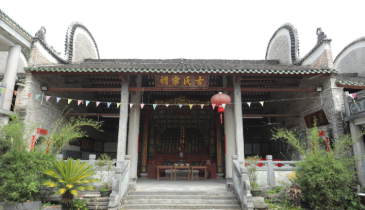 古氏宗祠 Ancient ancestral temple古氏宗祠 Ancient ancestral temple
在古镇北侧的新街上,始建于康熙年间(1708年),以古凤信为黄姚古氏支系始祖,古凤信是第一个率领黄姚古氏先祖从广东梅州搬迁广东鹤山县的人,后来,他的二十九世孙古纲伦、古齐治等人又迁移到了黄姚,于是筹集资金建成黄姚古氏宗祠。1909年(宣统二年)作为黄姚街子弟学校。抗日时期,桂北行署曾借此用作临时办公地址。1943年地下党在此举办黄姚中学。1993年农历八月七日开始动工重修。
古氏宗祠大门正中牌匾上书“古氏宗祠”,两边对联为“直父家声远,笔公世胄长”。进入大门后,另有一门,正中挂有“古氏宗祠”牌匾,两边写道“古道新风德门厚福俱由正路,家安宅吉仁里祥和恒处善林”。大厅内正中挂有“古氏宗祠”牌匾,右边有一小门,上悬牌匾“慈善堂”。进入慈善堂,正中供奉观音神像,上面写有“甘露琼浆”,两边为“春涵瑞霭龙仁里,日拥祥云护德门。”
On the New Street on the north side of the ancient town, it was built in the reign of Emperor Kangxi (1708). Gu Fengxin was the first person to lead the ancestors of the ancient family of Huangyao to move from Meizhou, Guangdong to Heshan County, Guangdong. Later, his 29th grandson Gu ganglun, Gu Qizhi and other people moved to Huangyao, so he raised funds to build the ancient family ancestral temple of Huangyao. In 1909 (the second year of Xuantong), it was used as Huangyao street children's school. During the Anti Japanese period, the administrative office in northern Guangxi used it as a temporary office address. In 1943, the underground party held Huangyao middle school here. The renovation began on August 7 of the lunar calendar in 1993.
The plaque in the middle of the gate of the ancient clan ancestral hall reads "ancient clan ancestral hall", and the couplets on both sides are "Zhifu's family is far away, and the pen Duke is the chief of the world". After entering the gate, there is another gate, with a plaque of "Gu's ancestral temple" hanging in the middle. On both sides, it is written that "the ancient road, the new wind, the virtuous gate, the thick blessings are all from the main road, the home is safe, the house is auspicious, the benevolence is peaceful, and the forest is always good". In the middle of the hall, there is a plaque of "Gu's ancestral temple", and on the right is a small door with a plaque of "charity hall". Entering the charity hall, the statue of Guanyin is enshrined in the middle, which is written with "nectar and nectar", and on both sides are "spring, auspicious mist, dragon Renli, embracing auspicious clouds and protecting the virtue door."


-
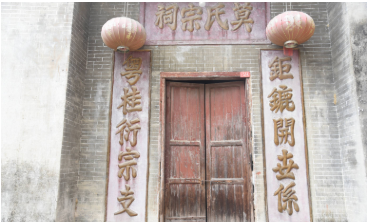 莫氏宗祠 Mo's ancestral temple莫氏宗祠 Mo's ancestral temple
位于金德街上,建于明末年。莫氏宗祠大门上书“莫氏宗祠”牌匾,两边对联为“巨鹿开世系,粤桂衍宗支”。大厅内前柱上书“水源木本流界迹,春露秋霜感口波”,后柱上的对联写道“祖德难忘修俎豆,宗功图报荐馨香”。大厅左角落有一石碑,上书“谒黄姚莫氏宗祠诗一首:巨鹿家声源流远,宣卿分支世泽长。祖德流芳传万代,宗功浩气显千祥。国恩家庆宏图展,人寿年丰后裔昌。鸿雁有情传喜讯,黄姚聚竭振纲常。裔孙敬题口葵酉年仲冬吉旦”。
Located on Jinde street, it was built in the late Ming Dynasty. On the gate of Mo's ancestral hall, there is a plaque of "Mo's ancestral hall", and the couplets on both sides are "julukai lineage, Yanzong branch of Guangdong and Guangxi". The front column of the hall reads "water source woody flow boundary trace, spring dew and autumn frost feel mouth waves", and the couplet on the rear column reads "Zude will never forget to repair zudou, and Zonggong TU will recommend Xinxiang". There is a stone tablet in the left corner of the hall, which reads "a poem to pay homage to the Mo's ancestral temple in Huangyao: the Julu family has a long history, and the Xuanqing branch has a long history. The ancestral virtues have been passed down from generation to generation, and the clan's great achievements are auspicious. The national grace family celebrates the grand plan exhibition, and the people have a long life. The descendants are prosperous. The wild geese send good news, and Huangyao gather together to vibrate. The ancient Sun Jing inscribes the auspicious day in the middle winter of Kui unitary year".

-
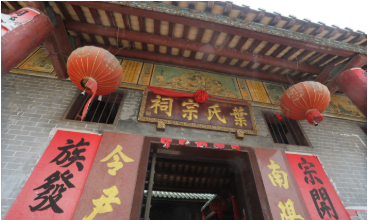 叶氏宗祠 Ye's ancestral temple叶氏宗祠 Ye's ancestral temple
位于古镇西南端公路边。门旁对联为“受姓在周朝自东迁西历古而臻今久远根苗当永念,发源由叶县从彼至此承先以启后连绵瓜口庆长延”,大厅正中牌匾上为“祖德流芳”,两边石柱上为“由口氏而分支世世祖承怀祖口,会南阳之合族年年祭祀念宗功”。
It is located at the southwest end of the ancient town by the highway. The couplet beside the door reads "the surname Shou moved from the east to the West in the Zhou Dynasty, reaching its ancient level, and today's roots and seedlings should be remembered forever. It originated from Ye County. From there, it inherited the first enlightenment and then the continuous melon mouth celebration for a long time". On the plaque in the middle of the hall is "Zude Liufang", and on the stone columns on both sides is "the descendants of the Kou family inherit Huaizu mouth, and the family members of Nanyang will sacrifice and recite Zonggong every year".


-
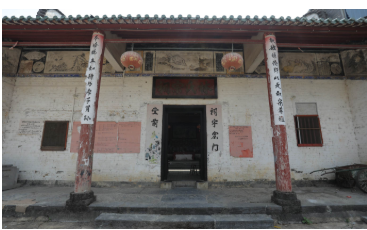 林氏宗祠 Lin's ancestral temple林氏宗祠 Lin's ancestral temple
为三间两进,镬耳硬山顶,青砖清水墙。因为后期重修,青砖墙上还喷有石灰层。二层楼高,但无楼面。盖小青瓦,瓦头制安工艺不明,明改为绿色琉璃瓦勾头和滴水。正脊以现被改建为绿色琉璃釉筒瓦和滴水。正脊平辅一层小青瓦,其上再用两行竖瓦压实。前檐廊上设两檐柱,檐廊较宽敞,檐柱下棱形石柱楚垫支。
位于金德街56号,原为叶三林公祠,始建于道光年间,至今有200年左右的历史。林氏宗祠大门两边的石柱上写有一副对联,为“燕翼贻谋凭祖德,蝉冠称庆赖宗功”。大厅上书“忠孝”二字,右有“双桂发祥”,左有“九牧流芳”。
For three rooms, two into, wok ear hard peak, green brick clear water wall. Because of the later renovation, the green brick wall is also sprayed with lime layer. Two floors high, but no floor. Small green tiles were covered, and the manufacturing and installation process of tile heads was unknown. It was changed to green glazed tiles, hook heads and dripping water. Zhengji is now transformed into green glazed tube tiles and dripping water. The main ridge is flat with a layer of small green tiles, which are compacted with two rows of vertical tiles. There are two eaves columns on the front eaves corridor. The eaves corridor is spacious, and the prismatic stone columns under the eaves columns are Chu padded.
Located at 56 Jinde street, it was originally Ye Sanlin temple. It was built during the reign of Daoguang and has a history of about 200 years. There is a couplet written on the stone columns on both sides of the gate of Lin's ancestral temple, which reads "Yan Yimou is called Qinglai Zonggong by virtue of his ancestral virtue and cicada crown". The hall reads "loyalty and filial piety", with "Shuanggui Faxiang" on the right and "Jiumu Liufang" on the left.

-
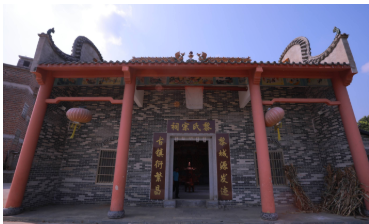 黎氏宗祠 Li's ancestral temple黎氏宗祠 Li's ancestral temple
黎氏宗祠始建于清同治九年(公元1870年)。传其地乃神仙(张大元帅)所赐;九曲水来在塘中,螺山把水亦相容;左边青山始碧玉,唯有连滩人马众。传其时亦神仙所示;建祠时,有兄弟新喜、新福同时请缨,“福喜”叠来,即时兴工,立门。家祠竣建百余年来,虽乏达官显贵,却也子孙昌盛,人才辈出。
原祠堂经风雨历练,虽伟岸不减,但椽腐柱朽,倾塌之危可见。2016年适昭平黎氏宗亲理事会倡导,并助推家祠晋级贺州黄姚宗祠,倡议贺州三县两区黎氏族人同心合力修建。时贺州七万黎氏闻风而动,捐资献策,2017年7月推倒重建,2018年6月主体工程竣工,主祠主屋216平方米,投资160余万元。新祠翘檐飞角、气宇轩昂、堂煌雄伟、庄严肃穆,虎踞黄姚,引为同族自豪,异姓仰视,过客竖指称赏。
Li's ancestral temple was built in the ninth year of Tongzhi of the Qing Dynasty (1870 A.D.). It is said that the land was given by the immortal (Marshal Zhang); Jiuqu water comes from the pond, and Luoshan is also compatible with the water; The green mountain on the left is green and jade. Only the people and horses on the beach are numerous. It is said that it was also shown by the gods at that time; When the temple was built, brothers Xinxi and Xinfu volunteered at the same time, and "Fuxi" overlapped to start work immediately and set up the door. The ancestral hall has been built for more than a hundred years. Although there are no dignitaries and dignitaries, its descendants are prosperous and talented.
The original ancestral hall has experienced wind and rain. Although its greatness has not been reduced, the rafters and columns are rotten and the danger of collapse can be seen. In 2016, Shi Zhaoping's Li clan Council advocated and promoted the promotion of the ancestral hall to Huangyao ancestral hall in Hezhou, and proposed that the Li clan in three counties and two districts of Hezhou work together to build it. When the 70000 Li family in Hezhou heard the wind, they donated funds and suggestions. They demolished and rebuilt in July 2017. The main project was completed in June 2018. The main house of the main temple was 216 square meters, with an investment of more than 1.6 million yuan. The new ancestral temple has raised eaves and flying horns, dignified appearance, magnificent hall and solemn solemnity. The tiger sits in Huangyao, which is proud of the same family, looks up to different surnames, and passers-by points out their appreciation.

-
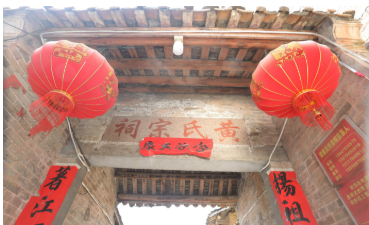 黄氏宗祠 Huang ancestral temple黄氏宗祠 Huang ancestral temple
为院落式建筑,主座为三间两进,镬耳硬山顶,青砖清水墙。前座檐廊以两幅砖墙代替檐柱。主座前为院落,院前有门楼。门楼青砖青水墙,人字形硬山顶,盖小青瓦。瓦头原有作法不明,现改为黄色琉璃瓦瓦当和滴水。
位于迎秀街上,大门两侧对联为“宗本延思久,支森祚积长”。
It is a courtyard building, with three main seats and two entrances, Woer hard peak and green brick clear water wall. Two brick walls replace the eaves columns in the front eaves gallery. In front of the main seat is a courtyard with a gatehouse in front of it. The gatehouse has green brick, green water wall, herringbone hard peak and small green tiles. The original method of tile head is unknown. Now it is changed into yellow glazed tile tile and dripping water.
Located on Yingxiu street, the couplets on both sides of the gate are "zongben continues to think for a long time, zhisenzuo accumulates long".