












-
 黄姚豆豉加工技艺 Huangyao Tempeh Processing Technique黄姚豆豉加工技艺 Huangyao Tempeh Processing Technique
黄姚生产豆豉的历史悠久,产品名声远扬,清乾隆二十四年编纂的《昭平县志》便有所记载:豆豉为黄姚特产,远近驰名,他处制者远不及。制作豆豉要经过炊豆、浸豆、发酵等十余道工序,复杂且要求很高。黄姚人经过三百余年一代又一代人的探索和总结改进,黄姚豆豉已经形成了一整套成熟的生产工艺和生产流程,但时至今日都没有留下任何文字数据记载,只靠师徒、父子之间口传心授。在工业现代化的今天,黄姚豆豉依然保持传统的手工操作。
在科学技术极其落后的条件下,黄姚的先民们利用发酵黑豆从而创造了黄姚豆豉这样一个驰名品牌,其制作过程完整系统,文化内涵丰富,抗战时期,我国著名科学家高士其住在黄姚近一年,他曾专文介绍黄姚豆豉的科学制作方法。这些都为研究我国南方省份和东南亚地区人们的饮食习惯和饮食文化提供了丰富的资料。
2007年录入《昭平县第一批非物质文化遗产名录》,同年入录《贺州市第一批非物质文化遗产名录》;2008年11月黄姚豆豉加工技艺入录《自治区第二批非物质文化遗产名录》。
The tempeh produced by Huangyao has a long history. The reputation of products is far-reaching. Zhaoping County Annals drafted in the 24th year during the reign of Emperor Qianlong of the Qing Dynasty records that: the tempeh is well-known as the special local product of Huangyao, and is far better than those produced elsewhere. Making the tempeh needs about 10 procedures, such as cooking, soaking and fermentation, and they are very complicated and have high requirements. After about 300 years of exploration, summarization and improvement by Huangyao people from generation to generation, Huangyao Tempeh has formed a complete set of mature manufacturing techniques and production processes. However, so far, there have been no written records. The related techniques are inherited by only depending on oral instructions between masters and apprentices, and between fathers and sons. Today, with the promotion of industrial modernization, Huangyao Tempeh still maintains the traditional manual operation.
Under the conditions of extremely backward science and technology, the ancestors of Huangyao use the fermented black soybeans to create a well-known brand of Huangyao Tempeh. Its production process is complete and systematic, with rich cultural connotation. During the period of the Anti-Japanese War, as the famous scientist of China, Gao Shiqi lived in Huangyao for nearly 1 year, and he wrote one article to introduce the scientific production methods of Huangyao Tempeh. These provide rich information for study of dietary habits and dietary culture of people in South China and Southeast Asia.
In 2007, Huangyao Tempeh was included in Zhaoping County First-batch Intangible Cultural Heritage List; in the same year, it was included in Hezhou First-batch Intangible Cultural Heritage List; in November, 2008, Huangyao Tempeh Processing Technique was included in Second-batch Intangible Cultural Heritage List of the Autonomous Region.

黄姚豆豉历史可追溯自元末明初,由于黄姚独特的地理环境,黄姚逐渐形成了一套成熟独特的淡豆豉加工技艺。杨晋记豆豉沿用传统黄姚豆豉加工技艺,加工全过程零添加,任何环节都不接触任何现代化工业物品,所有工具非竹即木。

一、原料的选取
精选本地方圆30公里之内种植的自然留种的黄姚本土富硒小黑豆,每年分春秋两季种植。

二、蒸豆
将精选出来的黑豆放入古炊具——甑中用土灶及柴火蒸4到5个小时。

三、洗豆
二次蒸豆、破豆。蒸熟的黑豆出锅,放入水池中用古井水进行浸泡和清洗,回锅进行第二次蒸豆。第二次出锅后进行破豆,以便及时的让熟的黑豆降温。

四、发酵
将蒸好的熟黑豆放入保持一定温度区间的酶房让黑豆进行自然发酵足够长时间,让其自然生长出如雪花般的有益霉菌。

五、洗霉
将霉房中发酵好的霉豆用手工搓散,再用古井的泉水清洗掉第一次发酵的有益青酶。

六、压白
将洗好后的豆豉半成品放入垫着稻干和荷叶或桐油树叶的大㼟中进行二次发酵7天左右至足够火候。

七、晾晒
经过两次自然发酵过后的豆子就已经完全变成豆豉了,从㼟中将其取出放入簸箕内自然阳光下晾晒,过风后就是成品淡豆豉。正宗的黄姚豆豉,还需再存仓三个月后方可出仓售卖。此时的黄姚豆豉香味扑鼻,煮豆豉汁颜色浓郁。


-
 黄皮糖加工技艺 Processing technology of yellow peel sugar黄皮糖加工技艺 Processing technology of yellow peel sugar
黄皮糖加工技艺流传于贺州市昭平县。黄皮果是当地的主要果树品种之一,成熟的黄皮果味甜,略带酸,果皮有轻微辛味。中医认为黄皮果有开胃、化痰去淤的功能,因而备受当地居民喜爱。因为黄皮果的成熟期集中,极不易保鲜,也不便于运输和携带,于是便有人将其制成蜜饯(黄皮糖)。加工制成的黄皮糖其色泽金黄,白糖附于果皮上,入口甘甜,最大程度地保留了黄皮果的的色、香、味。
黄皮糖加工技艺于2011年由贺州市人民政府公布为第三批市级非物质文化遗产代表性项目。
The processing technology of yellow peel sugar spread in Zhaoping County, Hezhou City. Yellow peel fruit is one of the main local fruit trees. The mature yellow peel fruit tastes sweet and slightly sour, and the peel has a slight pungent taste. Traditional Chinese medicine believes that Huangpi fruit has the functions of appetizing, resolving phlegm and removing silt, so it is loved by local residents. Because the ripening period of yellow peel fruit is concentrated, it is very difficult to preserve, transport and carry, so someone made it into preserves (yellow peel sugar). The processed yellow peel sugar is golden in color and white sugar is attached to the peel. It tastes sweet and retains the color, aroma and taste of yellow peel fruit to the greatest extent.
Huangpi sugar processing technology was announced by Hezhou Municipal People's government as the third batch of representative projects of municipal intangible cultural heritage in 2011.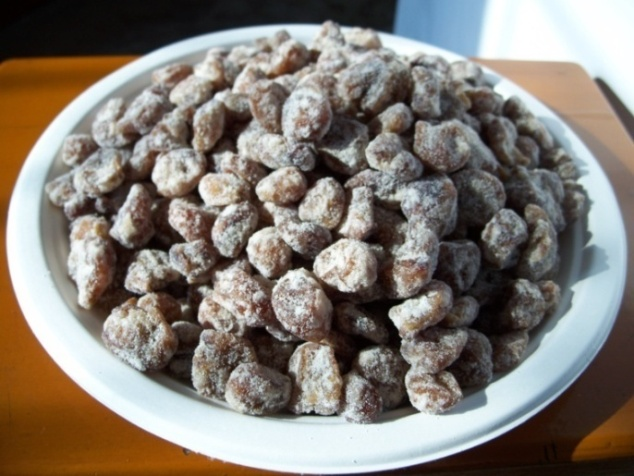
制作好的黄皮糖
-
 象棋山茶加工技艺 Chess and Camellia processing technology象棋山茶加工技艺 Chess and Camellia processing technology
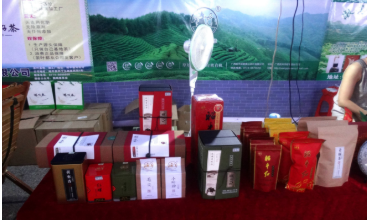
在县城附近建有茶文化中心,和生产平台,可观看整个制茶过程。象棋山云雾茶,外形紧细微曲,色泽翠绿油润,香高馥郁,伴有蜜糖花香,鲜味鲜美回甘,叶底嫩绿明亮,饮之齿颊留芳、畅人心脾、解暑消炎、强身益寿,颇有高山云雾茶的特色。
原产地文竹镇七冲村,现搬到昭平镇上岸村二级路旁。昭平县是全国重点产茶县、中国名茶之乡、全国十大生态产茶县,茶叶在昭平县种植已有1000多年的历史。象棋茶历史最为悠久。
A tea culture center and a production platform are built near the county seat to watch the whole tea making process. Qiqi mountain Yunwu Tea has a tight and delicate shape, green and oily color, high fragrance, accompanied by honey flower fragrance, delicious and sweet taste, light green and bright leaf bottom, fragrant teeth and cheeks, soothing people's heart and spleen, relieving summer heat and inflammation, strengthening health and longevity. It has the characteristics of mountain Yunwu Tea.
The place of origin is Qichong village, Wenzhu town. Now it is moved to the secondary roadside of Shangan village, Zhaoping town. Zhaoping County is a key tea producing county in China, a famous tea town in China and one of the top ten ecological tea producing counties in China. Tea has been planted in Zhaoping County for more than 1000 years. Chess tea has the longest history.

-
 昭平木偶戏 Zhaoping puppet show昭平木偶戏 Zhaoping puppet show
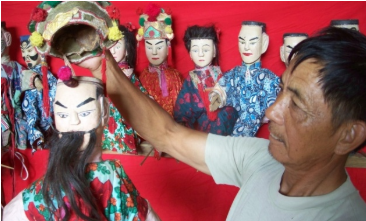
昭平木偶戏因表演艺人以昭平县富裕镇人居多,又称富裕木偶戏。表演木偶戏只需2至3名民间艺人,全部行当只需2人便可挑走,十分便利。昭平木偶戏历史悠久,于20世纪初由邻县的平南县传入,因其表演形式灵活,收费低廉而倍受百姓的欢迎,此后便在沿桂江一带流传下来。木偶戏的剧目大多是平民百姓耳熟能详的民间故事,如《薛仁贵》、《薛丁山征辽》和《薛丁山班师回朝》等。
昭平木偶戏于2011年由贺州市人民政府公布为第三批市级非物质文化遗产代表性项目。
Zhaoping puppet show is also called Fuyu puppet show because most of its performers are from Fuyu Town, Zhaoping County. It only takes 2 to 3 folk artists to perform the puppet show, and only 2 people can pick up all the trades, which is very convenient. Zhaoping puppet show has a long history. It was introduced from Pingnan County, a neighboring county in the early 20th century. It was welcomed by the people because of its flexible performance form and low charge. Since then, it has been handed down along the Guijiang river. Most of the puppet plays are folk stories familiar to the common people, such as Xue Rengui, Xue Dingshan's expedition to Liao, Xue Dingshan's class teacher Hui Dynasty, etc.
Zhaoping puppet show was announced by Hezhou Municipal People's government as the third batch of representative projects of municipal intangible cultural heritage in 2011.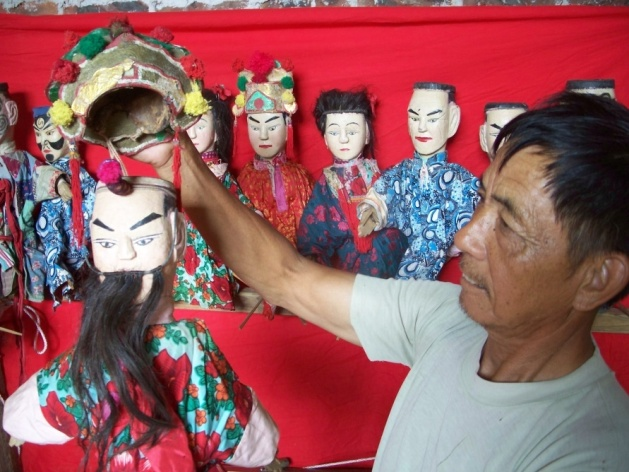
-
 昭平疍家五将庙炮会 Five general temple of Dan family in Zhaoping昭平疍家五将庙炮会 Five general temple of Dan family in Zhaoping
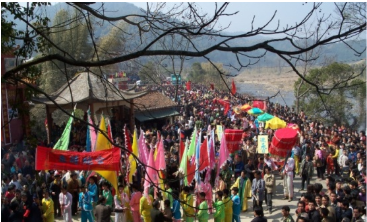
五将庙建在贺州市昭平县走马乡西坪村的犀岭,庙依山而建,座东朝西,庙内供奉五樽神像(坐像),高约100厘米。还供奉着金、银、梅、刘、柴五姓神将。宋开禧元年(1205)九月初三,皇帝赐玺书封五人为金、银、梅、刘、柴五姓神将。每年的农历正月十六为该庙的庙会日,届时,邻近民众皆聚集于此,平乐县的源头镇、钟山县的清塘镇不少香客也来朝拜。庙会的内容有“还炮”和“抢炮”,当地民众也称“炮会”或“炮期”。庙会期间常请戏班子来演戏,请道师表演上刀山、下火海等活动助兴,参与者往往逾万。
昭平疍家五将庙炮会于2011年有由贺州市人民政府公布为第三批市级非物质文化遗产代表性项目。
Wujiang temple was built in Xiling, Xiping village, Zouma Township, Zhaoping County, Hezhou City. The temple is built close to the mountain, facing east and West. The five bottles of statues (seated statues) are enshrined in the temple, about 100 cm high. There are also five gods named Jin, Yin, Mei, Liu and Chai. On the third day of September in the first year of Kaixi of the Song Dynasty (1205), the Emperor gave a seal and sealed it. Five people were God generals surnamed Jin, Yin, Mei, Liu and Chai. The 16th day of the first month of the lunar calendar is the temple fair day of the temple every year. At that time, nearby people gather here. Many pilgrims also come to worship in Yuanyuan town of Pingle county and Qingtang town of Zhongshan County. The contents of the temple fair include "returning guns" and "grabbing guns". The local people also call it "gun fair" or "gun period". During temple fairs, opera troupes are often invited to perform, and Taoist masters are invited to perform activities such as going up the knife mountain and going down the sea of fire, often with more than 10000 participants.
Zhaoping DanJia five generals Temple artillery association was announced by Hezhou Municipal People's government as the third batch of representative municipal intangible cultural heritage projects in 2011.
Site map of Wujiang Temple gun meeting
-
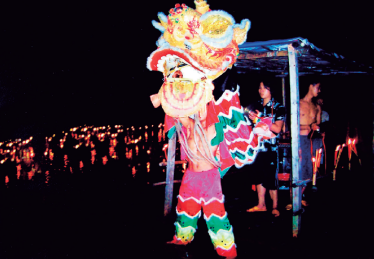 黄姚放灯节 Huangyao Lantern Festival黄姚放灯节 Huangyao Lantern Festival
Huangyao Lantern Festival is a traditional folk activity for the residents of Huangyao ancient town to worship the river god. Huangyao Lantern Festival has a long history, which began in the reign of Emperor Qianlong of the Qing Dynasty. Every year on the evening of July 14 of the lunar calendar, it is a custom to exile river lanterns made of grapefruit on the Yao River. The grapefruit is peeled, incense and candles are inserted, and several grapefruits are connected together to exile along the river. The leaves have the function of expelling evil and removing filth. The activities of "Lantern Festival" are divided into two parts: preparation and formal lantern worship. The ceremony includes putting grapefruit lanterns in Yaojiang, worshiping Baidi and the land.
Huangyao Lantern Festival was announced by the people's Government of Guangxi Zhuang Autonomous Region as the third batch of representative projects of intangible cultural heritage at the autonomous region level in 2010.
Huangyao Lantern Festival
-
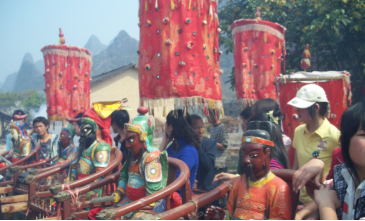 客家三山国王庙会 Hakka Sanshan King Temple Fair客家三山国王庙会 Hakka Sanshan King Temple Fair
“三王爷”指的是供奉在广东揭西县霖田的巾山国王、明山国王和独山国王。宋代(公元1033年)在霖田镇建有庙宇奉祀,客家人将“三山国王”视为自己的保护神。清道光十七年,黄姚贝氏弟子贝廷相将神像奉带到昭平,众人捐资在中洞村的象鼻山建立“三王庙”,供奉“三山国王”。每年的农历正月十三(中洞),正月初九(新华),是当地举行“三王爷出游”的日子,各家各户则备好香案和供品,恭迎“三王爷”,意在祈福。
客家三山国王庙会于2011年由贺州市人民政府公布为第三批市级非物质文化遗产代表性项目。
"Three kings" refer to the king of Jinshan, the king of Mingshan and the king of Dushan enshrined in Lintian, Jiexi County, Guangdong Province. In the Song Dynasty (1033 AD), a temple was built in Lintian town. The Hakka regarded the "Three Mountain Kings" as their patron saint. In the 17th year of Daoguang of the Qing Dynasty, Bei Tingxiang, a disciple of the Bei family of Huang Yao, brought the statue to Zhaoping. They donated money to establish a "Three Kings Temple" in Xiangbi mountain in Zhongdong village to worship the "three kings". Every year, the 13th day of the first lunar month (Zhongdong) and the 9th day of the first lunar month (Xinhua) are the days for the local "three kings to travel". Each family prepares incense cases and offerings to welcome the "three kings" in order to pray for blessings.
The Hakka three mountain king temple fair was announced by Hezhou Municipal People's government as the third batch of representative projects of municipal intangible cultural heritage in 2011.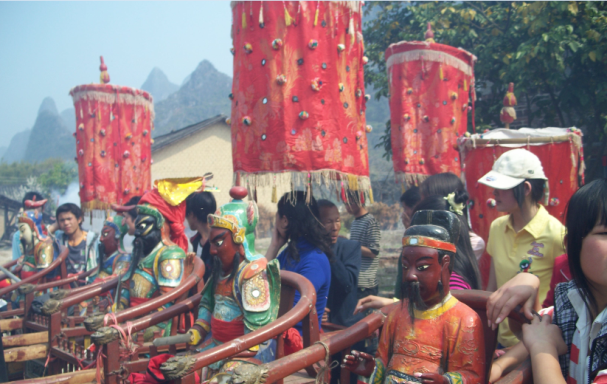
客家三山国王庙会 Hakka Sanshan King Temple Fair
-
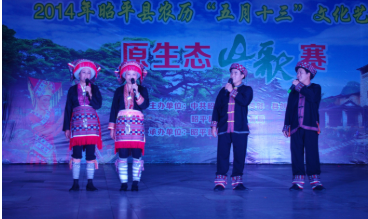 昭平瑶歌对唱 Zhaoping Yao song duet昭平瑶歌对唱 Zhaoping Yao song duet
富罗位于昭平县的东南面,距昭平县城80公里。地处偏僻,是瑶族聚居村落,属山区丘陵地带,镇内多山,林业较发达。辖区面积333平方公里,总人口27000多人。除汉族外,尚有瑶族、壮族同胞聚居。一般为单声部较多,多声部的瑶歌对唱公分布在瑶山和牛角村。约在清朝安始传唱,距今也有四百多年的历史,以口耳代代相传的形式流行至今。
瑶族是一个喜欢唱歌的民族,男女传情用歌、喜庆的日子唱歌、迎接远方的客人也离不开歌。富罗瑶歌一般为一问一答,四句七言为一组,在演唱时,他们能运用二声部的“和声”与“重唱”的技巧,提高瑶歌对唱的韵律美,而这种“和声”与“重唱”是原生态的,并没有经过音乐老师的指教,因而有较高的艺术价值。富罗瑶歌对唱主要在喜庆场合,也可以用于男女传情。对唱山歌可分为男女对唱或多人集体对唱,其曲调是现成的,只需根据当时的情景套入适当的词便成。瑶歌对唱常常是通宵达旦,緾緾绵绵达两三天。客人进门有迎客歌、敬茶歌、敬酒歌,客人要离开了有送客歌,相送很远了,依然是情了歌未了,歌了情未了。
多声部瑶歌是瑶族劳动人民的艺术结晶,能够熟练地运用“和声”与“重唱”的技巧,使瑶歌的韵律更美,这种原生态的多声部的瑶歌与一般的民歌相比,有更高的艺术欣赏价值和研究价值。
Fuluo is located in the southeast of Zhaoping County, 80km away from Zhaoping County. It is located in a remote village inhabited by Yao nationality. It is a mountainous and hilly area. There are many mountains in the town and the forestry is relatively developed. It covers an area of 333 square kilometers and has a total population of more than 27000. In addition to the Han nationality, there are Yao and Zhuang compatriots living together. Generally, there are many single parts, and the Yao song duets with multiple parts are distributed in Yaoshan and Niujiao village. It began to sing in an of the Qing Dynasty. It has a history of more than 400 years. It is popular from generation to generation.
Yao nationality is a nation that likes singing. Men and women use songs to convey love, sing on festive days and welcome guests from afar. Fuluo Yao songs are generally a question and a answer, with four sentences and seven words in a group. When singing, they can use the "harmony" and "duet" skills of two voice parts to improve the rhythmic beauty of Yao songs. This "harmony" and "duet" are original and have no guidance from music teachers, so they have high artistic value. Fuluo Yao song duet is mainly used in festive occasions, and can also be used for men and women to convey love. Duet folk songs can be divided into male and female duets or collective duets. Their tunes are ready-made, and only appropriate words need to be inserted according to the situation at that time. Yao song duets often last all night for two or three days. When guests enter the door, there are welcome songs, tea songs and toast songs. When guests want to leave, there are send off songs. It's far away. It's still love, song and song.
Multi voice Yao songs are the artistic crystallization of the working people of Yao nationality. They can skillfully use the skills of "harmony" and "duet" to make the rhythm of Yao songs more beautiful. Compared with ordinary folk songs, this original multi voice Yao song has higher artistic appreciation value and research value.

-
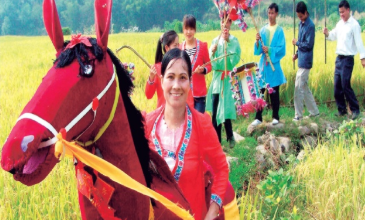 仙回瑶族调马 Xianhui Yao's horse transfer仙回瑶族调马 Xianhui Yao's horse transfer
仙回瑶族调马是流布于贺州市昭平县仙回瑶族乡的瑶族传统民间舞蹈。常用于瑶族同胞们庆祝五谷丰登、国泰民安等重大节日庆典场合。调马由最初的恐吓老虎的功能演变成为祈祷“风调雨顺”、“国泰民安”传统习俗。调马的传承形式为集体传承,其自产生时便有一个相对稳定的传承群体。调马艺术传承至今,已形成了一整套成熟和规范的表演模式。集体性和大众参与性是调马艺术的充分体现。
仙回瑶族调马于2012年由广西壮族自治区人民政府公布为第四批自治区级非物质文化遗产代表性项目。
Xianhui Yao Tiaoma is a Yao traditional folk dance that spreads in Xianhui Yao Township, Zhaoping County, Hezhou City. It is often used for Yao compatriots to celebrate major festivals such as grain harvest, national peace and public security. From the original function of intimidating tigers, horse dispatching has evolved into a traditional custom of praying for "good weather" and "peace of the country and the people". The inheritance form of Tiaoma is collective inheritance, and there has been a relatively stable inheritance group since its emergence. So far, the art of Tiaoma has formed a set of mature and standardized performance modes. Collectivity and public participation are the full embodiment of Tiaoma art.
Xianhui Yao nationality horse transfer was announced by the people's Government of Guangxi Zhuang Autonomous Region as the fourth batch of representative projects of intangible cultural heritage at the autonomous region level in 2012.
“调马”演出队为群众送戏