













-
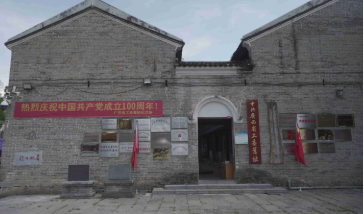 广西省工委旧址展厅(逢周一闭馆) Exhibition Hall of the Former Site of Guangxi Provincial Working Committee广西省工委旧址展厅(逢周一闭馆) Exhibition Hall of the Former Site of Guangxi Provincial Working Committee
1940年,广西省工委成立于桂林,钱兴同志担任省工委书记。1942年桂林“七·九”事件后,以钱兴为书记的中共广西省工委机关撤到农村,1945年夏迁到昭平县黄姚镇,建立了全省党组织指挥中心,以宝珠观做隐蔽地开展革命工作。中共广西省工委与当时疏散到黄姚的何香凝、欧阳予倩、千家驹、张锡昌等大批爱国知名人士广泛合作,建立统一战线,组织发动各地群众开展反内战、反独裁,争取和平民主斗争。中共广西省工委在黄姚培养锻炼了大批干部,壮大了党的力量,创立了不可磨灭的革命业绩。省工委机关驻黄姚期间,利用黄姚中学和《广西日报》为阵地与各地党组织相互配合,广泛发展民族统一战线,协同作战,领导全省开展隐蔽斗争,推动敌后抗日民主运动的向前发展。
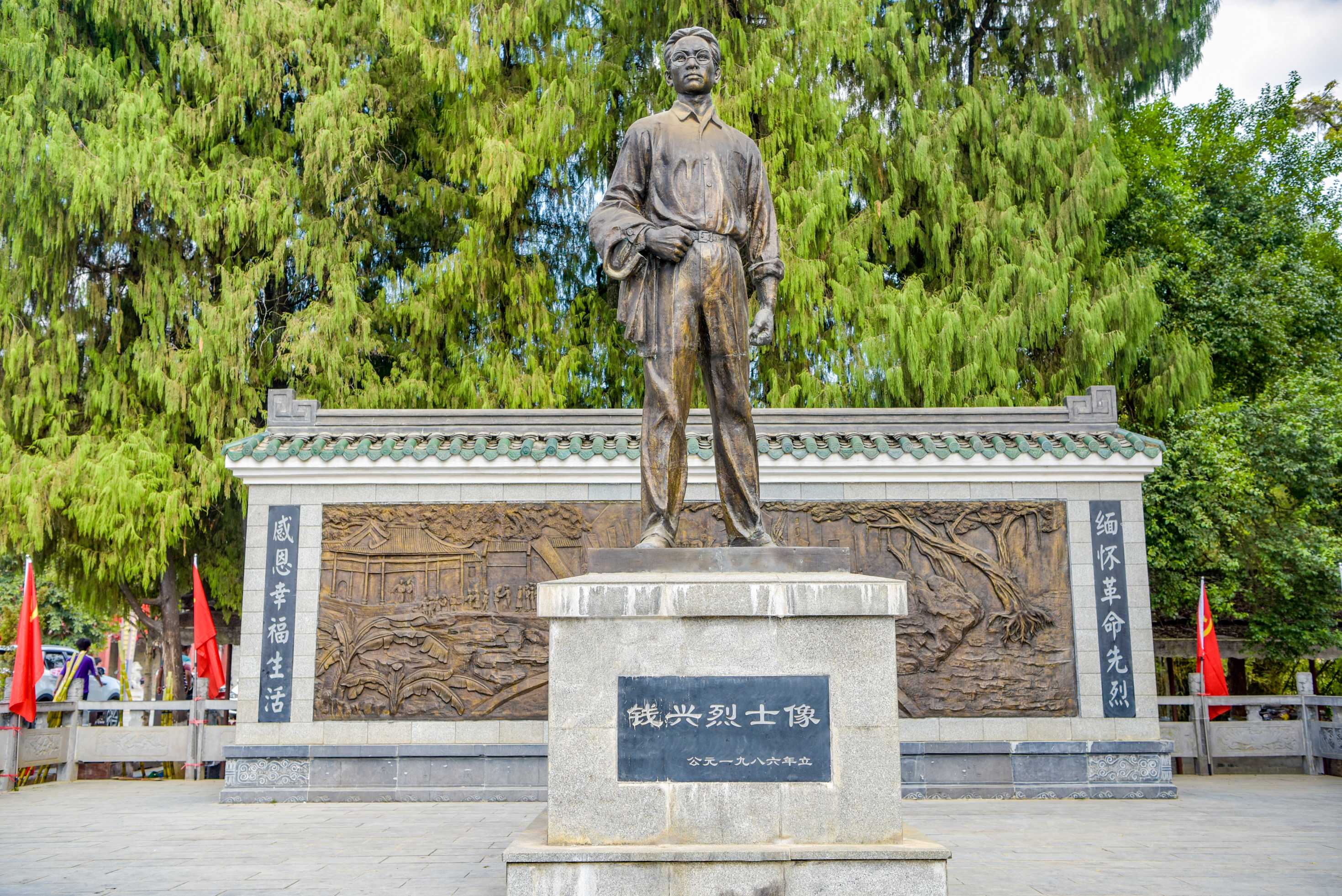
1986年自治区人民政府拨款修复中共广西省工委黄姚旧址,建造钱兴塑像,开设纪念馆,同年7月免费对外开放。
广西省工委旧址还是自治区爱国主义教育、广西各民主党派政治交接教育、广西廉政教育、贺州市党风廉政教育、贺州市国防教育等基地。目前中共广西省工委黄姚旧址纪念馆共有“广西省工委在黄姚”“民主人士在黄姚”“中国民盟在黄姚”“廉政警示教育”“廉政文化基地”等专题陈列展厅。
广西省工委旧址纪念馆开放时间:09:00-17:00(逢周一闭馆)
In 1940, Guangxi Provincial Working Committee was established in Guilin, and Comrade Qian Xing was appointed as the secretary of the provincial working committee. In 1942, the CPC Guangxi Provincial Working Committee Office whose secretary was Qian Xing was moved to the village after “July 9” Incident of Guilin. In summer of 1945, it was relocated in Huangyao Town, Zhaoping County. The provincial party organization command center was set up, and Baozhu Taoist Temple was regarded as the secluded place to launch the revolutionary work. The CPC Guangxi Provincial Working Committee cooperated with a large number of famous patriotic personages who were evacuated to Huangyao at that time, such as He Xiangning, Ouyang Yuqian, Qian Jiaju, and Zhang Xichang, to build the united front, organize the masses to carry out anti-civil war and anti-dictatorship, and fight for peace and democracy. The CPC Guangxi Provincial Working Committee cultivated a great number of cadres, to strengthen the party’s power and create the indelible revolutionary achievements. The provincial working committee located in Huangyao took Huangyao Middle School and Guanxi Daily as the position, to cooperate with the party organizations, extensively develop the national united front, carry out cooperative combat, lead the whole province to conduct the hidden struggle, and promote the forward development of the anti-Japanese democratic movement behind enemy lines.
In 1986, the People’s Government of the Autonomous Region allocated funds to restore the Former Site of the CPC Guangxi Provincial Working Committee in Huangyao, set up Qian Xing Statue, and establish the memorial hall which was open to the public free of charge in July of the same year.
The Former Site of Guangxi Provincial Working Committee is considered as the Patriotism Education Base of the Autonomous Region, Guangxi Political Handover Education Base for Democratic Parties, Guangxi Incorruption Education Base, Hezhou Party Spirit & Incorruption Education Base, and Hezhou National Defense Education Base. At present, the Memorial Hall of the Former Site of the CPC Guangxi Provincial Working Committee in Huangyao has several theme exhibition halls, such as “Guangxi Provincial Working Committee in Huangyao”, “Democratic Personages in Huangyao”, “China Democratic League in Huangyao”, “Incorruption Warning Education”, and “Incorruption Culture Base”.
Opening Hours of the Memorial Hall of the Former Site of Guangxi Provincial Working Committee: 09:00-17:00 (Closed on Mondays)

上

-
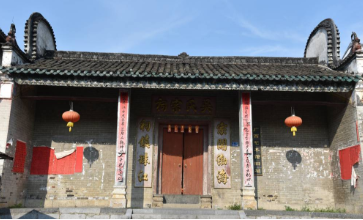 广西艺术馆旧址 Former Site of Guangxi Art Gallery广西艺术馆旧址 Former Site of Guangxi Art Gallery
1945年元旦,为了扩大黄姚地区的抗日宣传活动,广西省立艺术馆联合当时在黄姚的文化进步人士,举行一次盛大的文艺公开演出晚会。为把这场文艺晚会做到更好,艺术馆上下加紧创作和排练,他们还组织黄姚珠江春剧社、黄姚中学师生、妇女识字班学员参与排练和演出。当时艺术馆馆长欧阳予倩担任晚会总导演,他参与了一些具体的工作,比如他把桂剧《辕门射戟》的剧本改编成京剧演出,由于当地的民众普遍没有看过京剧,自海报公告之后,消息很快就传遍了各村各寨。
元旦当晚,黄姚镇内外各村各寨都赶来观看,甚至是离演出地十几里路远的凤律、潮江、界塘和樟木等地的群众都打起火把,成群结队赶来观看。戏台前面宽阔的广场人潮涌动,人满为患,现场甚至要在场边搭起高棚看戏,可以说是热闹至极,盛况空前。当晚演出节目丰富多彩,博得了观众的阵阵喝彩,报以热烈的掌声。首个节目是上百人的《新年大合唱》,四场大合唱分为“新年好”“骂汪精卫”“国家形势好”和“家庭幸福”,指挥由谭枫和姜岳担任;随后演出的是欧阳予倩京剧《辕门射戟》;欧阳予倩的女儿欧阳敬如是艺术馆的歌咏队员,她独唱《放下你的鞭子》 《卢沟桥问答》和《铁蹄下的歌女》等曲目;广东人林坤用各式各样的傀儡面具表演,一边唱,一边表演各种人物的动作。演出取得了巨大的成功,成为了当地的文艺盛事。
On New Year’s Day in 1945, in order to expand the anti-Japanese publicity activity in Huangyao, Guangxi Provincial Art Gallery, together with the cultural progressive personages in Huangyao at that time, organized the grand public artistic performance evening party. The art gallery intensified the creation and rehearsal to better hold this evening party. They also organized Huangyao Zhujiangchun Drama Club, teachers & students of Huangyao Middle School, and students of Women’s Literacy Class to attend the rehearsal and performance. At that time, as the curator of the art gallery, Ouyang Yuqian was appointed as the chief director of the evening party. He also participated in some specific work. For example, he adapted the script of Guangxi Opera Yuanmensheji to Peking Opera Performance. As the local people had never seen Peking Opera, after the poster announcement, the news quickly spread to villages.
On the night of New Year’s Day, the people from all villages inside and outside Huangyao Town came here to see the performance, and even the masses from Fenglu, Chaojiang, Jietang, Zhangmu and other places that were more than 10 li from the site of performance lit torches and flocked to watch the performance. The wide square in front of the stage was crowed with the people. The scene also set up a high shed to be convenient for audiences to watch the performance, which was very bustling and unprecedented. The colorful performance won the cheers and warm applause of audiences. The first show was New Year’s Chorus by hundreds of people. Four choruses were divided into “Happy New Year”, “Abuse Wang Jingwei”, “The National Situation Is Good”, and “Family Happiness”, conducted by Tan Feng and Jiang Yue; the following show was Peking Opera Yuanmensheji by Ouyang Yuqian; as the daughter of Ouyang Yuqian, Ouyang Jingru was the singing member of the art gallery, and sang solos, such as Put Aside Your Whip, Lugou Bridge Questions & Answers, and Singer Under the Iron Hoof; Cantonese Lin Kun performed with a variety of puppet masks, showing various characters’ actions while singing songs. The performance was a great success, and became a local artistic event.
-
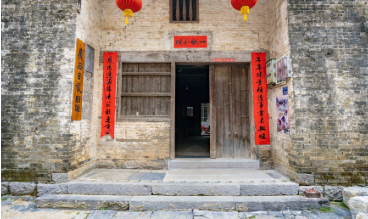 《广西日报》(昭平版)旧址 Former Site of Guangxi Daily (Zhaoping Version)《广西日报》(昭平版)旧址 Former Site of Guangxi Daily (Zhaoping Version)
在抗日战争时期,一批从桂林疏散来昭平的民主党派爱国进步人士陈劭先、欧阳予倩、张锡昌、千家驹、莫乃群等人,开展敌后抗日民主运动创办了《广西日报》昭平版。《广西日报》(昭平版)旧址自发刊到停刊,一共出版了295期,发表了许多有较大影响的重要社论和文章,对动员群众团结抗日起到了激励、鼓舞、鞭策和推动作用,在全省影响很大。抗战胜利后,《广西日报》昭平版停刊,迁回桂林。
During the Anti-Japanese War, a group of patriotic progressive personages evacuated from Guilin to Zhaoping, such as Chen Shaoxian, Ouyang Yuqian, Zhang Xichang, Qian Daoju, and Mo Naiqun, launched the anti-Japanese democratic movement behind enemy lines, and created Guangxi Daily (Zhaoping Version). On the Former Site of Guangxi Daily (Zhaoping Version), from publication to discontinuation, a total of 295 issues had been published. Many important editorials and articles with major influence had been published, to play a role of motivating, encouraging, spurring and promoting the mobilization of the masses to unite and fight against Japanese aggression, and have a great influence on the whole province. After the Anti-Japanese War succeeded, Guangxi Daily (Zhaoping Version) stopped publication and was moved to Guilin.


-
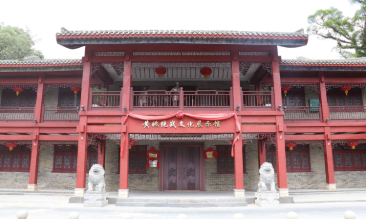 黄姚统战文化展示馆 Huangyao United Front Culture Exhibition Hall黄姚统战文化展示馆 Huangyao United Front Culture Exhibition Hall
黄姚统战文化展示馆位于广西贺州市昭平县黄姚镇真武东路42号。该馆由贺州市委批准建设,于2020年9月动工,2021年3月正式挂牌投入使用。是广西壮族自治区统一战线传统教育基地、广西社会主义学院教学基地、广西各民主党派政治交接教育基地。
展示馆共2层,总面积1000平方米。一楼展馆主要展示统一战线在贺州的发展历史,包括全国抗日民族统一战线的形成、中国共产党领导下的抗日民族统一战线工作在广西的探索与实践、广西抗日民族统一战线重心从桂林转移至桂东开辟抗日新战场、桂东抗日民族统一战线的初步形成、中国共产党领导下的以黄姚为中心的桂东抗日民族统一战线的正式形成、从胜利走向胜利等6部分内容,二楼展馆包括统战史馆、八大民主党派馆、名人馆等。
展示馆通过全息投影投射系统、多媒体查阅系统、AR体验系统、地面互动投影系统、语音导阅系统、智能广播系统等先进设备,完整、详实地再现当年中共广西省工委和中共广东省地方党组织以民族大义为重,在桂东地区以黄姚为中心,以昭平县城、贺县八步镇、苍梧县大坡乡为重要据点,与从桂林疏散而来的以中国民主政团同盟、救国会为代表的民主党团组织,以文化供应社、工合组织、广西建设研究会为代表的社团组织,以及以何香凝、李济深、陈劭先为代表的民主进步人士,建立桂东抗日民族统一战线,开展了一系列抗日救亡运动,保护了一大批民主进步人士,组建了中国民主同盟东南总支,开始了中国民主促进会的筹建工作等广西统一战线重大历史事件。
Huangyao United Front Culture Exhibition Hall is located at No. 42 Zhenwu East Road, Huangyao Town, Zhaoping County, Hezhou City, Guangxi. The construction of the museum was approved by Hezhou municipal Party committee, started in September 2020 and officially put into use in March 2021. It is the traditional education base of the united front of Guangxi Zhuang Autonomous Region, the teaching base of Guangxi Socialist College, and the Political Handover education base of various democratic parties in Guangxi.
The exhibition hall has two floors, with a total area of 1000 square meters. The exhibition hall on the first floor mainly displays the development history of the United Front in Hezhou, including the formation of the national anti Japanese national united front, the exploration and practice of the Anti Japanese national united front under the leadership of the Communist Party of China in Guangxi, the transfer of the focus of Guangxi Anti Japanese National United Front from Guilin to Eastern Guangxi to open up a new anti Japanese battlefield, the preliminary formation of Eastern Guangxi Anti Japanese national united front The official formation of the Anti Japanese national united front in Eastern Guangxi centered on Huang Yao under the leadership of the Communist Party of China, from victory to victory, etc. the exhibition hall on the second floor includes the United Front History Museum, the eight democratic parties Museum, the celebrity Museum, etc.
Through the holographic projection system, multimedia access system, AR experience system, ground interactive projection system, voice guidance system, intelligent broadcasting system and other advanced equipment, the exhibition hall completely and accurately reproduces that the working committee of Guangxi Province and the local Party organizations of Guangdong Province of the Communist Party of China focused on the great interests of the nation, centered on Huangyao in Eastern Guangxi, Zhaoping County, Babu town of He county Dapo Township, Cangwu County, as an important stronghold, established the Anti Japanese national united front in Eastern Guangxi with the Democratic Party and League organizations evacuated from Guilin, represented by the China Democratic League and the National Salvation Association, mass organizations represented by the cultural supply society, the industrial cooperation organization and the Guangxi Construction Research Association, as well as democratic progressives represented by He Xiangning, Li Jishen and Chen Shaoxian, It launched a series of Anti Japanese and national salvation movements, protected a large number of democratic progressives, established the southeast general branch of the China Democratic League, and began the preparations for the establishment of the China Association for the promotion of democracy.

-
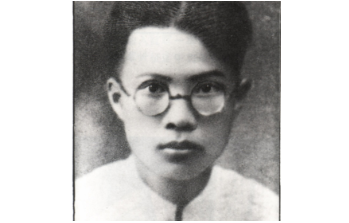 钱兴 Qianxing钱兴 Qianxing
钱兴同志,生于1909年6月23日,广西怀集县人(解放后归广东)。1933年考入中山大学,1936年加入中国共产党,曾任中山大学支部书记、厦门市工委书记,漳州中心县委宣传部部长。1940年冬,任中共广西省工委书记。1945年夏,钱兴将省工委机关迁到昭平县黄姚镇,与从桂林疏散到昭平的各民主党派进步人士广泛合作,建立统一战线,领导各地党组织开展革命活动。
在黄姚期间,钱兴书记还组织党员认真学习马列主义理论和中央“整风”文件精神。他清正廉洁,务实为民,从不拿群众的一针一线。
1947年7月,钱兴调任中共粤桂湘边工委副书记兼粤桂湘边纵队副政委,领导发动了怀南起义。1948年9月,敌人围攻粤西广宁四雍根据地时,他主动担负留守任务,掩护主力转移。11月在怀集县坳仔区仕儒村的山林中突围时牺牲。1948年11月,钱兴为掩护主力转移,在怀集的一次反围剿突围战斗中壮烈牺牲,时年39岁。
Comrade Qian Xing was born on June 23, 1909, and came from Huaiji County of Guangxi (belonging to Guangdong after liberation). He was admitted to Sun Yat-sen University in 1933, and joined the Communist Party of China in 1936, appointed as the party branch secretary of Sun Yat-sen University, the secretary of Xiamen Municipal Working Committee, and the head of the Publicity Department of Zhangzhou Central County Committee. In winter of 1940, he acted as the secretary of the CPC Guangxi Provincial Working Committee. In summer of 1945, Qian Xing moved the provincial working committee office to Huangyao Town, Zhaoping County, and extensively cooperated with the progressive personages of democratic parties who were evacuated from Guilin to Zhaoping, to establish the united front, and lead the party organization to launch the revolutionary activities.
During his stay in Huangyao, Secretary Qian Xing also organized the party members to learn the theory of Marxism-Leninism and the spirit of the Central “Rectification” Document. He was upright, honest, and pragmatic for the people, and never asked the masses for anything.
In July, 1947, Qian Xing was appointed the deputy secretary of the CPC Yueguixiangbian Working Committee, and the deputy political commissar of Yueguixiangbian Column, and led Huainan Uprising. In September, 1948, he took an initiative to undertake the left-behind tasks and cover the transfer of the main force when the enemy besieged West Guangdong Guangning Siyong Base. In November, he died when breaking out of the encirclement in the mountain forest of Shiru Village (Aozai District, Huaiji County). In November, 1948, in order to cover the transfer of the main force, at the age of 39, he died in the counter-encirclement and suppression battle.
-
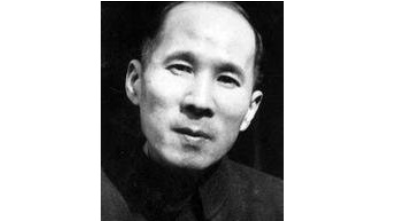 高士其 Gaoshiqi高士其 Gaoshiqi
高士其与黄姚古镇
高士其是我国科普事业的先驱和奠基人,也是第一位投奔延安并参加革命的留美科学家。虽然 受甲型脑炎病毒感染,留下严重后遗症,导致之后全身瘫痪,但他没有被病魔所吓倒,还创作了许多优秀的科学文艺作品。
半个世纪以来,高士其在全身瘫痪的情况下,写下了数百万字的科学小品、科学童话故事和多种形式的科普文章,引导了一批又一批青少年走上科学道路,被亲切称为“高士其爷爷”。高士其逝世后,中组部(中共中央组织部)确认他为“中华民族英雄”,国际小行星命名委员会也将3704号行星命名为“高士其星”。
1944年9月下旬,高士其先生从昭平县城来到的黄姚小镇,开始了他在黄姚将近一年边养病、边写作、边研究的生活。抗日战争胜利后,高士其先生在离别黄姚时给小镇留下的一首小诗《别了,黄姚》。这首诗表达了他对黄姚的依依不舍和新中国的期待。
Gao Shiqi (November 1905-december 19, 1988), formerly known as Gao Shi, is a famous Chinese scientist, popular science writer and social activist, a master of popular science in China and a pioneer and founder of the cause of popular science.
He graduated from Tsinghua University in 1925 and received a bachelor's degree in chemistry from the University of Chicago in 1927. In 1930, he graduated from the Medical Research Institute of the University of Chicago. He returned to China in 1931 and successively served as director of the laboratory department of the Central Hospital, technical consultant of Guilin allied service department, director of the Food Research Institute, deputy editor in chief of natural science and first-class researcher. Deputies to the first, second, third, fourth, fifth and Sixth National People's congresses, consultants and members of the Standing Committee of the China Association for science and technology, honorary president of the China Association of science popularization creators, member of the all China Federation of literary and art circles, director of the China Writers Association, and member of the National Committee for the protection of children of the Chinese people. He began to publish his works in 1934. He joined the Chinese Writers Association in 1952. Died in 1988.
For half a century, although Gao Shiqi was infected with type A encephalitis virus and left serious sequelae, resulting in general paralysis. In the case of general paralysis, he was not frightened by the disease, insisted on writing, wrote millions of words of scientific sketches, scientific fairy tales and various forms of popular science articles, and guided batch after batch of teenagers onto the road of science, He is affectionately known as "Grandpa Gao Shiqi". After Gao Shiqi's death, the Organization Department of the CPC Central Committee (the Organization Department of the CPC Central Committee) confirmed him as a "hero of the Chinese nation", and the international asteroid naming committee also named planet 3704 "Gao Shiqi".
In late September 1944, Mr. Gao Shiqi came to Huangyao town from Zhaoping County and began his life of recuperating, writing and studying in Huangyao for nearly a year. After the victory of the Anti Japanese War, Mr. Gao Shiqi left a small poem "farewell, Huangyao" for the town when he left Huangyao. This poem expresses his attachment to Huang Yao and his expectation of new China.《别了·黄姚》
别说我们住厌了旧村庄,
别说我们不喜欢小草屋,
在你温暖的怀抱里,
滴落了疏散人的泪珠。
如今,抗战胜利了,我们得回去!
别了,黄姚,我们避难时的保姆。
别说我们走厌了石板路,
别说我们不喜欢迎秀街,
在你鱼鳞式的屋檐下,
收走了下江人的故衣摊。
如今,和平成功,我们得回去!
别了,黄姚 ,我们患难中的朋友。
别说我们看厌了桐柏山,
别说我们不喜欢桥梁,
在你明媚秀丽的山水间,
响起了归途人的脚步声。
如今,时局已定,我们得回去!
别了,黄姚,我们乱世间的爱人。Farewell to Huangyao Gao Shiqi
Do not say that we are tired of old villages.
Do not say that we dislike huts.
In your warm embrace,
There are tears of evacuated people.
Now, the Anti-Japanese War succeeds, and we have to go back!
We will say farewell to Huangyao, our babysitter when taking refuge.
Do not say that we are tired of roads paved with stone slabs.
Do not say that we dislike Yingxiu Street.
Under your fish-scale eaves,
Take away the old clothes stall of the Xiajiang people.
Now, the successful peace is achieved, and we have to go back!
We will say farewell to Huangyao, our friend in need.
Do not say that we are tired of Tongbai Mountain.
Do not say that we dislike bridges.
In your wonderful landscape,
There is the sound of footsteps on their way home.
Now, the situation has been determined, and we have to go back!
We will say farewell to Huangyao, our lover in troubled times.

-
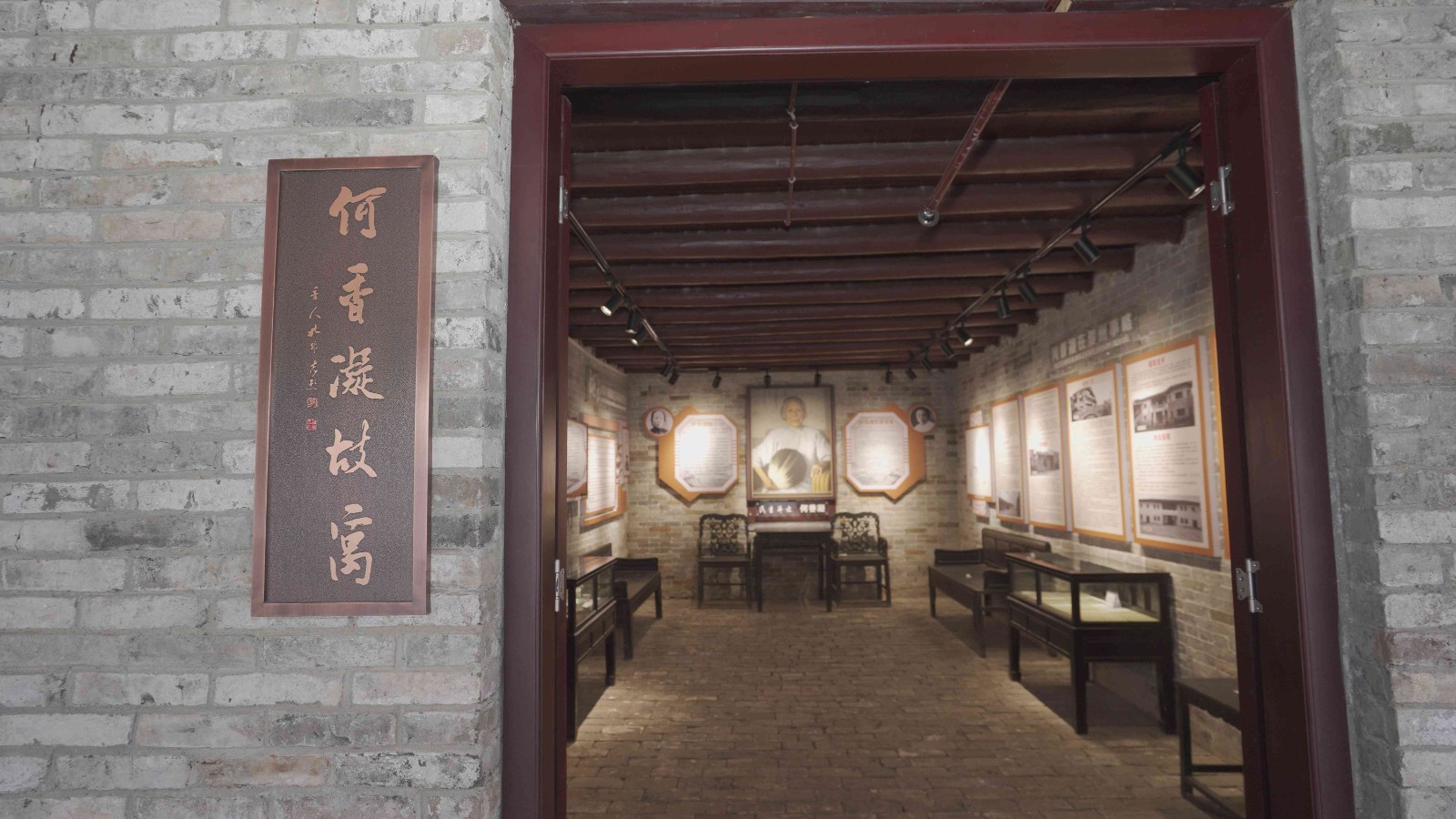
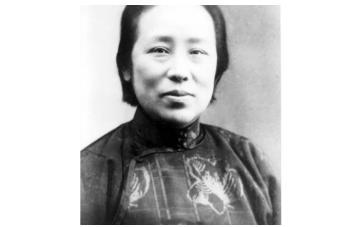 何香凝 Hexiangning何香凝 Hexiangning
何香凝(1878年6月27日-1972年9月1日),号双清楼主,广东南海棉村(今佛山市南海区)人,生于香港,中国国画家。
何香凝是孙中山先生的亲密战友,是廖仲恺先生的革命伴侣,是民革的主要创始人,也是第一位加入中国同盟会的女会员,她不仅是一位杰出的革命家和政治活动家,而且是一位在海内外享有盛誉的著名画家。作品包括《狮》、《梅花》、《高松图》等,曾出版画集有《何香凝画集》、《何香凝诗画辑》、《双清诗画集》等。
1944年9月,何香凝从桂林疏散到昭平,开展敌后抗日活动,后辗转到黄姚。在黄姚期间,她与千家驹、欧阳予倩、张锡昌等爱国知名人士筹办了“临江中学黄姚分校”和“黄姚图书馆”,给黄姚群众传播了先进的文化理念。
He Xiangning (June 27, 1878 – September 1, 1972) whose pseudonym was Shuangqinglouzhu was born in Hong Kong and came from Nanhaimian Village of Guangdong (present Nanhai District of Foshan), regarded as the traditional Chinese painter.
He Xiangning is Mr. Sun Yat-sen’s close comrade-in-arms and Mr. Liao Zhongkai’s revolutionary companion, as well as the main founder of the democratic revolution, and the first female member to join Chinese Revolutionary League. She is also an outstanding revolutionist & politico, and a famous painter enjoying a high reputation at home and abroad. Her works include Lion, Plum Blossom, Towering Pine Painting, etc.; her painting collections that have been published involve He Xiangning Painting Collection, He Xiangning Poem & Painting Collection, Shuangqing Poem & Painting Collection, etc.
On January 11, 1945 (the 28th day of the 11th lunar month), He Xiangning took a wooden boat along Siqin River, crossed Bijiang River, reached Xiping, and stayed for one night; on the following day (January 12, 1945) walked through nearly-20km rugged mountain road, arrived in Huangyao, and lived in Zhunti Tower of Baozhu Taoist Temple.
After arriving there, He Xiangning was given a warm welcome by Mo Chengzeng as the special commissioner of Pingle Special Office in Huangyao Town, the person in charge of Zhaoping County Government Office in Huangyao, the officials of Huangyao Town Government, and Huangyao people from all walks of life (including teachers and students from Huangyao Central Primary School). On the morning of the following day (January 13, 1945), Huangyao people from all walks of life went to Zhunti Tower to visit He Xiangning. At the request of Gu Baizhen as the deputy town mayor, He Xiangning drew a picture titled Snow & Plum Blossom Painting and gave it to the government as a gift. While drawing pictures, He Xiangning enthusiastically encouraged the people from all walks of life to unite and take active actions to make due contributions to the Anti-Japanese War. At the same time, she also encouraged everyone to firmly believe the power of the people, and the victory in the Anti-Japanese War.
After having breakfast, He Xiangning carried out the short inspection for Huangyao Central Primary School, together with cultural personages evacuated to Huangyao (like Qian Jiaju), as well as the responsible people of the local government, and the representatives from all walks of life. At a symposium held with the responsible people of the local government and the representatives from all walks of life, in order to resolve the problem about the juveniles’ dropout and the migrants’ unemployment, He Xiangning proposed to establish a middle school, which laid the ideological foundation for the successful preparation of Huangyao Branch of Linjiang Middle School (namely, Huangyao Middle School that was built later).
Huangyao Branch of Linjiang Middle School was founded in April, 1945. Qian Jiaju was appointed as the principal; 11 people, such as He Xiangning, Liang Shuming, Ouyang Yuqian, Zhou Kuangren, Zeng Xiangzhen and Li Shangquan as the local enlightened gentry, joined the board of directors. At the founding meeting, He Xiangning personally gave a lecture titled Insisting on the Anti-Japanese War to the first session of faculties and students, to greatly inspire the fighting spirit of the teachers and students from Huangyao Middle School, as well as the masses.
During her stay in Huangyao, He Xiangning also specially asked the responsible people of the relocation unit who accompanied her to Huangyao, and hoped them to settle down quickly, overcome difficulties, and resume their jobs as soon as possible.
During the Anti-Japanese War, Linjiang Middle School regularly held the democracy lectures. Invited by Principal Li Zhen, He Xiangning gave a lecture for twice. According to the current conditions, she revealed Chiang Kai-shek’s crime of betraying Sun Yat-sen’s spirit and implementing fascist rules, and publicized the concept of the victory in the Anti-Japanese War to the audiences. Her speech was impassioned and uplifting, and received a warm welcome. In addition, Chen Cisheng, Zhang Tiesheng, Liang Shuming and Liu Yazi were successively invited to give the lecture on the situation and democratic politics.
On November 1, 1945 (the 27th day of the 9th lunar month), He Xiangning, Li Minxin, Li Langru and other predecessors from the same hometown prepared to return to Guangdong. Guangdong Natives Association raised funds and hired a boat to send them to Guangzhou free of charge. Along the way, under the concern of all parties, He Xiangning and other people from the same hometown finally left Babu (Hezhou). After the arrival in Guangzhou, He Xiangning also called Soong Ching-ling, Tse-ven Soong, and Sun Ke, and asked them to appeal to the Kuomintang to stop the civil war. After a short stay, He Xiangning left Guangzhou and returned to Hong Kong.
-
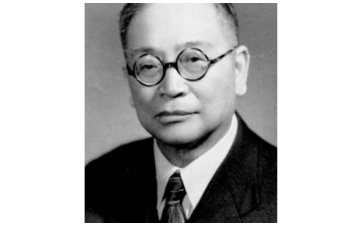 欧阳予倩 Ouyang Yuqian欧阳予倩 Ouyang Yuqian
欧阳予倩(1889年5月12日-1962年9月21日),出生于湖南省浏阳县,中国内地作家、编剧、导演,先后毕业于早稻田大学、明治大学。
1926年,加入南国社,创作剧本《潘金莲》等。1931年,加入"左联",抗战时期编写历史剧《忠王李秀成》等。抗战胜利后编导《关不住的春光》等电影。
1944年秋天,疏散来到黄姚镇,在黄姚进行抗日救国宣传活动,对推动全民性的抗日救国运动起到了积极作用。欧阳馆长平易近人,深深受到黄姚人民的敬爱。欧阳予倩在抗日战争时期,在桂林担任广西艺术馆馆长,桂剧实验剧团团长,他推动和组织西南剧展,创编了大量抗战的优秀剧目,进行抗日救亡宣传活动。
1945年,欧阳予倩在昭平加入民主党派中国民主同盟,并担任了中国民主同盟东南总支部筹委会委员,参与组建了民盟昭平县黄姚支部。1945年11月,他在桂林担任民盟广西省支部委员,此外,他在《广西日报》(昭平版)担任编委会主任委员,还领导了广西艺术馆在黄姚的工作。
1946年,创作京剧《孔雀东南飞》。1947年,执导由新中国剧社首演的话剧《桃花扇》。1955年,欧阳予倩加入中国共产党。1957年,为中央戏剧学院实验话剧院再次执导话剧《桃花扇》。1959年,根据《汤姆叔叔的小屋》创作了九场话剧《黑奴恨》。1962年9月21日,欧阳予倩病逝。
主要著作有:《欧阳予倩剧作选》、《自我演戏以来》、《一得余抄》、《电影半路出家记》、《唐代舞蹈》、《话剧、新歌剧与中国戏剧艺术传统》等。
Ouyang Yuqian (May 12, 1889 - September 21, 1962), born in Liuyang County, Hunan Province, is a writer, screenwriter and director in mainland China. She graduated from Waseda University and Meiji University.
In 1926, he joined Nanguo society and wrote the script Pan Jinlian. In 1931, he joined the "leftist League" and wrote the historical play "loyal King Li Xiucheng" during the Anti Japanese war. After the victory of the war of resistance against Japan, he edited and directed films such as "spring beyond confinement".
In the autumn of 1944, the evacuation came to Huangyao town and carried out Anti Japanese and national salvation publicity activities in Huangyao, which played a positive role in promoting the national anti Japanese and national salvation movement. Ping Yi, director of Ouyang Pavilion, is deeply respected by the Huangyao people. During the war of resistance against Japan, Ouyang Yuqian served as the curator of Guangxi Art Museum and the head of Guangxi opera experimental troupe in Guilin. He promoted and organized the southwest drama exhibition, created a large number of excellent plays of the war of resistance against Japan and carried out Anti Japanese and national salvation publicity activities.
In 1945, Ouyang Yuqian joined the Democratic Party China Democratic League in Zhaoping, served as a member of the Preparatory Committee of the southeast general branch of the China Democratic League, and participated in the establishment of the Huangyao branch of Zhaoping County. In November 1945, he served as a member of the Guangxi provincial branch of the Democratic League in Guilin. In addition, he served as the chairman of the Editorial Committee of Guangxi daily (Zhaoping Edition) and led the work of Guangxi Art Museum in Huangyao.
In 1946, he created the Peking Opera Peacock Flying Southeast. In 1947, he directed the drama peach blossom fan, which was premiered by the new China drama society. In 1955, Ouyang Yuqian joined the Communist Party of China. In 1957, he directed the drama peach blossom fan again for the experimental theatre of the Central Academy of drama. In 1959, he created nine dramas "slave hate" based on Uncle Tom's cabin. On September 21, 1962, Ouyang Yuqian died of illness.
His main works include: Selected Plays by Ouyang Yuqian, since I acted, more than one copy, film becoming a monk halfway, dance of the Tang Dynasty, drama, new opera and Chinese dramatic art tradition, etc.
-
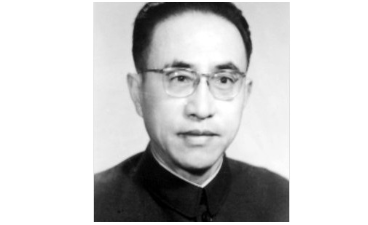 张锡昌 Zhang Xichang张锡昌 Zhang Xichang
张锡昌,笔名张帆、亦金。浙江绍兴人。中共党员。浙江大学毕业。1949年参加革命工作,历任外交部西欧司科员、副科长,中国驻法国使馆三等秘书,中国国际问题研究所西欧研究室副主任,中国驻法国使馆一等秘书、政务参赞、临时代办,华盛顿威尔逊国际研究中心研究员,哈佛大学欧洲研究中心客座研究员,国务院外事办公室参赞。1944年开始发表作品。1999年加入中国作家协会。著有长篇传记文学《传奇人物戴高乐》(合著)、《密特朗传》,随笔集《四十年法国缘》等。
1942年加入中国民主政团同盟桂林核心小组。1944年8月与一批进步文化人士疏散到昭平,参与组建民盟昭平黄姚支部和民盟东南总支部筹备委员会,任民盟东南总支部筹备委员会委员,筹办《广西日报》(昭平版),任社务委员会委员、经理,撰写社论、专稿,宣传中共方针、政策,促进抗日民主运动的开展。
1945年2月21日,《广西日报》(昭平版)搬迁到黄姚,报纸复刊,张锡昌担任报社委员会成员,他经常给报社写稿,他还特别约稿中共广西省工委书记钱兴,并请钱兴进行审稿。1945年春,根据中共南方局周恩来同志的指示,张锡昌、周匡人、莫乃群、徐寅初、千家驹、欧阳予倩、刘邦彦等人在黄姚加入中国民主同盟。成立后,张锡昌奔走八步、黄姚之间,积极推动“民盟”东南总支部筹委会和“民盟”黄姚支部的筹备工作。
1945年3月,在何香凝等人的倡议下,张锡昌、千家驹、欧阳予倩等人参与筹建临江中学黄姚分校,这就是后来的黄姚中学。中学建立以后,张锡昌将广西省工委派来的中共党员分批安排到中学担任教职,为中共广西省工委机关转移到中学做了大量的工作。经过一系列的筹备,中学开学,迎来的第一批师生。1945年9月,抗战胜利后,张锡昌和工业合作社桂林事务所迁离黄姚,返回桂林。
Zhang Xichang, pseudonyms Zhang Fan and Yi Jin. From Shaoxing, Zhejiang Province. A member of the Communist Party of China. Graduated from Zhejiang University. He participated in revolutionary work in 1949 and successively served as a member and deputy chief of the Western European Department of the Ministry of foreign affairs, the third secretary of the Chinese Embassy in France, the deputy director of the Western European Research Office of the China Institute of international studies, the first secretary, political counsellor and charg é d'affaires of the Chinese Embassy in France, a researcher at the Wilson International Research Center in Washington and a visiting researcher at the European research center of Harvard University, Counsellor of the Foreign Affairs Office of the State Council. He began to publish his works in 1944. He joined the Chinese Writers Association in 1999. He is the author of a long biography, the legend Charles de Gaulle (co authored), the biography of Mitterrand, and a collection of essays, the fate of France for forty years.
In 1942, he joined the Guilin core group of China Democratic Political League. In August 1944, he evacuated to Zhaoping with a group of progressive cultural figures to participate in the establishment of the Preparatory Committee of the Huangyao branch and the southeast general branch of the Democratic League of China, served as a member of the Preparatory Committee of the southeast general branch of the Democratic League of China, prepared Guangxi daily (Zhaoping Edition), served as a member and manager of the Social Affairs Committee, wrote editorials and monographs, and publicized the principles and policies of the Communist Party of China, Promote the development of the Anti Japanese democratic movement.
On February 21, 1945, Guangxi daily (Zhaoping Edition) moved to Huangyao and the newspaper resumed publication. Zhang Xichang served as a member of the newspaper Committee. He often wrote articles for the newspaper. He also specially invited Qian Xing, Secretary of the Guangxi Provincial Working Committee of the Communist Party of China, and invited Qian Xing to review the articles. In the spring of 1945, according to the instructions of Comrade Zhou Enlai of the Southern Bureau of the Communist Party of China, Zhang Xichang, Zhou Kuang Ren, Mo naiqun, Xu Yinchu, qianjiaju, Ouyang Yuqian and Liu Bangyan joined the China Democratic League in Huangyao. After its establishment, Zhang Xichang ran between eight steps and Huangyao, and actively promoted the preparations for the Preparatory Committee of the southeast general branch of the "Democratic League" and the Huangyao branch of the "Democratic League".
In March 1945, at the initiative of He Xiangning and others, Zhang Xichang, qianjiaju, Ouyang Yuqian and others participated in the preparation of Huangyao branch of Linjiang middle school, which was later Huangyao middle school. After the establishment of the middle school, Zhang Xichang assigned the CPC members sent by the Guangxi Provincial Working Committee to the middle school as teaching posts in batches, and did a lot of work for the transfer of the organs of the Guangxi Provincial Working Committee of the CPC to the middle school. After a series of preparations, the middle school opened and ushered in the first batch of teachers and students. In September 1945, after the victory of the Anti Japanese War, Zhang Xichang and Guilin Office of industrial cooperative moved from Huangyao and returned to Guilin.