龙畔街 Longpan Street

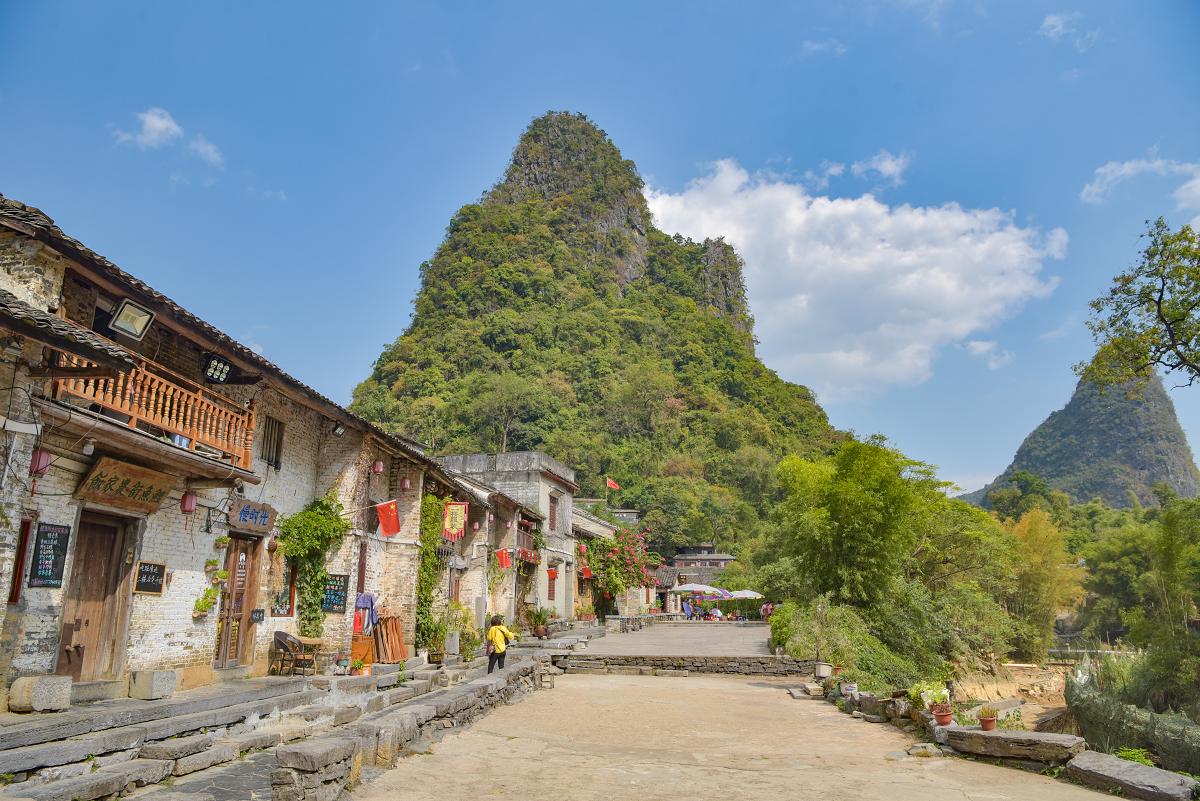
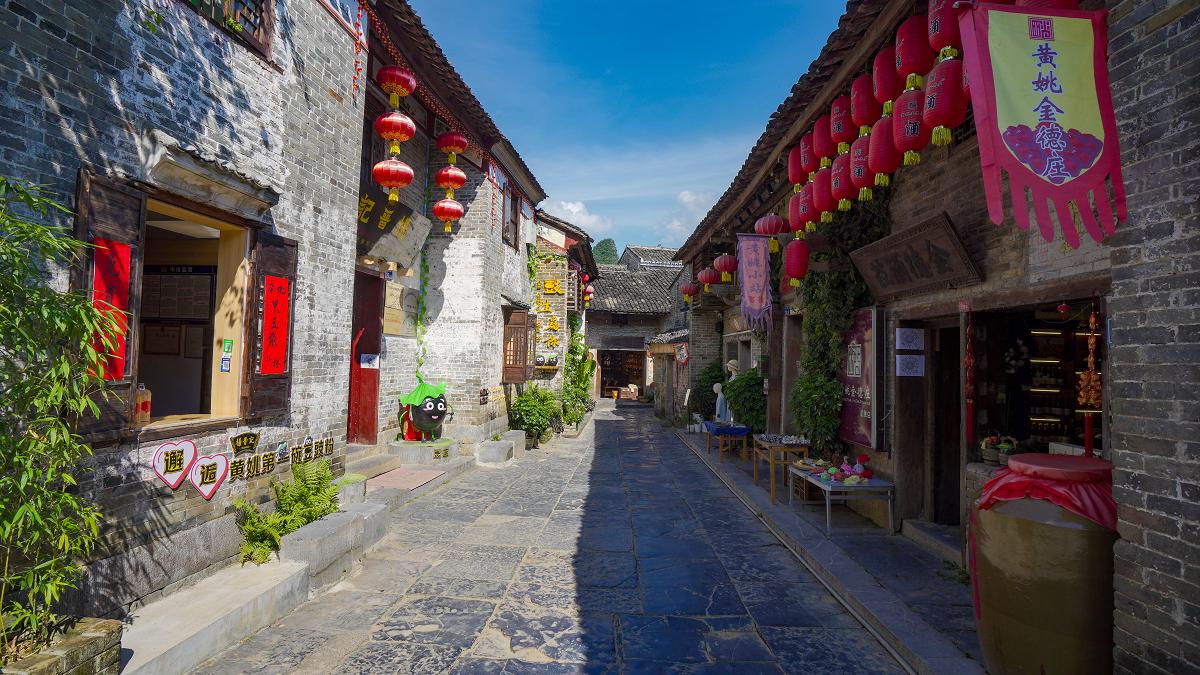
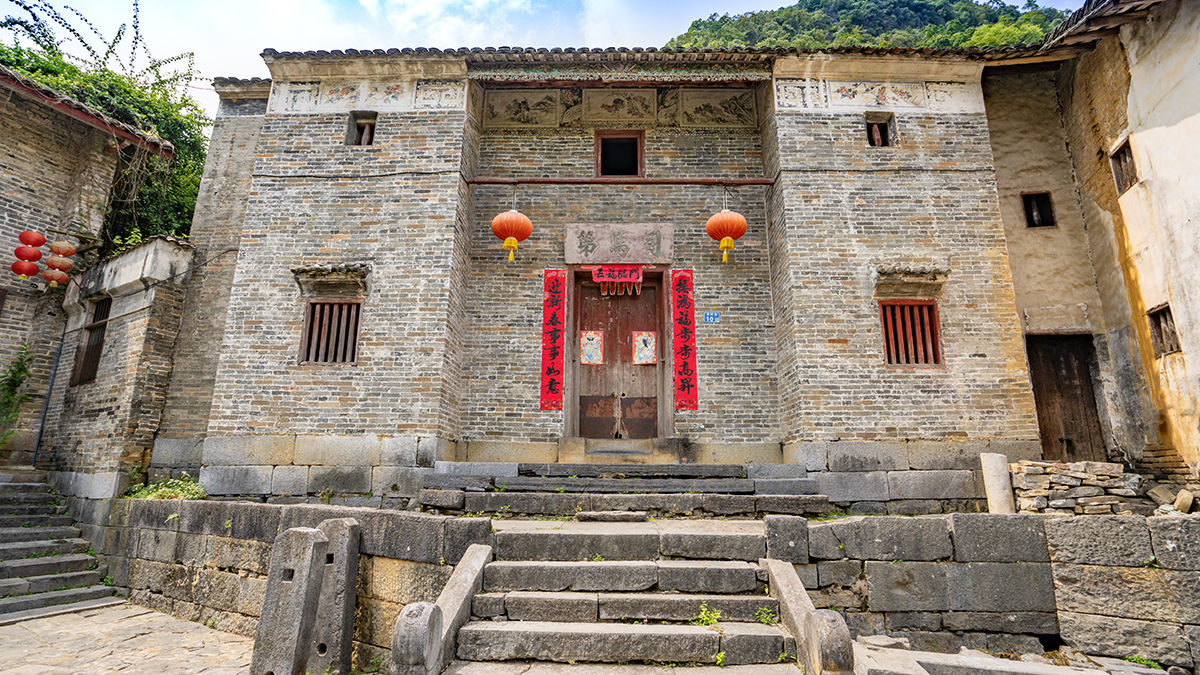
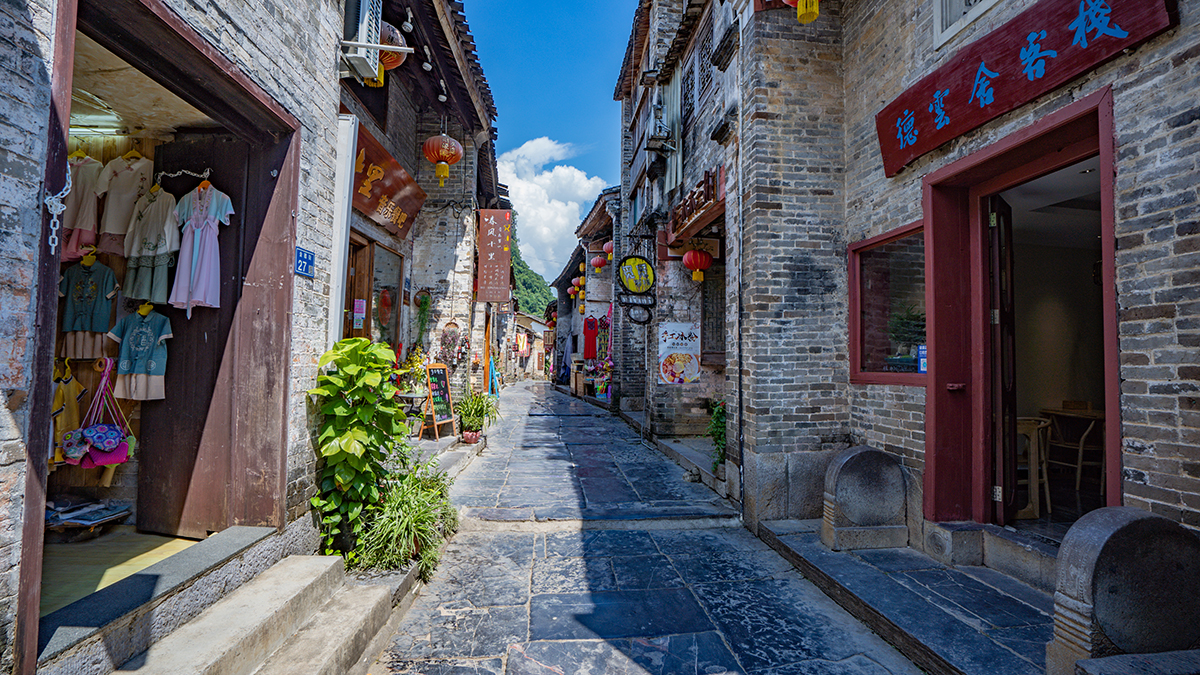
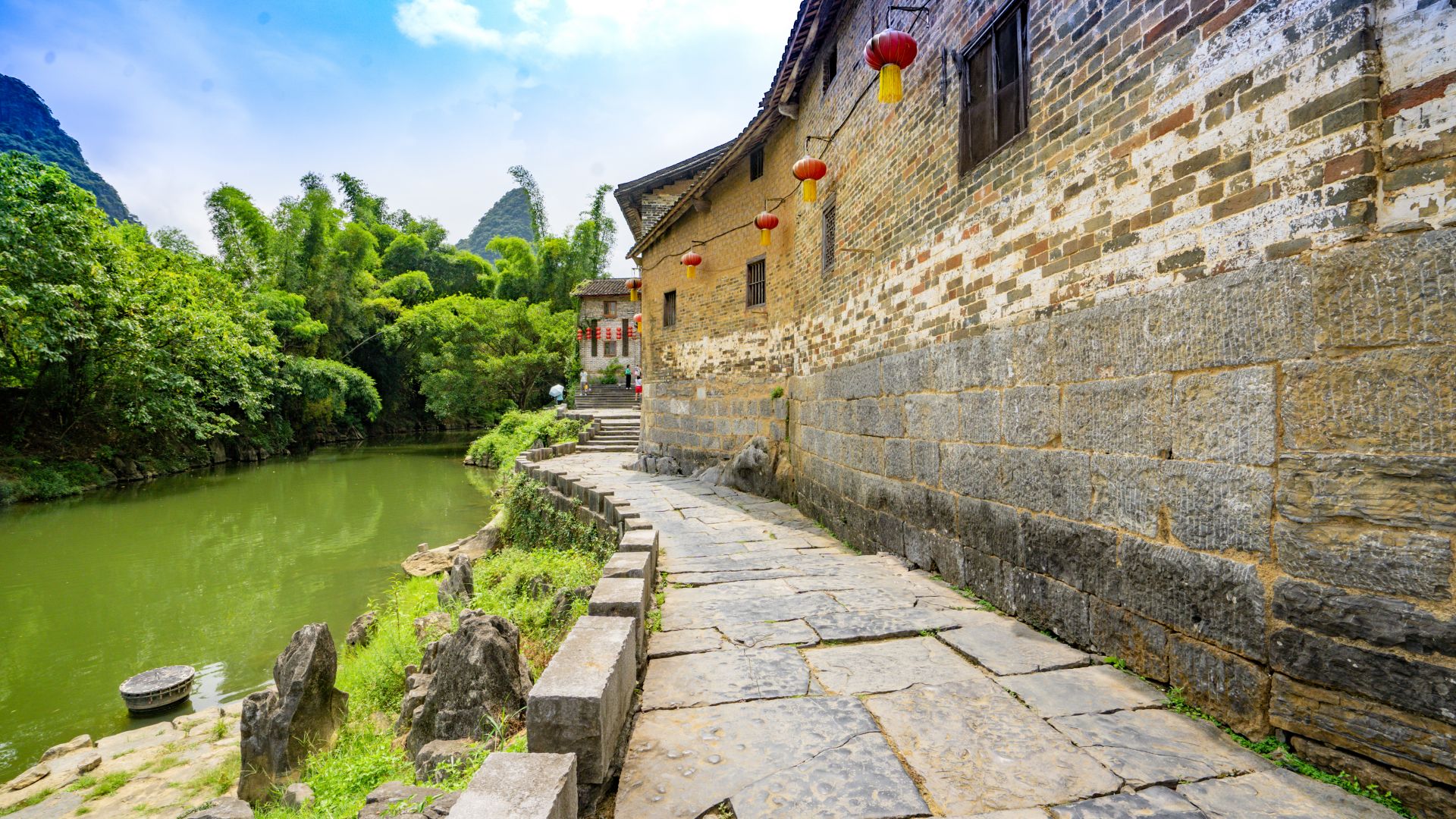
  龙畔街,得名源自古镇百姓对龙的信仰传统。人们认为高高的真武山就是龙穴,真武山下的河道就是神龙出入的通道。这条修建在姚江之畔的道路就称作龙畔街。据统计,古镇上带龙字的景物多达13处,能保存到今天的古迹依然有8处。


   Longpan Street is named according to the people’s belief tradition for dragons in the ancient town. People consider that, towering Zhenwu Mountain is the dragon’s lair, and the river channel under Zhenwu Mountain is the passage for the dragon to enter and exit. This road built on the bank of Yaojiang River is called Longpan Street. According to the statistics, in the ancient town, there are 13 scenic spots whose name contains a Chinese character of the dragon. So far, 8 historical sites have been well preserved.1631088206291.jpg
锁龙桥 Suolong Bridge

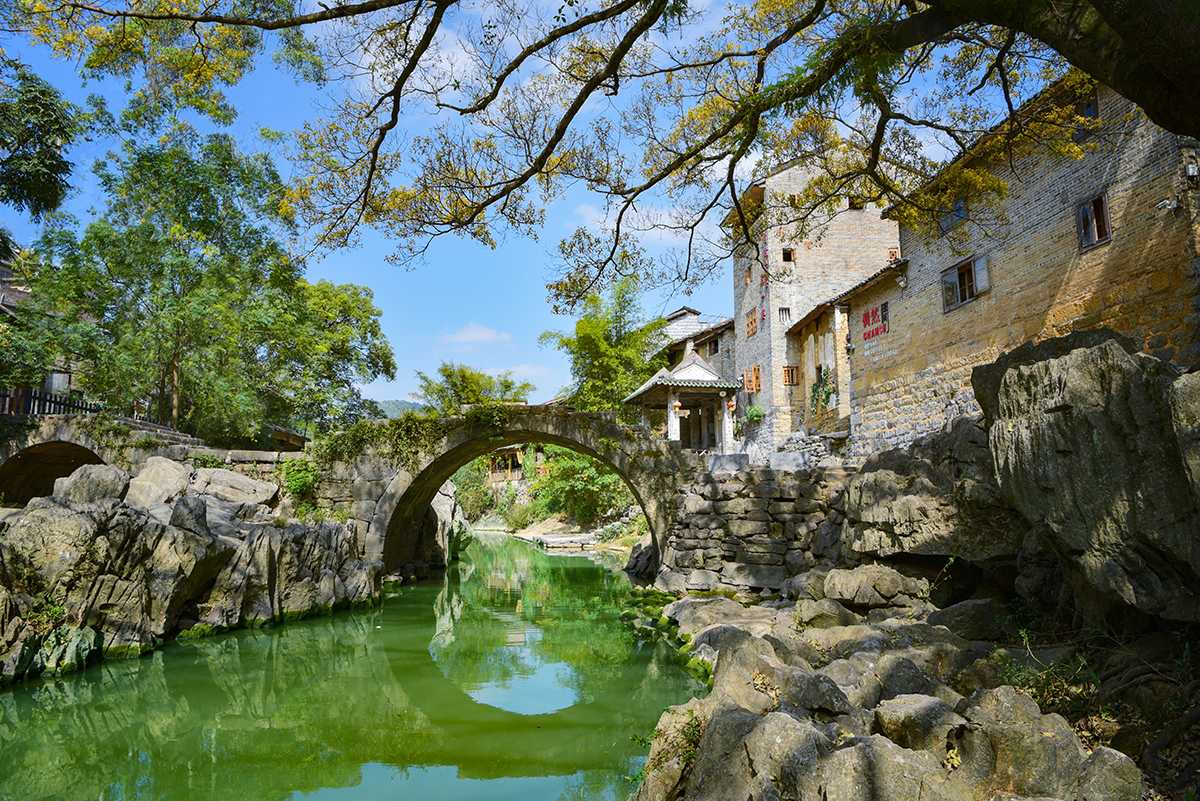
锁龙桥,锁龙寓意锁住龙气,锁住财富。黄姚先民认为,姚江河道是神龙出入古镇的通道,由神龙带来的祥瑞之气从真武山下的宝珠江进入古镇后,不能让其向外散逸,于是就在古镇南面姚江的出口处建锁龙桥把龙气锁住,护佑这里的一方百姓。

The meaning of Suolong is to lock the auspicious luck and wealth, hence the name “Suolong Bridge”. The ancestors of Huangyao considered that, Yaojiang River was the passage for the dragon to enter and exit the ancient town. The auspicious luck brought by the dragon cannot be allowed to escape after entering the ancient town, so Suolong Bridge was built at the entrance & exit of Yaojiang River in the south of the ancient town, to lock the auspicious luck and bless the common people living here.


农事作坊 Farming Workshop

 农事作坊,为古镇农业文化体验点。这里通过对黄姚特色农产品生产加工活动的展示、还原和体验,增进游客对农事活动和农业文化的兴趣。这里主要展示了古镇居民酿酒、榨油、舂米、磨豆腐,以及黄姚豆豉生产和制作的全过程。千百年来,黄姚人民依靠勤劳双手,在这里创造下美好的生活。

Farming Workshop is the agricultural culture experience point in the ancient town. It can stimulate tourists’ interest in farming activities and agricultural culture through the display, restoration and experience on production & processing activities of Huangyao featured agricultural products. This mainly presents the whole process of making wine, squeezing oil, pounding rice, grinding bean curd and producing & manufacturing Huangyao tempeh by residents in the ancient town. For thousands of years, Huangyao people have relied on their hardworking hands to create a better life here.


接龙门 Jielong Gate

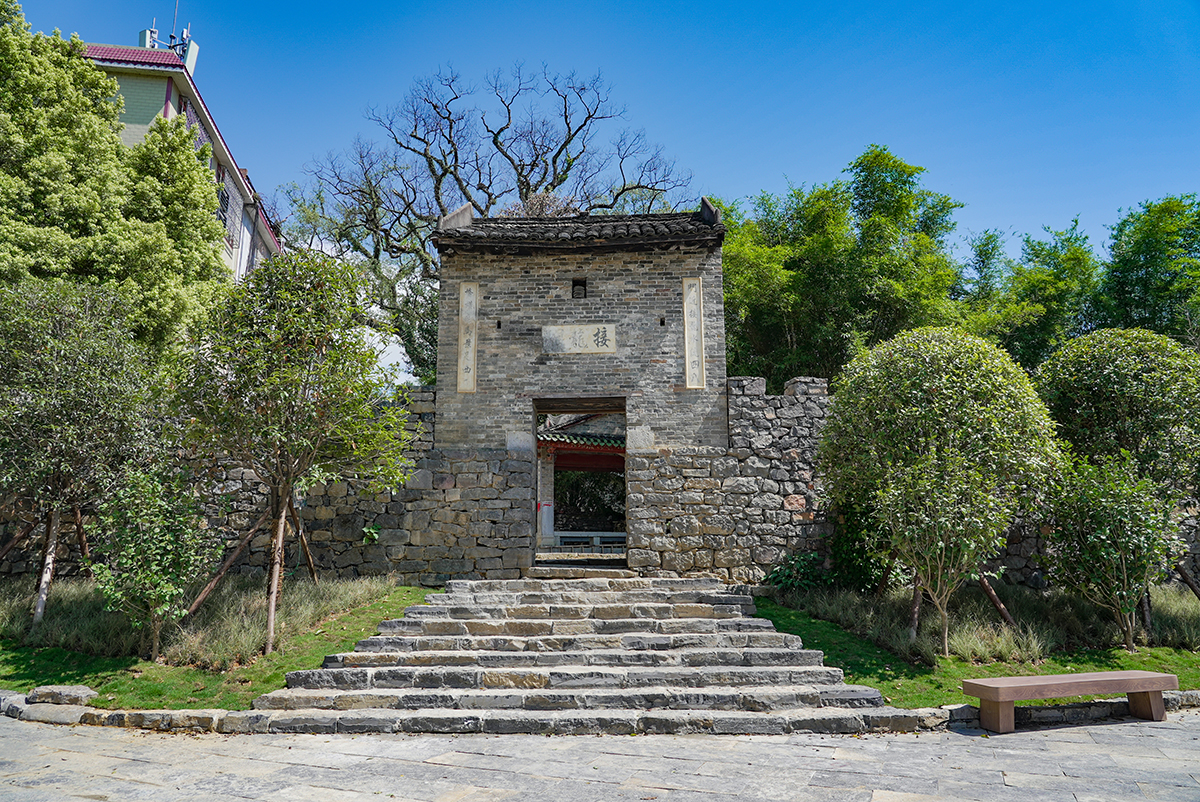
接龙门,位于天然街西出口,为古镇中部西面主出入口,因靠近接龙社而得名。该门楼为四方形平面布局,二层砖木结构,硬山瓦顶。底层为通道,二楼正面设瞭望口和长条形枪眼,大门外设有栅栏门。

Jielong Gate is located at the west exit of Tianran Street. It is the main entrance & exit in the central and western region of the ancient town, close to Jielongshe, hence the name. The gatehouse adopts the square layout, with the two-storey masonry-timber structure and gabled tile roof. The ground floor is used a passage, there are watching windows and long & narrow loopholes in the front of the second floor, and the grated door is set up outside the gate.

 接龙门 FX301216.jpg

天然街 Tianran Street

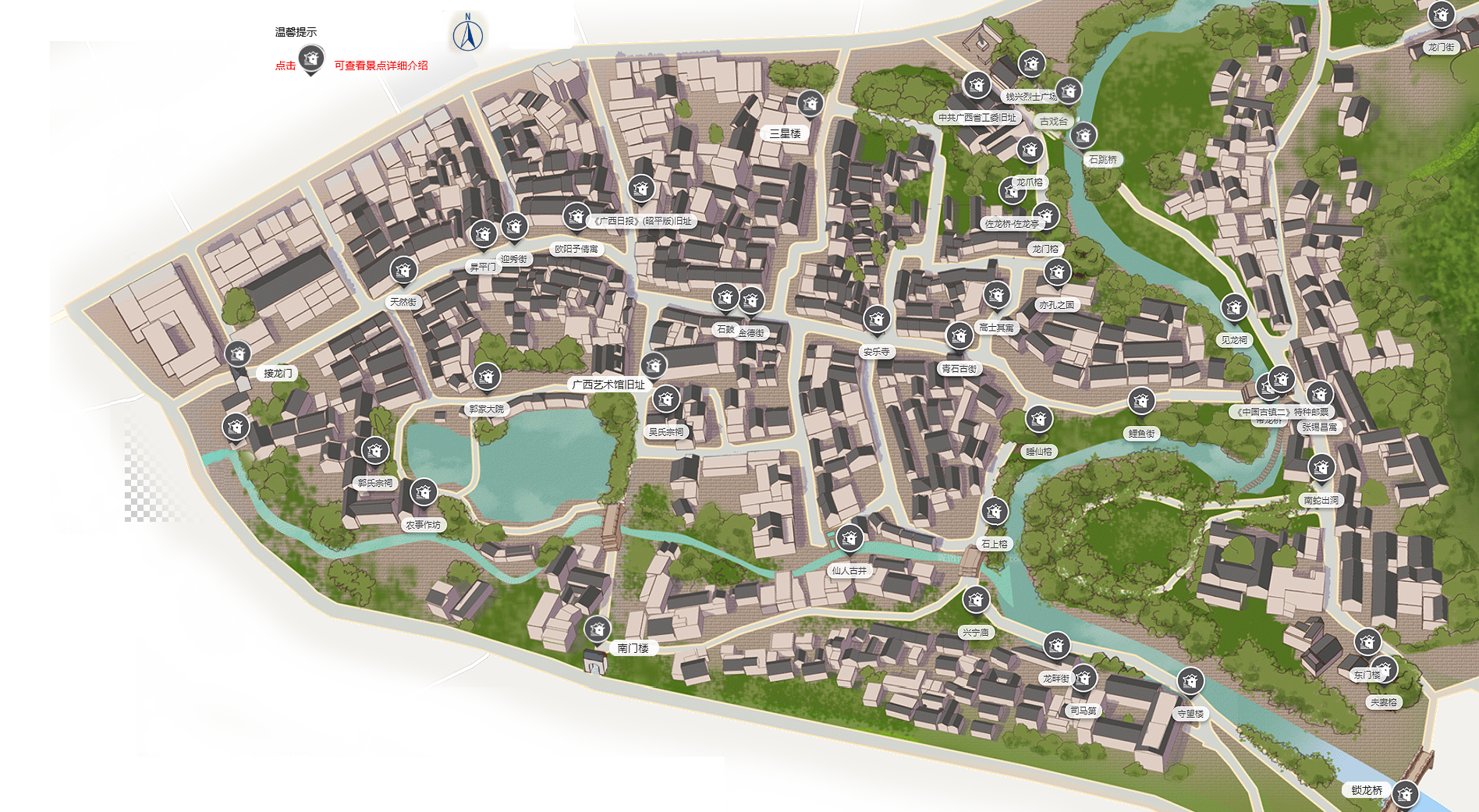
天然街,因西面紧临接龙,且靠近天然桥,故而得名。古镇内的街道布局为典型的“篦式结构”,即在古镇中部有一条主街,其它大小街巷都与这条主街交汇连通,就好像梳头的篦子一样。这条主街自西向东分别是天然街、迎秀街、金德街、安乐街和鲤鱼街。

Tianran Street is close to Jielong Gate in the west, adjacent to Tianran Bridge, hence the name. In the ancient town, the layout of streets adopts the typical “grated structure”, which is to say that, there is a main street in the ancient town, and other streets & lanes are connected to this main street, just like a grate for combing hair. The main street is respectively connected to Tianran Street, Yingxiu Street, Jinde Street, Anle Street and Liyu Street from west to east.


安乐寺 Anle Temple

安乐寺,是供奉黄姚第一代开埠土司李道清的寺庙。明朝万历26年(1598年),当地发生土民之乱,李道清率兵平定叛乱并在黄姚开垦屯田,功绩卓著。清朝顺治年间,黄姚的百姓为了纪念他而建庙奉祀,并取名为安乐寺。

Anle Temple is a temple where Li Daoqing as the 1st Kaibu Tusi of Huangyao is enshrined. In the 26th year during Wangli Period of the Ming Dynasty (1598), there was a rebellion among the local people. Li Daoqing led the troops to put down the rebellion, and carried out the reclamation in Huangyao, with outstanding achievements. During the reign of Emperor Shunzhi of the Qing Dynasty, the common people of Huangyao built a temple in memory of him, and the temple was named as Anle Temple.


宝珠观 Baozhu Taoist Temple

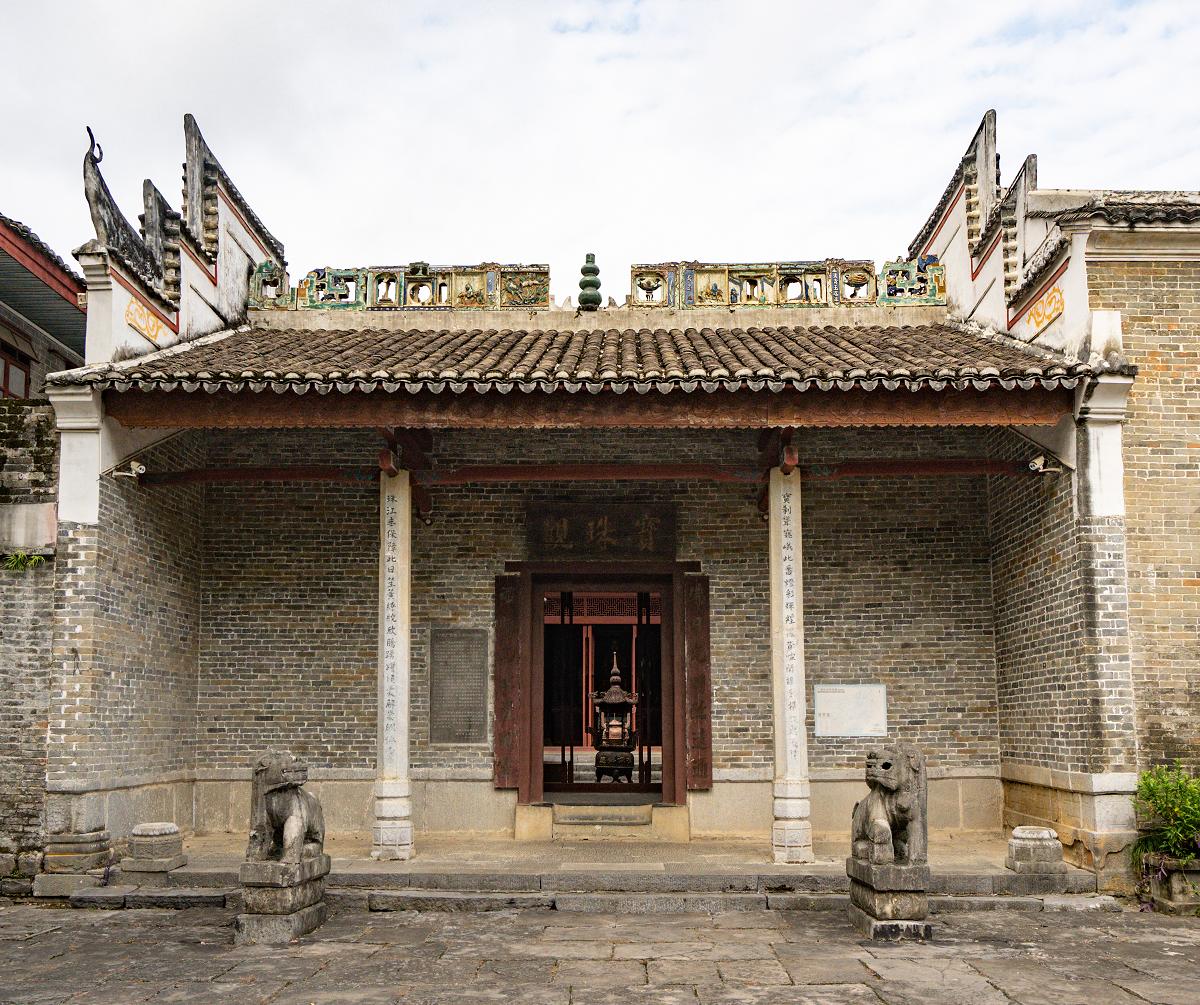
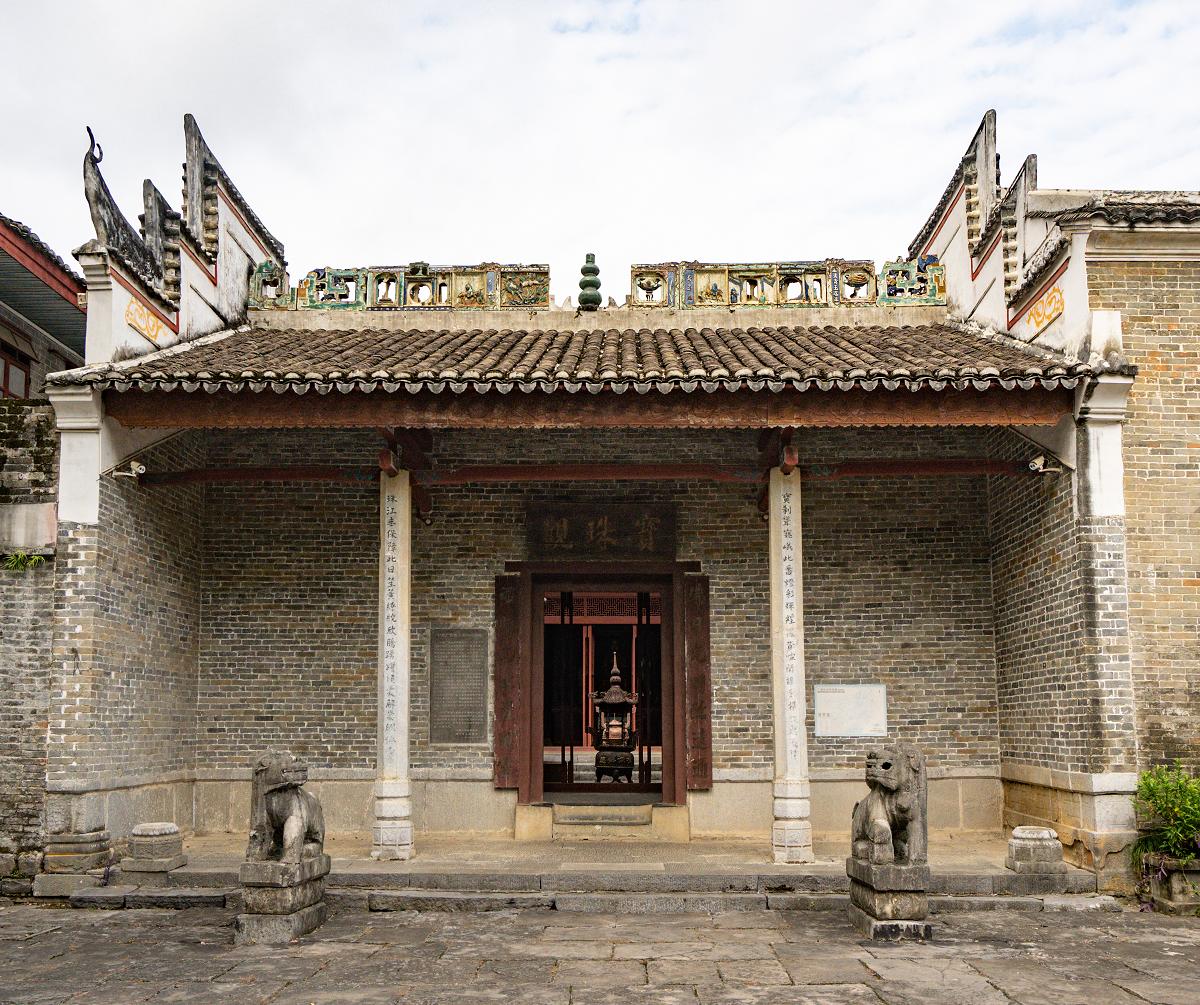
宝珠观,始建于明朝嘉靖三年(1524年),是黄姚古镇代表性古建筑。因背靠宝珠山而得名。宝珠观历代多次重修,目前占地约2亩,其主座为三间两进建筑群,由前殿、大殿、天井、回廊等建筑组合而成。宝珠观内既供奉“北帝君主”---真武大帝,也供奉如来佛祖和观世音菩萨,是一座佛道合一的寺观。宝珠观也是黄姚三月三传统祭祀活动的主要场所。

Built in the 3rd year during Jiajing Period of the Ming Dynasty (1524), Baozhu Taoist Temple is a representative ancient building in Huangyao Ancient Town. It is backed against Baozhu Mountain, hence the name. Baozhu Taoist Temple has been repeatedly rebuilt over the past dynasties. At present, it covers a land area of about 2 mu. The main building is the three-bay & two-courtyard building cluster, composed of front hall, main hall, patios, winding corridors, etc. Great Emperor Zhenwu as “North Monarch”, Tathagata and Avalokiteshvara are enshrined in Baozhu Taoist Temple. It is a temple integrating Buddhism with Taoism. Baozhu Taoist Temple is the main venue for the traditional sacrificial activities of Huangyao on the 3rd day of the 3rd lunar month.

宝珠观 FAT07059.jpg


鲤鱼街 Liyu Street

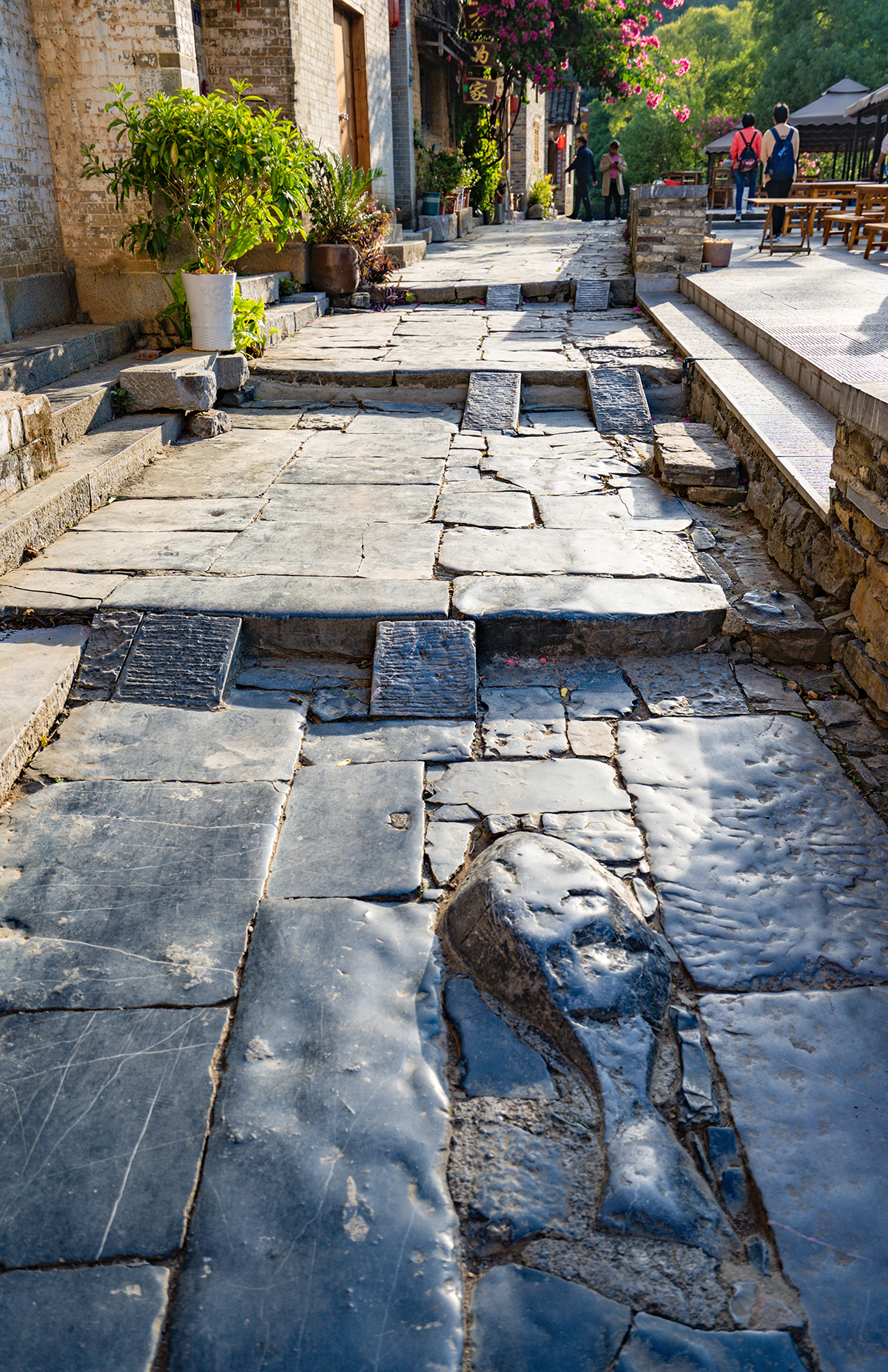
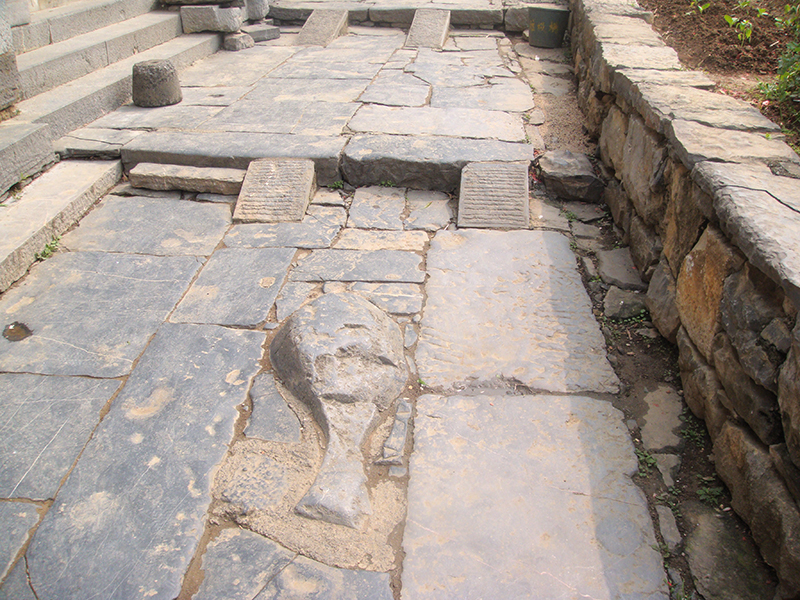
      鲤鱼街,古镇中部主要街道之一。因街中有凸石形似一条长约二尺的鲤鱼,故而得名。无论老人小孩,从这里走过,从未有人被它绊倒或扭伤脚,故称之为“盘道石鱼”。

   Liyu Street is one of main streets in the middle of the ancient town. In the street, there is a convex stone that looks like a carp with a length of 2 chi, hence the name. Old people and children have never been tripped over or sprained by it, hence the name “Pandao Stone Fish”.


鲤鱼街 ps.jpg


龙门榕 Dragon Gate Ficus

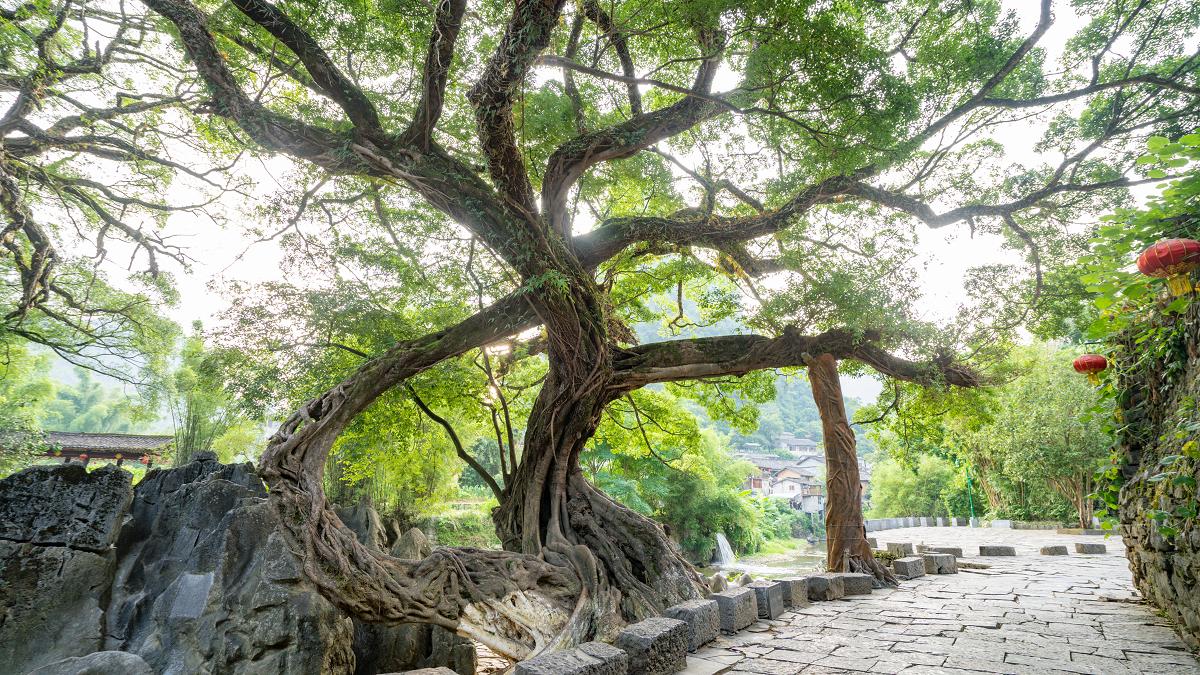
龙门榕,树龄800多年,因其虬枝盘错缠绕,形如拱门,且坐落于佐龙桥之畔而得名。树下有一奇石,似鲤鱼上跃,与龙门榕组成“鲤鱼跃龙门”的天然景观,令人称奇。

Dragon Gate Ficus is more than 800 years old. Its twisted branches are just like an arched gate, located beside Zuolong Bridge, hence the name. A strange stone under the tree looks like a carp leaping upwards, forming the natural landscape of “A Carp Jumping over the Dragon Gate” together with Dragon Gate Ficus, which is amazing.
高士其寓 Former Residence of Gao Shiqi

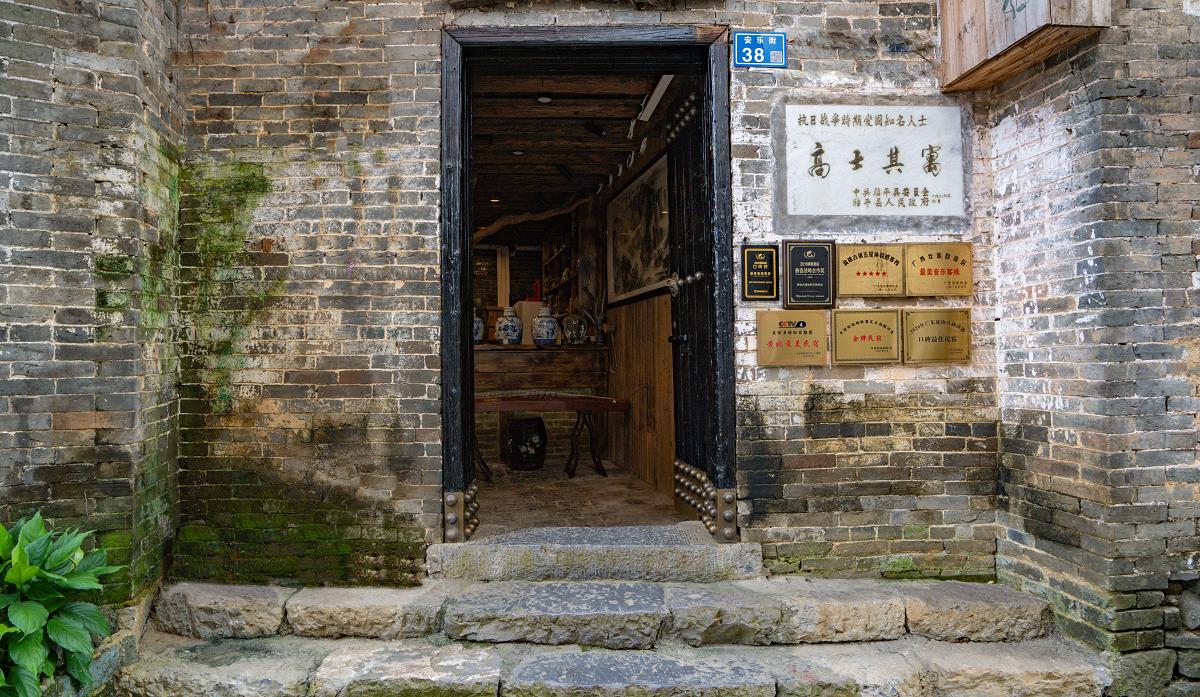
高士其(1905 -1988),福建福州人,中共党员,著名的科普作家。1944年,高士其转移到黄姚寓居于此,继续革命工作。在黄姚期间,高士其写下了科普著作《奇妙的数》,科普文章《美味的黄姚豆豉有霉菌的一分功劳》,临别还为黄姚留下了一首深情的诗《别了,黄姚》。

Gao Shiqi (1905-1988) was a member of the Communist Party of China, and came from Fuzhou of Fujian, regarded as a famous science writer. In 1944, Gao Shiqi arrived at Huangyao and lived here to continue to carry out the revolutionary work. During his stay in Huangyao, Gao Shiqi wrote Popular Science Book Wonderful Numbers, and Popular Science Article Delicious HuangyaoTempeh Includes the Contribution of Mould, and left an affectionate poem titled Farewell to Huangyao.

高士其寓 FAT07046.jpg

龙爪榕 Dragon Claw Ficus

龙爪榕,树龄850多年,是目前古镇中最古老的榕树之一。因其枝干从半空倒垂而下,仿佛天外神龙伸出的一只龙爪,故而得名。其如龙爪般下垂的枝干其实早已枯萎,因气根与藤蔓缠绕而挂垂下来,而树干本体却依然生机勃勃,见证了整座古镇的兴衰变迁。

Dragon Claw Ficus at the age of over 850 is one of the oldest banyan trees in the ancient town at present. The branches fall upside down from the air, like a dragon claw stretched out by a dragon, hence the name. In fact, these branches hanging like a dragon claw have withered. They hang down due to the entanglement of aerial roots and vines, but the trunk is still vibrant, to witness the ups and downs of the entire ancient town.

鲤鱼街 Liyu Street

鲤鱼街,古镇中部主要街道之一。因街中有凸石形似一条长约二尺的鲤鱼,故而得名。无论老人小孩,从这里走过,从未有人被它绊倒或扭伤脚,故称之为“盘道石鱼”。

Liyu Street is one of main streets in the middle of the ancient town. In the street, there is a convex stone that looks like a carp with a length of 2 chi, hence the name. Old people and children have never been tripped over or sprained by it, hence the name “Pandao Stone Fish”.

41 鲤鱼街 FAT_6965.jpg

《中国古镇二》特种邮票 China Ancient Town II Special Stamp

2016年5月19日,中国邮政发行《中国古镇二》特种邮票,其中黄姚古镇以其悠久的历史、秀美的风景入选。邮票设计以实景为基础,采用了钢笔勾线配以淡彩的手法,细腻的雕刻线条,刻画出了黄姚古镇具有代表性的景观,充分体现了黄姚古镇的厚重历史、文化积淀和秀美风景。

On May 19, 2016, China Post issued China Ancient Town II Special Stamp. Huangyao Ancient Town was selected due to its long history and wonderful scenery. The stamp design is based on real-life scenery, and adopts the method of combining pen lines with light color, to depict the representative landscape of Huangyao Ancient Town, and fully embody the profound history, cultural accumulation and beautiful scenery.

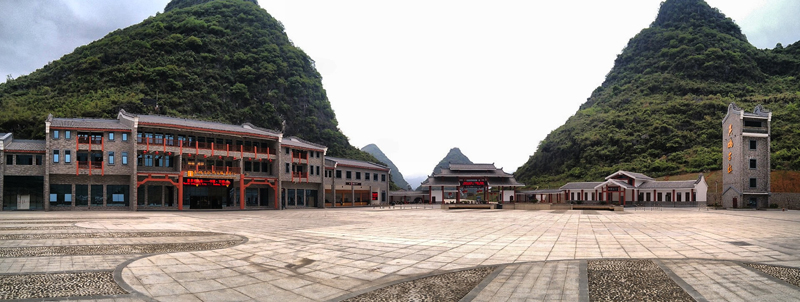
游客中心
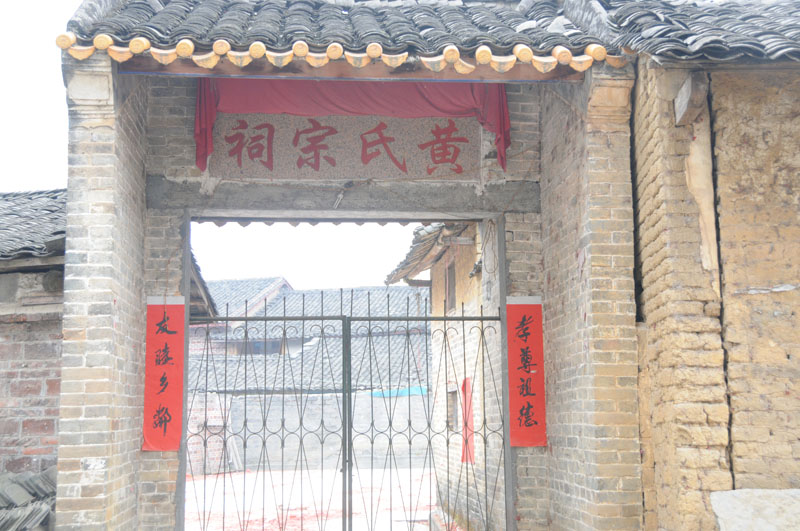
黄氏宗祠
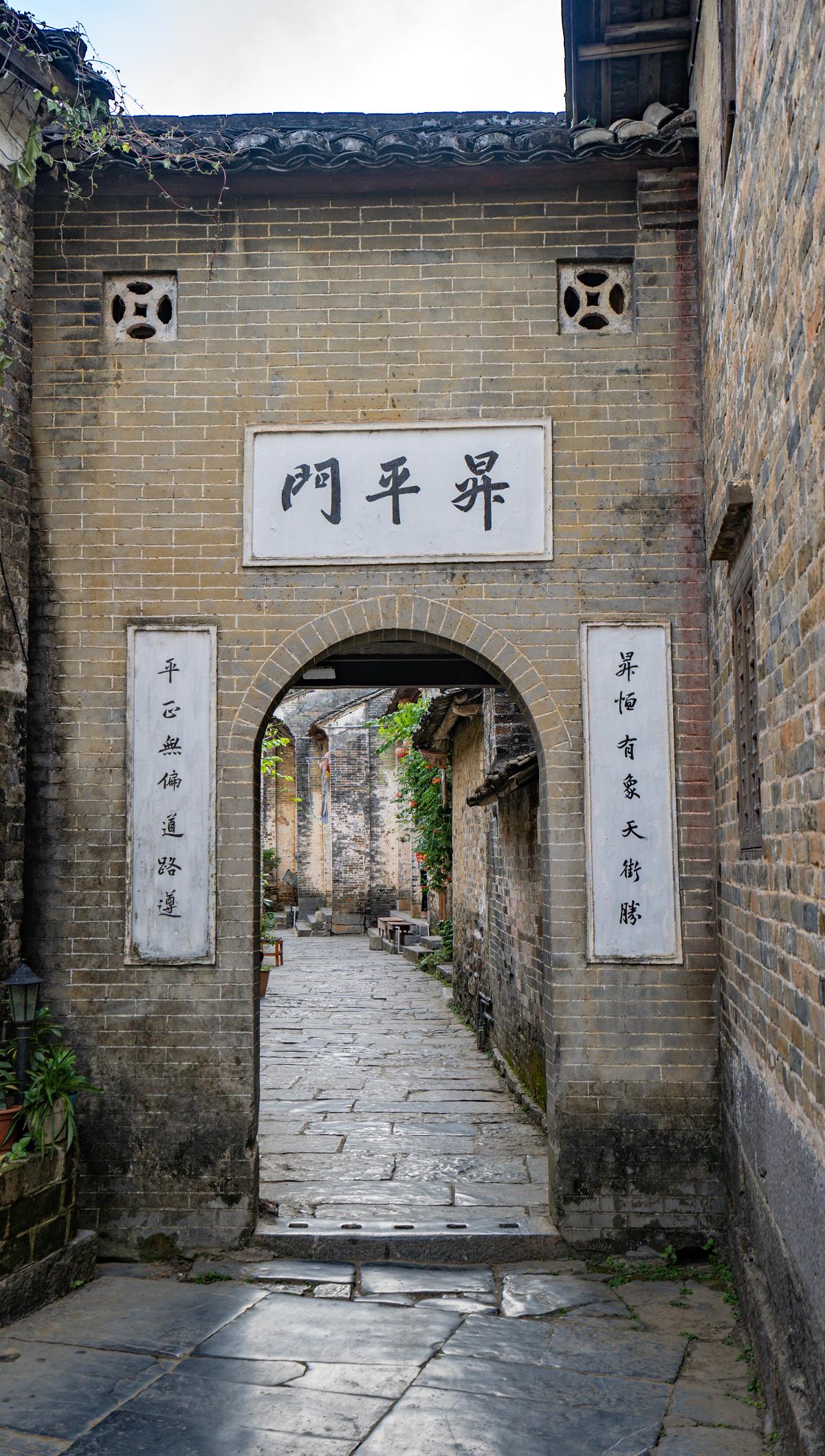
昇平门 Shengping Gate

昇平门,建于清代,原名太平门。清代学者康有为认为,社会是循着“据乱世-昇平世-太平世”的规律发展的,因此昇平门更体现出人们对蒸蒸日上生活的期盼。门联“昇恒有象天街胜,平正无偏道路遵”引用了《诗经》“如月之恒,如日之昇”的说法,大意是前方的街市会更加美好,脚下的道路将无比坦荡。

 21 昇平门 FAT00317.jpg


欧阳予倩寓所 Former Residence of Ouyang Yuqian

 欧阳予倩(1889 -1962),湖南浏阳人,中共党员,我国著名戏剧家、戏剧教育家、电影艺术家,被誉为“中国现代戏剧之父”。抗战时期,欧阳予倩创办了广西艺术馆,任广西艺术馆馆长,1944年他将广西艺术馆迁至黄姚,寓居于此。他通过戏剧形式传播革命思想,激励军民抗战。建国后,他任中央戏剧学院第一任院长。

Ouyang Yuqian (1889-1962) was a member of the Communist Party of China, and came from Liuyang of Hunan. He was the famous dramatist, drama educator and film artist of China, reputed as the “Father of Chinese Modern Drama”. During the Anti-Japanese War Period, Ouyang Yuqian created Guangxi Art Gallery, appointed as the curator of Guangxi Art Gallery. In 1944, Guangxi Art Gallery was moved to Huangyao, and he lived here. Ouyang Yuqian spread the revolutionary ideas through the dramatic form, to inspire soldiers and civilians to resist Japanese aggression. After the founding of the People’s Republic of China, he was appointed as the first president of the Central Academy of Drama.


20 欧阳予倩寓 DSC_0181.jpg

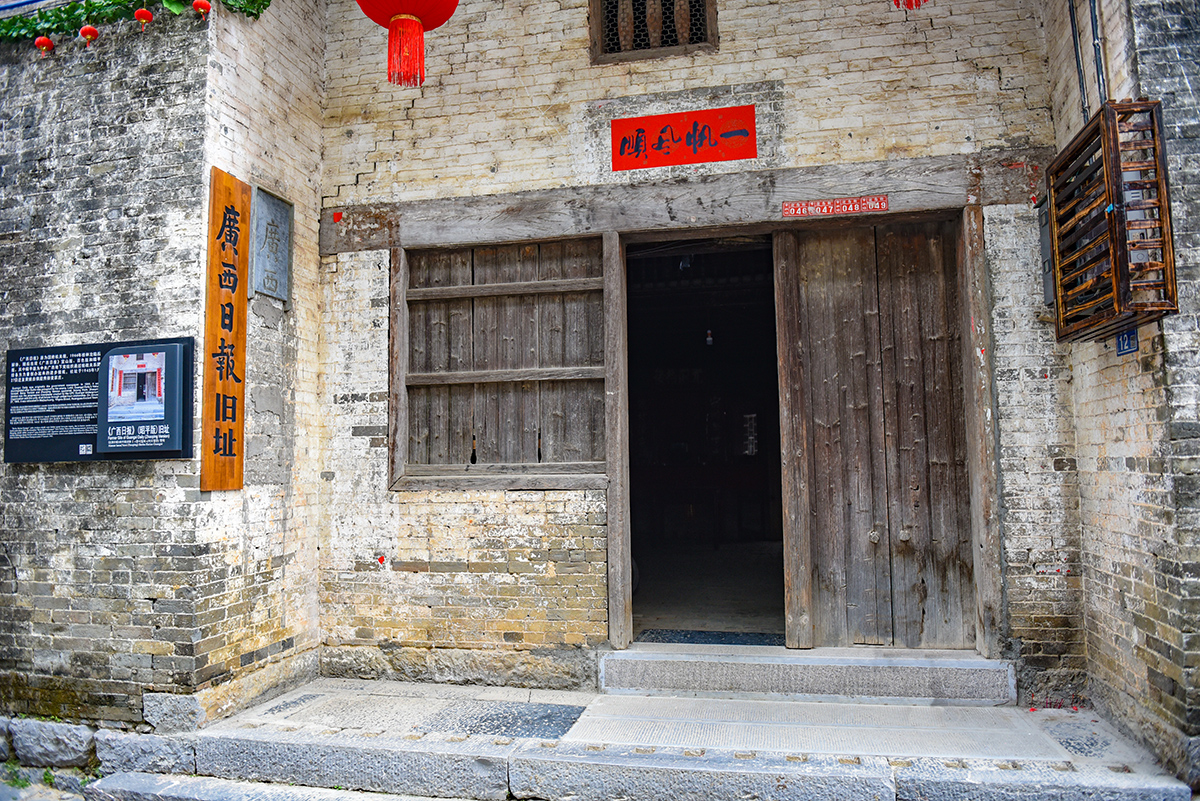
广西日报旧址 Former Site of Guangxi Daily (Zhaoping Version)

《广西日报》原为国府机关报,1944年桂林沦陷后解体,随后出现《广西日报》宜山版、百色版和昭平版。其中昭平版为中共广西地下党组织通过统战关系团结各方力量创办起来的进步报纸,社址于1945年1月27日迁至黄姚古镇迎秀街麦家庄。

Guangxi Daily was originally the government newspaper. In 1944, it was disintegrated after Guilin was occupied by the enemy. Later, Guangxi Daily’s Yishan Version, Baise Version and Zhaoping Version appeared. Among them, Zhaoping Version was the progressive newspaper created by the CPC Guangxi Underground Organization with the unity of all forces through united front relationship. On January 27, 1945, it was relocated in Maijiazhuang, Yingxiu Street, Huangyao Ancient Town .


广西日报.jpg

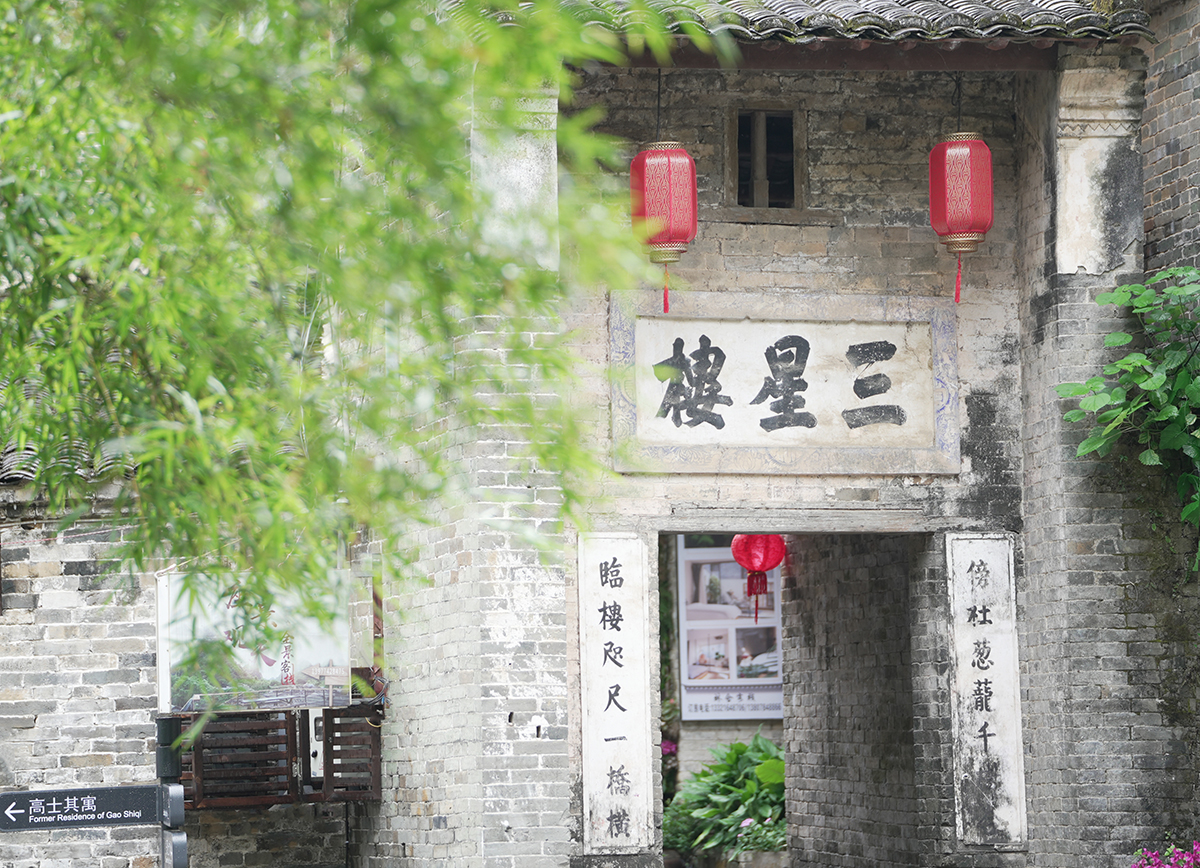
三星楼

三星楼在黄姚古镇金德街北端,始建于清初,面宽3.5米,进深6米,通高7米,砖木结构,单间两层。上层为望楼室,前后各有大小窗户两个,三星楼下层为城门通道。前后为高大的矩形大门,并有上下石阶。光绪年间重修时,由黄姚书法家林贡廷书“三星楼”,楷体,镌于三星楼门上,门两侧原有对联为“傍社葱茏千树合,临楼咫尺一桥横”。三星意即:福、禄、寿,三星拱照。三星楼是黄姚古镇防卫性的重要门关之一,同时也是该镇的出入通道.


三星楼DSC00694.jpg

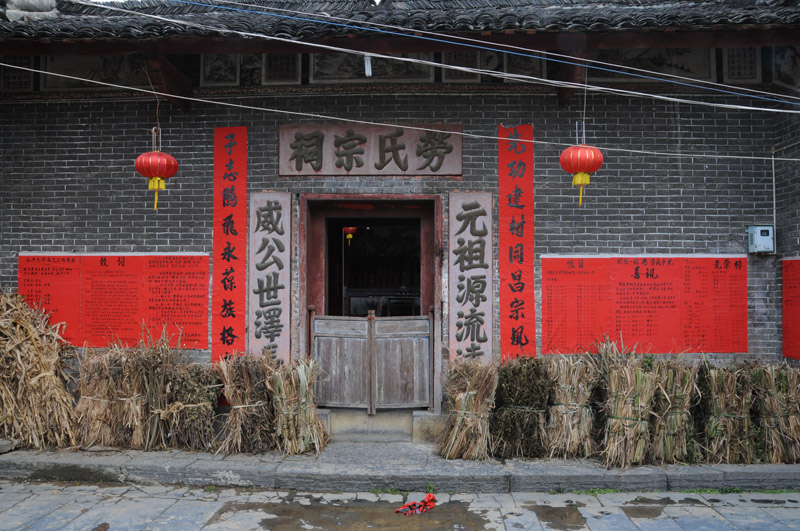
劳氏宗祠

      劳氏族谱记载,其祖先是雍正、乾隆年间县从广东鹤山县古劳村迁来。林氏宗祠:林氏族谱记载,其相先是清朝初年从广东南海县迁来。南海在鹤山东北方,隔西江于鹤山相望,紧邻广州市。


永安门

是古镇以前的一道闸门,寓意永保平安,对联:永做中流砥柱,安康盛世机关。


夫妻榕 Couple Ficus

夫妻榕,位于东门楼前,树龄有300多年,看似一棵大树,实则是两棵榕树生长在一起,如同紧紧相偎的一对夫妻,故称“夫妻榕”。夫妻榕更是罕见的“变色榕”,每当有大旱大涝,树叶会在春季变得枯黄。百姓通过观察树叶颜色的变化,就能判断当年天气情况,提前做好预防。

Couple Ficus is located in front of East Gatehouse. It is more than 300 years old. Couple Ficus looks like a big tree, but, in fact, it is two trees growing together, just like a couple hugging each other, hence the name “Couple Ficus”. Couple Ficus is rare “Color-changing Ficus”. In case of major drought or flood, the tree leaves turn yellow in spring. People may judge the weather conditions of the year by observing the color change of tree leaves, to take precautions in advance.


石上榕 Shishang Ficus

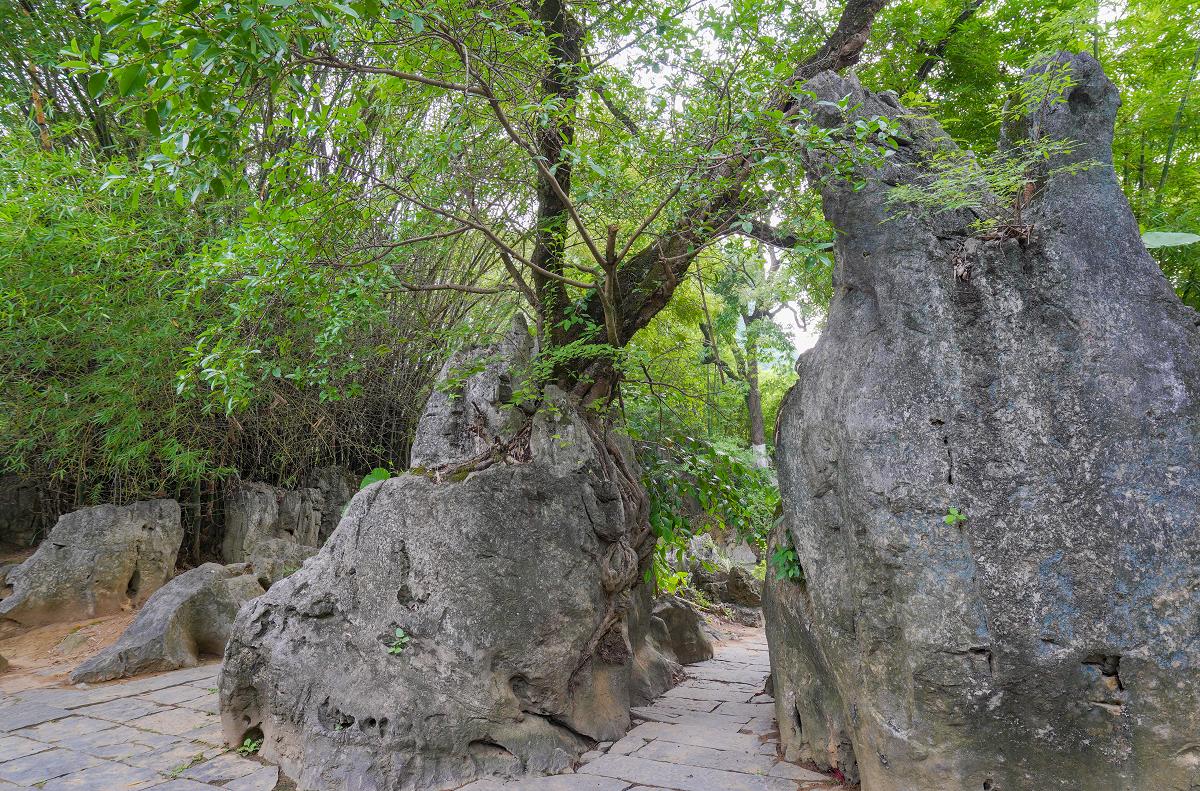
石上榕,位于姚江西岸,有近百年树龄,因榕树扎根于岩石之上而得名。其强大的生命力令人叹为观止,是黄姚古镇中的一处奇景。因其根系盘错在岩石上,难以吸收养分,故而树形娇小玲珑。

Shishang Ficus is located on the west bank of Yaojiang River. It is nearly 100 years old, laying the roots on the rock, hence the name. Its powerful vitality is amazing. This is a wonderful view in Huangyao Ancient Town. The root system is intertwined on the rock, and it is difficult to absorb nutrients, so the tree is very small and exquisite.


石上榕 FAT06932.jpg

南蛇出洞 South Snake Stretching out of Its Hole

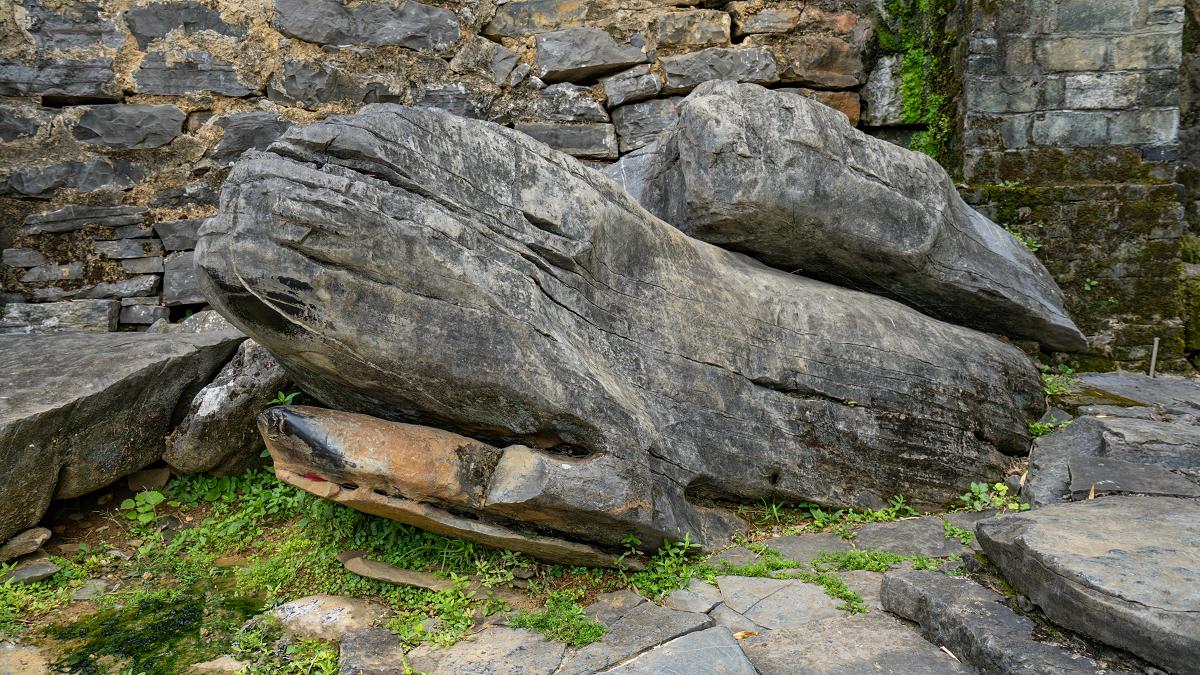
南蛇即蟒蛇的俗称,奇石形如灵蛇探头,与对岸神龟遥遥相望。龟蛇二石坐落在真武山脚下。相传,真武大帝在此脚踏龟蛇得道成仙,庇佑着黄姚子民。

South Snake is the common name of the python. The strange stone is shaped like a snake stretching its head, and it faces the divine turtle on the opposite bank. Two stones which are respectively shaped like a turtle and a snake are located at the foot of Zhenwu Mountain. According to the legend, Great Emperor Zhenwu stepped on the turtle & snake here to become an immortal and bless the people living in Huangyao.

35 南蛇出洞 FAT09982.jpg

张锡昌寓 Former Residence of Zhang Xichang

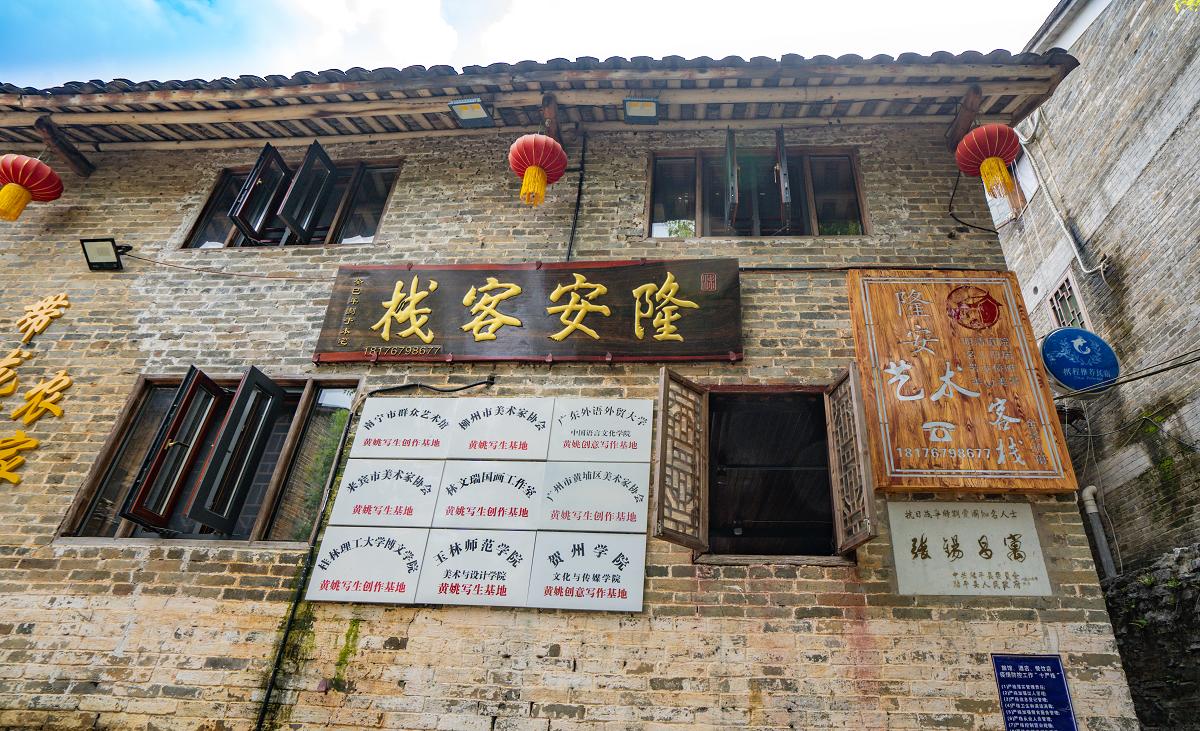
张锡昌(1902-1980),江苏无锡人,中共党员,中共南方局的负责人之一。1944年,日军占领桂林后,张锡昌主持出版的《广西日报》(昭平版),为报社经理。1945年《广西日报》(昭平版)社址迁至黄姚镇,张锡昌寓居于此。

Zhang Xichang (1902-1980) was a member of the Communist Party of China, and came from Wuxi of Jiangsu, appointed as one of the responsible people of the CPC South Bureau. In 1944, after Guilin was occupied by Japanese troops, Zhang Xichang was responsible for publication of Guangxi Daily (Zhaoping Version), and acted as the manager of the newspaper office. In 1945, the office of Guangxi Daily (Zhaoping Version) was moved to Huangyao Town, and Zhang Xichang lived here.


张锡昌寓 FAT09992.jpg

见龙祠 Jianlong Ancestral Hall

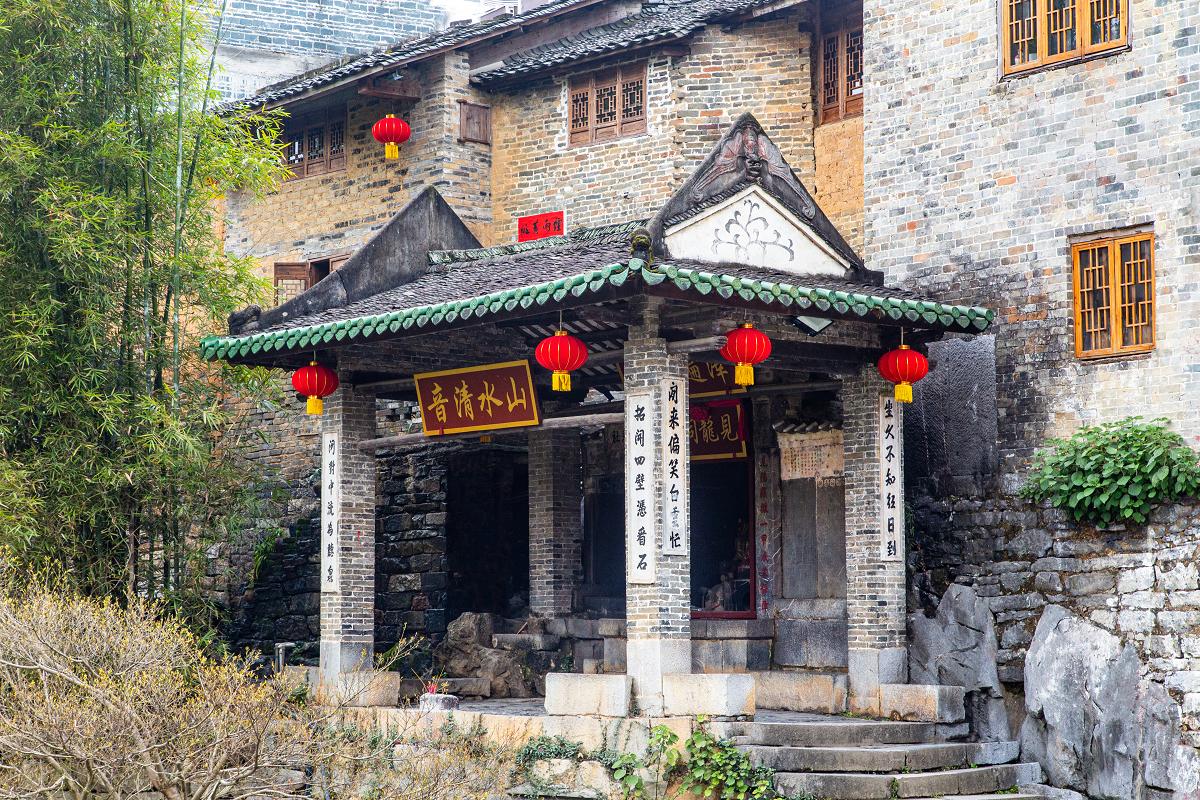
见龙祠,位于带龙桥西北侧,背靠真武山,面向姚江,由一座神祠和四角亭构成,奉祀土地公、土地婆,以保平安。祠联“坐久不知红日到,闲来偏笑白云忙”,道出了黄姚百姓悠然自得的生活缩影。

Jianlong Ancestral Hall is located on the northwest side of Dailong Bridge, backed against Zhenwu Mountain, facing Yaojiang River, composed of a shrine and a quadrangle pavilion. Earth God and Earth Grandmother are enshrined, to bless the safety. The couplet that “people who sit for a long time do not know the arrival of the red sun, and people who are free laugh at the busy white clouds” presents the epitome of the people’s leisurely life in Huangyao.


黄姚 见龙祠.jpg

石跳桥 Shitiao Bridge

石跳桥,又称“丁步桥”。因行人需轻跳跨越桥墩而得名。此桥建于清朝嘉庆十六年(1811年),长19米,共31步墩,既利于人行,又不影响泄洪。

Shitiao Bridge is also called “Dingbu Bridge”. It is named because pedestrians need to jump across the bridge pier. Built in the 16th year during the reign of Emperor Jiaqing of the Qing Dynasty (1811), the bridge is 19 m long, with 31 step piers, which is beneficial to pedestrians and has no effect on flood discharge.


古氏宗祠

古氏族谱记载,其祖先是清顺治年间从广东鹤山(从新会分出)古劳村迁来黄姚经商而定居下来的。


佐龙桥和佐龙亭 Zuolong Bridge · Zuolong Pavilion

佐龙桥和佐龙亭,均始建于清朝乾隆二年(1737年)。佐龙桥头即是重檐方亭的佐龙亭,题匾“惟尔有神”,语出《尚书》。亭中天花板饰有四幅图案,寓意“四方来福”,亭后佐龙祠奉祀土地公和土地婆。

Zuolong Bridge and Zuolong Pavilion were built in the 2nd year during the reign of Emperor Qianlong of the Qing Dynasty (1737). Zuolong Pavilion that is square with double eaves is located at the end of Zuolong Bridge, with the plaque of “Weieryoushen” which is from Book of History. The ceiling in the pavilion is decorated with four patterns, which means that “the blessing from four directions gathers here”. Behind the pavilion, Earth God and Earth Grandmother are enshrined in Zuolong Ancestral Hall.


守望楼 Shouwang Tower

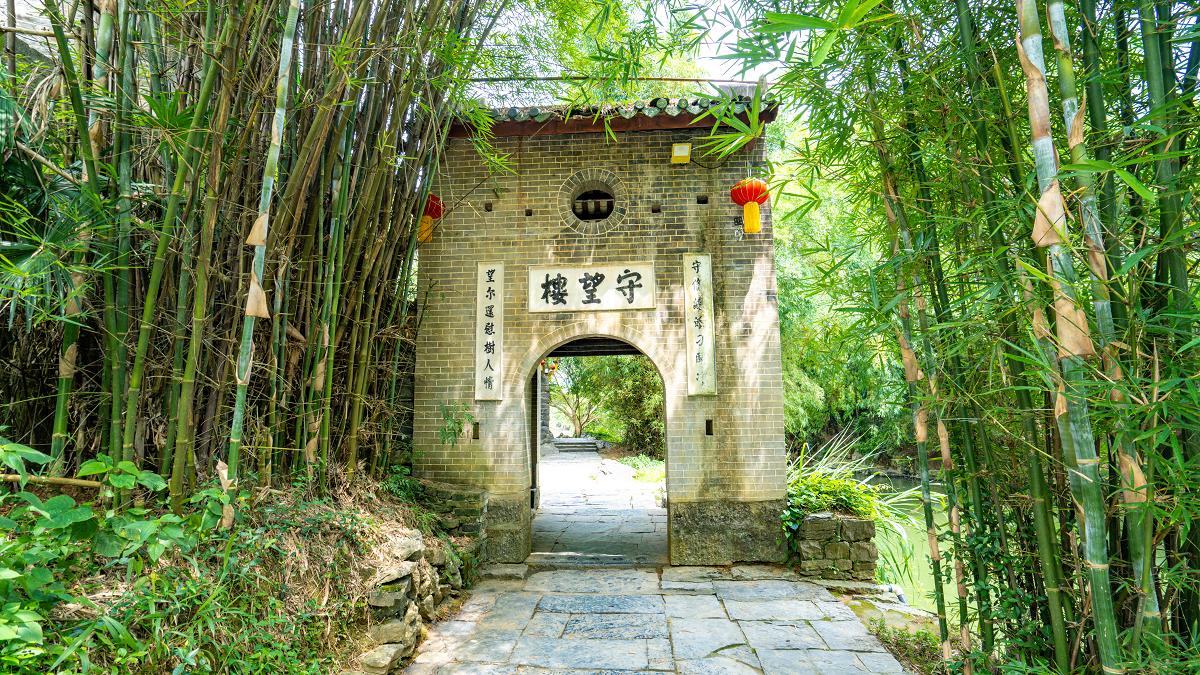
守望楼,是姚江南岸百姓从东面进出古镇的门楼。门楼为四方形平面结构,瞭望孔、枪眼、栅栏等设施齐备。民国以前,镇上安排专人在这座门楼上打更、守望,护卫古镇的安宁和祥和。

For the people living on the south bank of Yaojiang River, Shouwang Tower is the gatehouse to enter and exit the ancient town from the east. The gatehouse adopts the square plane structure, with complete facilities, such as watching windows, loopholes and fences. Before the Republic of China, the town arranged the special personnel to watch and guard the gate, so as to achieve the serenity and peace of the ancient town.


31 守望楼 FAT09968.jpg

钱兴烈士广场 Square of Martyr Qian Xing

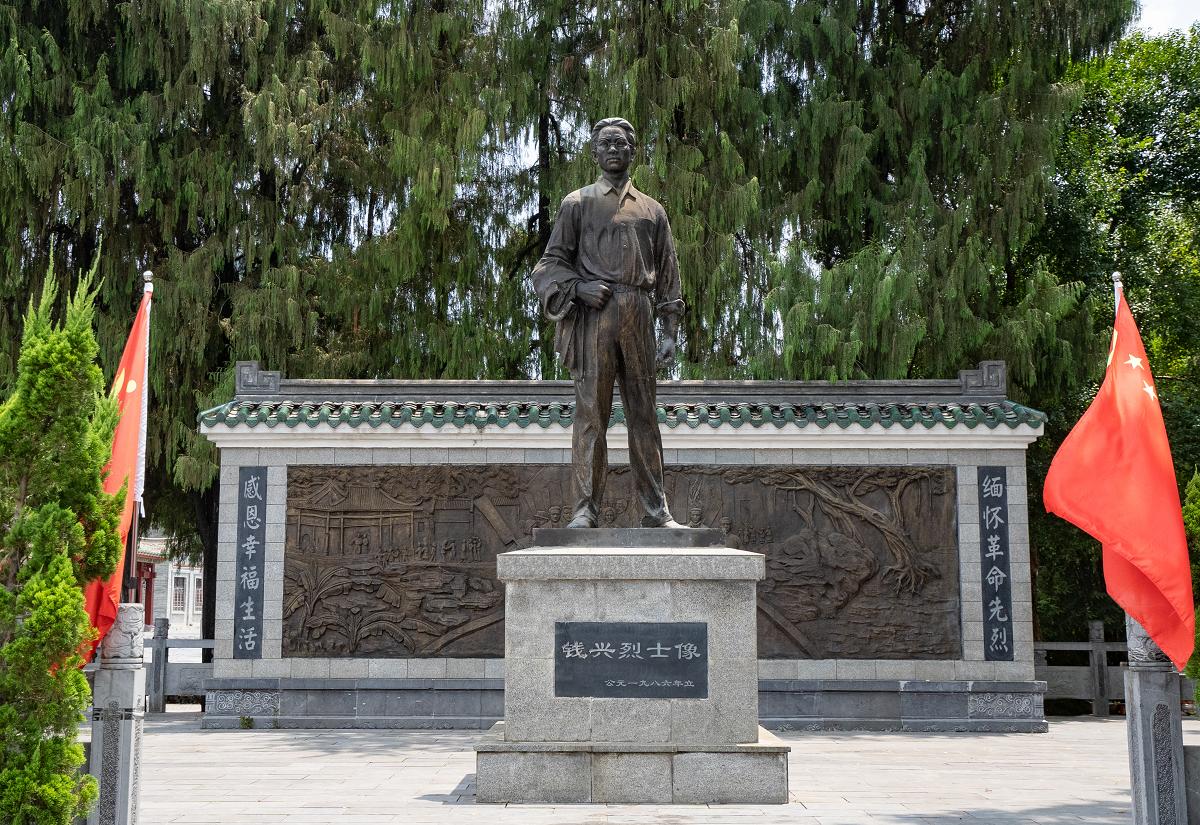
钱兴(1909-1948),中共党员,广东省怀集县人,1940年任中共广西省工委书记。1942年至1945年,在与上级组织失去联系的情况下,他坚持斗争,领导广西革命。1945年8月广西省工委机关在钱兴的带领下转移到黄姚,并在此继续坚持革命工作。1948年11月在怀集的一次战斗中牺牲。人民为缅怀先烈,1986年兴建了这座高4.6米的塑像,同时将所在的广场命名为钱兴烈士广场。

Qian Xing (1909-1948) was a member of the Communist Party of China, and came from Huaiji County of Guangdong, appointed as the secretary of the CPC Guangxi Provincial Working Committee in 1940. Between 1942 and 1945, after losing contact with the superior organization, he adhered to the struggle and led Guangxi Revolution. In August, 1945, under the leadership of Qian Xing, the CPC Guangxi Provincial Working Committee was moved to Huangyao where he continued to persist in the revolutionary work. In November, 1948, he died in a battle in Huaiji. In order to cherish the memory of the revolutionary martyrs, in 1986, the sculpture with the height of 4.6 m was built, and the square where it was located was named as Square of Martyr Qian Xing.


钱兴烈士像 FAT00068.jpg

中共广西省工委旧址 Former Site of the CPC Guangxi Provincial Working Committee

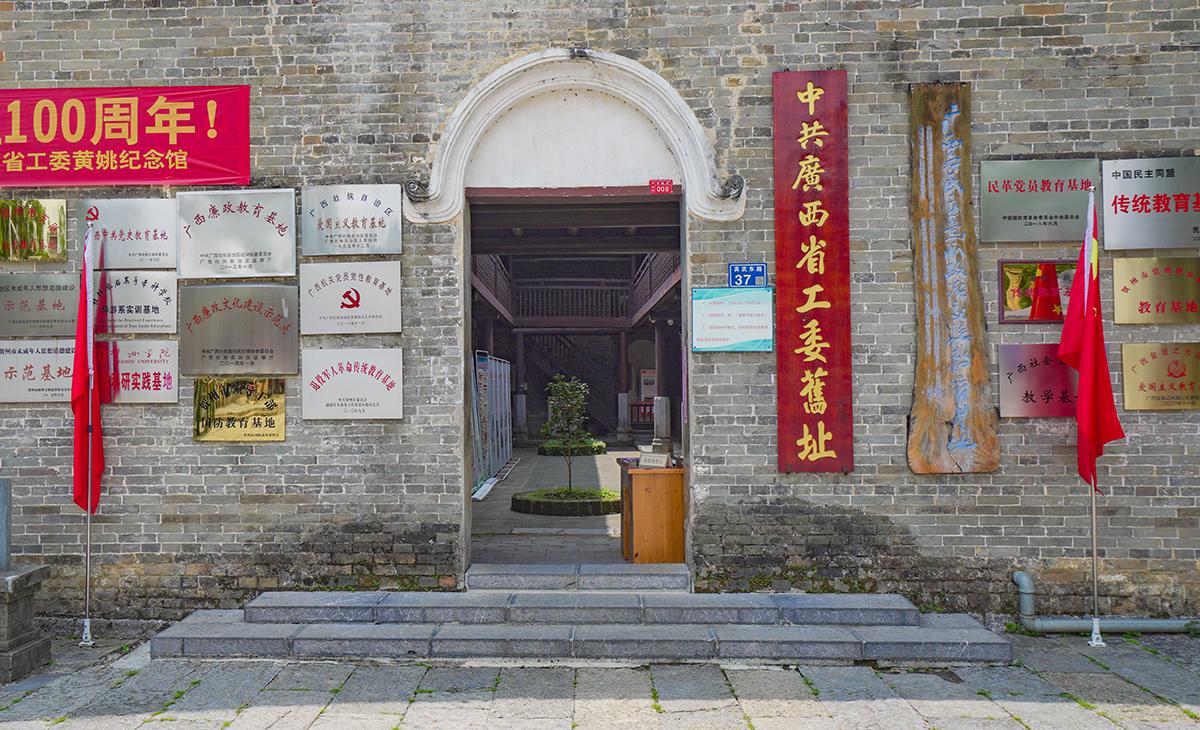
中国共产党广西省工作委员会,简称中共广西省工委,成立于1936年11月,是抗日战争时期中国共产党在广西地区建立的地方领导机关。1945年8月广西省工委搬迁至宝珠观内,领导广西的革命工作。1986年广西壮族自治区党委把宝珠观定为中共广西省工委旧址,是广西壮族自治区重点文物保护单位和重要的爱国主义教育基地。

The CPC Guangxi Provincial Working Committee (GXWC for short) was established in November, 1936. It was the local leading body that was built by the Communist Party of China in the region of Guangxi during the Anti-Japanese War Period. In August, 1945, the CPC Guangxi Provincial Working Committee was moved to Baozhu Taoist Temple, to lead the revolutionary work of Guangxi. In 1986, Baozhu Taoist Temple was designated as the Former Site of the CPC Guangxi Provincial Working Committee by the CPC Guangxi Zhuang Autonomous Region Committee, also regarded as a key cultural heritage protection unit and an important patriotism education base of Guangxi Zhuang Autonomous Region.


06 省工委纪念馆 FAT00055.jpg

迎秀街 Yingxiu Street

迎秀街,位于黄姚街中段,为古镇最宽敞的一条街,最宽处有5米。历史上,从昭平县城方向来黄姚,皆由西门楼经此街进入古镇。相传此街建成之时,恰好有人考中秀才从县城归来,因此以“迎秀”作为街名。迎秀街无论是东路秀色,西山佳气,都能翘首相迎,招而至之。

Yingxiu Street is located in the middle section of Huangyao Street, and it is the most spacious street in the ancient town. The maximum width is 5 m. In history, people who came to Huangyao from Zhaoping County entered the ancient town from West Gatehouse through this street. According to the legend, when the street was completed, the person who passed the imperial examination at the county level returned from the county, hence the name “Yingxiu Street”. Yingxiu Street, including the beautiful scenery of the east road and the good spirit of the west mountain, expresses a warm welcome.


迎秀街 FAT00407.jpg

鲤鱼街 Liyu Street

鲤鱼街,古镇中部主要街道之一。因街中有凸石形似一条长约二尺的鲤鱼,故而得名。无论老人小孩,从这里走过,从未有人被它绊倒或扭伤脚,故称之为“盘道石鱼”。

Liyu Street is one of main streets in the middle of the ancient town. In the street, there is a convex stone that looks like a carp with a length of 2 chi, hence the name. Old people and children have never been tripped over or sprained by it, hence the name “Pandao Stone Fish”.


带龙桥 Dailong Bridge


带龙桥,始建于明朝万历四年,是古镇中最大的阶梯石拱桥,连接鲤鱼街与中兴街。铁铆石梁的造桥工艺及水旱二孔的排洪设计,让这座桥梁既科学又美观。相传百姓修建此桥是为了把真武山龙气接引至鲤鱼街,桥也因此得名“带龙”。

Built in the 4th year during the reign of Emperor Wanli of the Ming Dynasty, Dailong Bridge is the largest stepped stone arch bridge in the ancient town, connecting Liyu Street to Zhongxing Street. The bridge construction process of iron-rivet stone beams and the flood discharge design of two holes for flood and drought make this bridge scientific and beautiful. According to the legend, the common people built the bridge in order to bring the auspicious luck of Zhenwu Mountain to Liyu Street, hence the name “Dailong Bridge”.


36 带龙桥 FAT_9306去掉桉树 .jpg


东门楼 East Gatehouse

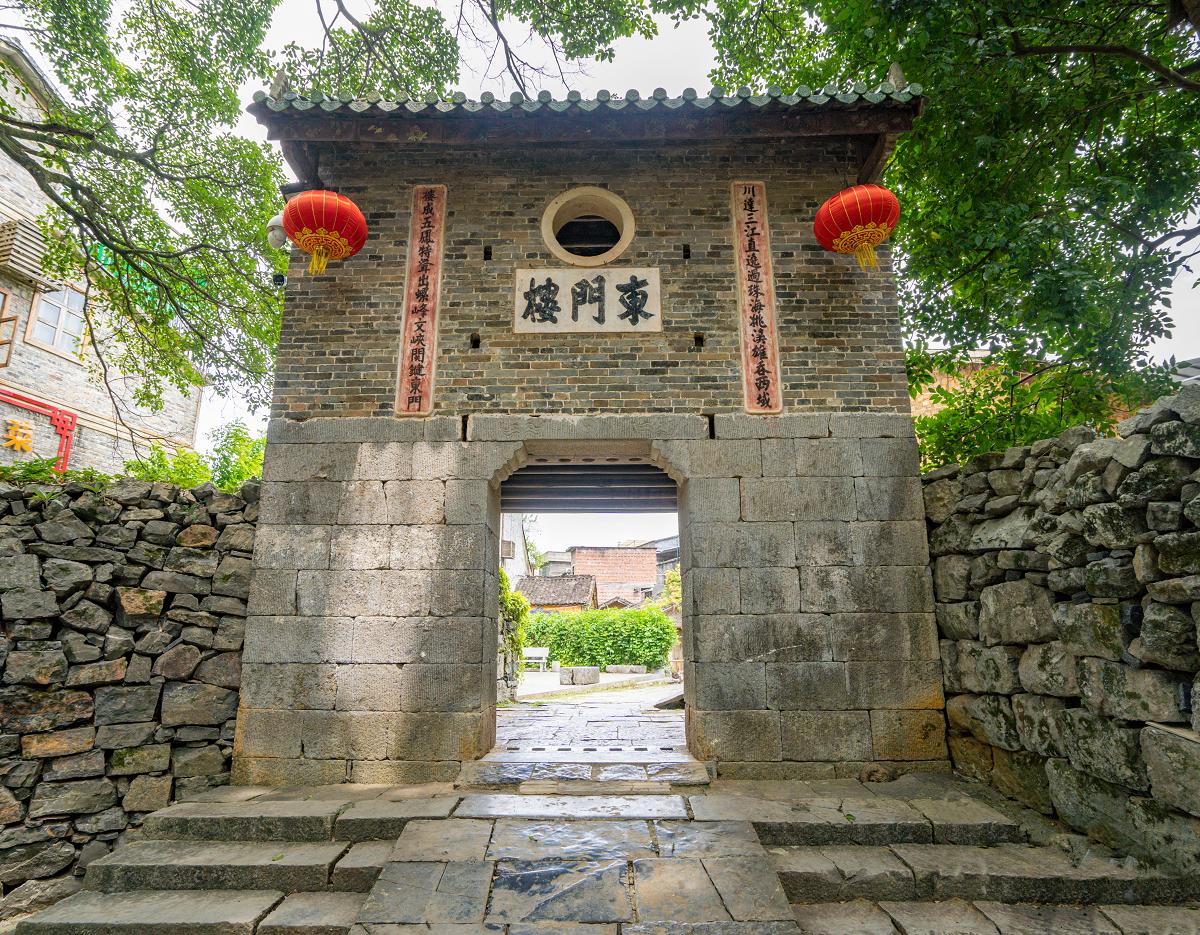
东门楼,始建于清朝初年,乾隆二年(1737年)重修,为古镇重要门楼之一。它是姚江北岸百姓从东面进出古镇的门楼,门楼北连真武山城墙,南以姚江为护城河,西与街巷民居屋墙相连,组成一个合围的屯堡,是防御功能最强、保存最完整的一座门楼。

East Gatehouse was built in the early years of the Qing Dynasty, rebuilt in the 2nd year during the reign of Emperor Qianlong (1737), regarded as one of the important gatehouses in the ancient town. For the people living on the north bank of Yaojiang River, it is the gatehouse to enter and exit the ancient town from the east. The gatehouse is connected to the rampart of Zhenwu Mountain in the north, close to Yaojiang River as the moat in the south, adjacent to the residential house walls of streets & lanes in the west, so as to form an enclosed military outpost. This is the best-preserved gatehouse with the strongest defense function.


33 东门楼 FAT09978.jpg

司马第 Sima Mansion


司马第,是黄姚古镇官宦民宅的代表之作。主人莫霭然官居清代直隶分州同知,人称“莫司马”,故这间莫家大屋称为“司马第”。它是一座三开三进式的建筑,地基高出地面近一米,是名副其实的“高门大户”,后座正厅又高于前座将近70厘米,包含着官宦人家“步步高升”的寓意。

Sima Mansion is the representative building of the official residences in Huangyao Ancient Town. As the owner of the mansion, Mo Airan was appointed as Zhili Fenzhou Rongzhi, also called “Sima Mo”, so this mansion of Mo Family is named as “Sima Mansion”. It is a three-bay & three-courtyard building. The foundation is nearly 1 m above the ground. This is the veritable “Rich & Powerful Family”. The rear main hall is about 70 cm higher than the front building, with the implied meaning that the official family is “promoted step by step”.


30 司马第 FAT09938.jpg

兴宁庙 Xingning Temple

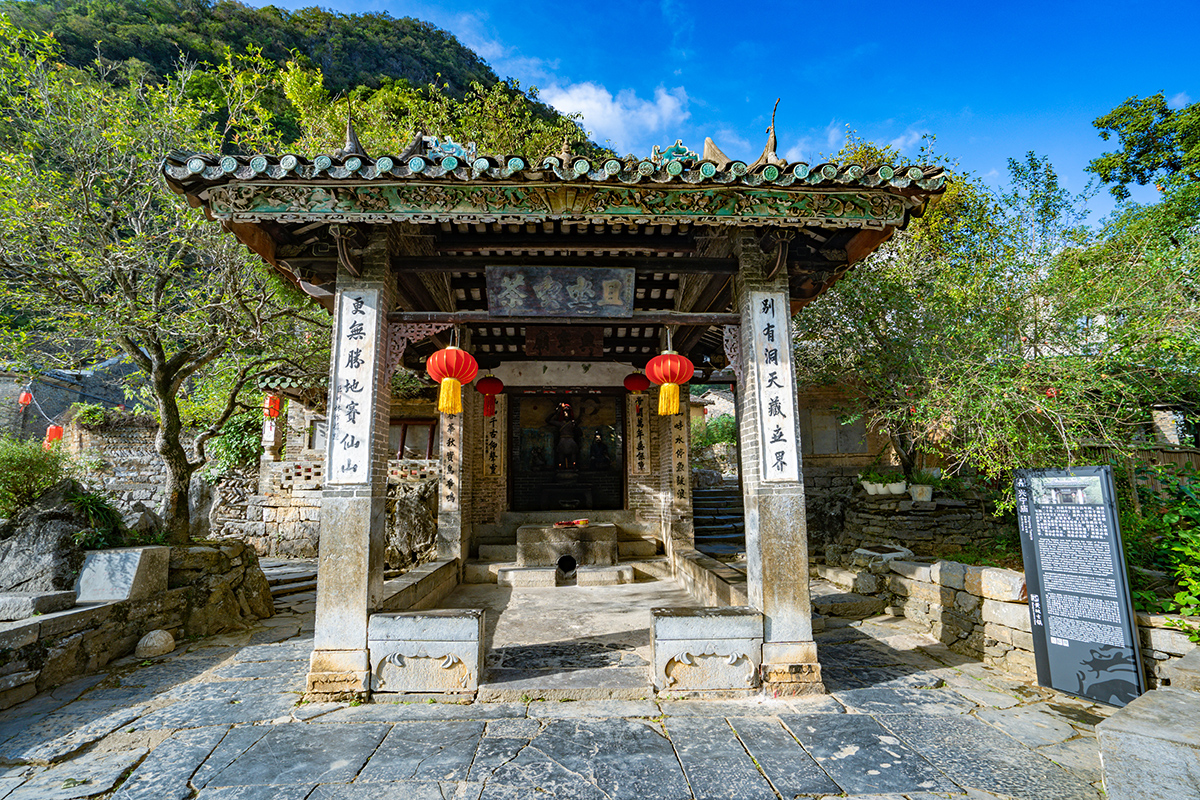
兴宁庙,始建于明朝万历年间,清朝乾隆二十年(1755年)重修。它位于姚江与兴宁河交汇的河口,庙内主要供奉北帝真武大帝。庙前有亭,正上方“且坐喫茶”匾为乾隆年间当地举人林作楫所书,为当时惬意生活的真实写照,被收入《中华名匾》一书。整体布局体现了黄姚古建筑“有山必有水、有水必有桥、有桥必有亭、有亭必有联、有联必有匾”的特色。

Xingning Temple was built during the reign of Emperor Wanli of the Ming Dynasty, rebuilt in the 20th year during reign of Emperor Qianlong of the Qing Dynasty (1755). It is located at the confluence between Yaojiang River and Xingning River. Great Emperor Zhenwu as “North Monarch” is mainly enshrined in the temple. There is a pavilion in front of the temple. The plaque of “Qiezuochicha” on the upper part was written by Lin Zuoji as the local successful candidate in the imperial examinations at the provincial level during the reign of Emperor Qianlong, which was the true portrayal of happy life at that time, included in China Famous Plaques. The overall layout embodies the feature of Huangyao ancient building that “mountains, rivers, bridges, pavilions, couplets and plaques are perfectly integrated”.


兴宁庙 A7M03231 ok.jpg


仙人古井 Ancient Well of Immortals

仙人古井,始建于明朝万历年间,为古镇代表性景点之一。自古就有“七仙”来井边嬉戏的传说,故而得名。古井分内外两部分,共五池,内池用于饮用、洗菜,外池用于洗衣、洗手、洗农具。井水清澈,久旱不涸。每年农历七月初七,为古镇特色民俗“取水节”,每家每户都来此取水。

Built during the reign of Emperor Wanli of the Ming Dynasty, Ancient Well of Immortals is one of the representative scenic spots in the ancient town. Since the ancient times, there has been a legend that “seven immortals” came to play beside the well, hence the name. The ancient well is divided into two parts like inner ponds and outer ponds. The total number of ponds is 5. The inner ponds are used for drinking and washing vegetables; the outer ponds are used for washing clothes, hands and farm tools. The well water is very clear, and will not dry up for a long time. The 7th day of the 7th lunar month is “Water-taking Festival” as the featured folk custom of the ancient town. Every household comes here to collect water.


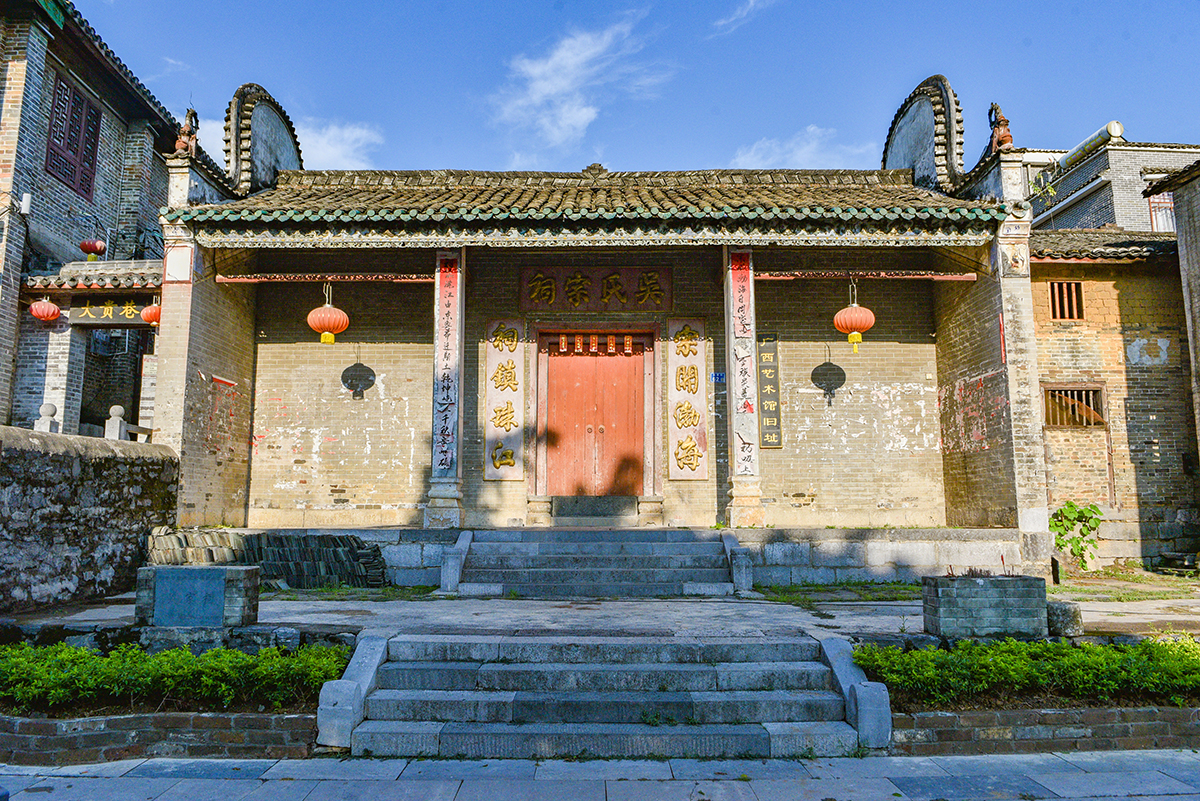
吴氏宗祠 Wu Family Ancestral Temple

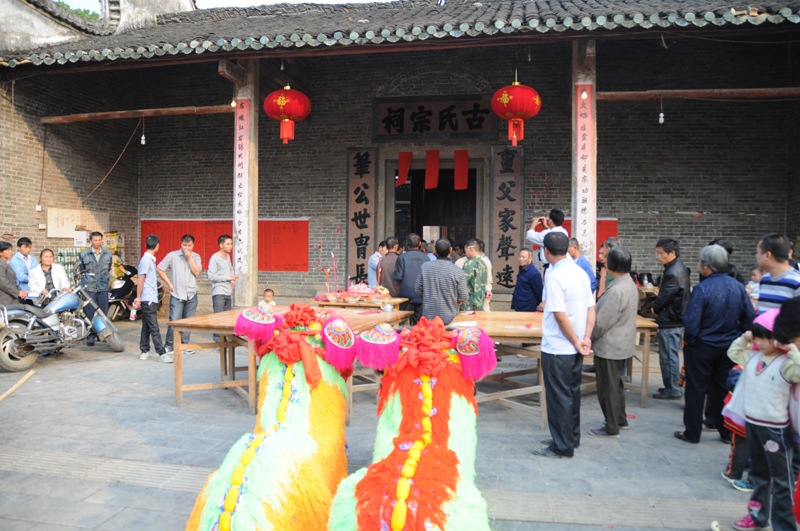
吴氏宗祠,始建于明末清初,是黄姚最早修建的宗祠之一。祠堂坐东向西,为二进二廊一天井,一进三开间的建筑风格,祠堂内保存了大量的民国壁画,是古镇内壁画较多的一座建筑。它既有岭南建筑的简朴、精致,又有中原地区的气派,是岭南文化与中原文化的完美结合。1944年,广西艺术馆迁至黄姚,在这里开课培训群众,开展抗日宣传,后命名为“广西艺术馆旧址”。

Built in the late Ming and early Qing Dynasties, Wu Family Ancestral Temple is one of the oldest ancestral temples in Huangyao. The ancestral temple faces the west, and adopts the architectural style of “two courtyards-two corridors-one patio and one courtyard-three bays”. A large number of wall paintings that were made in the Republic of China have been well-preserved in the ancestral temple. This is a building with most wall paintings in the ancient town, presenting the simplicity and exquisiteness of Lingnan buildings, as well as the magnificence of Central Plain, perfectly integrating Lingnan culture with Central Plain culture. In 1944, Guangxi Art Gallery was moved to Huangyao where the classes were held to train the masses so as to carry out the publicity of the Anti-Japanese War. Later, it was named as “Former Site of Guangxi Art Gallery”.


吴氏宗祠 DSC_3801.jpg


郭氏宗祠 Guo Family Ancestral Temple

郭氏宗祠,始建于清朝乾隆四年(1739年),为三间两进式建筑,由前厅、大厅、厢房等建筑组成,采用镬耳歇山顶建筑风格,山墙圆弧起翘,形似官帽,为岭南地区最具特色的古建筑造型,有保佑后人读书仕进、功成名就的寓意。大厅绘有大型彩画《龙入东海图》及“唯有读书高”的郭家祖训。

Built in the 4th year during the reign of Emperor Qianlong of the Qing Dynasty (1739), Guo Family Ancestral Temple is the three-bay & two-courtyard building, composed of front hall, main hall and wing rooms, adopting the wok-ear & gable-and-hip roof architectural style. The gable is warped, just like an official hat. This is the most distinctive ancient architectural form in Lingnan, with the implied meaning of blessing future generations to study & make progress and achieve fame. In the hall, there is a large-scale color painting titled A Dragon into the East China Sea and Guo Family’s ancestral sermon that “nothing is more important than learning”.


郭家大院 Guo Family Courtyard

郭家大院,始建于清朝道光年间,为黄姚古镇典型的平地庭院式建筑,占地500多平方米,由前厅、庭院、正厅和厢房组成,院内布局精巧,内涵丰富,更设有灵巧的防盗机关,至今仍是古镇内最豪派的私宅大院之一。宅内保存有道光年间朝廷赐匾“稀龄举案”,以表彰其和谐的家风。

Guo Family Courtyard was built during the reign of Emperor Daoguang of the Qing Dynasty. It is the typical flat-ground courtyard building in Huangyao Ancient Town, covering a land area of over 500 m2, composed of front hall, courtyard, main hall and wing rooms. In the courtyard, there is exquisite layout, rich connotation, and clever anti-theft mechanism. So far, Guo Family Courtyard has been one of the most deluxe private mansions in the ancient town. The plaque of “Xilingju’an” was granted by the imperial court during the reign of Emperor Daoguang, to commend the harmonious family tradition. 


迎秀街 Yingxiu Street

迎秀街,位于黄姚街中段,为古镇最宽敞的一条街,最宽处有5米。历史上,从昭平县城方向来黄姚,皆由西门楼经此街进入古镇。相传此街建成之时,恰好有人考中秀才从县城归来,因此以“迎秀”作为街名。迎秀街无论是东路秀色,西山佳气,都能翘首相迎,招而至之。

Yingxiu Street is located in the middle section of Huangyao Street, and it is the most spacious street in the ancient town. The maximum width is 5 m. In history, people who came to Huangyao from Zhaoping County entered the ancient town from West Gatehouse through this street. According to the legend, when the street was completed, the person who passed the imperial examination at the county level returned from the county, hence the name “Yingxiu Street”. Yingxiu Street, including the beautiful scenery of the east road and the good spirit of the west mountain, expresses a warm welcome.


迎秀街 FAT00407.jpg


石 鼓 Stone Drum

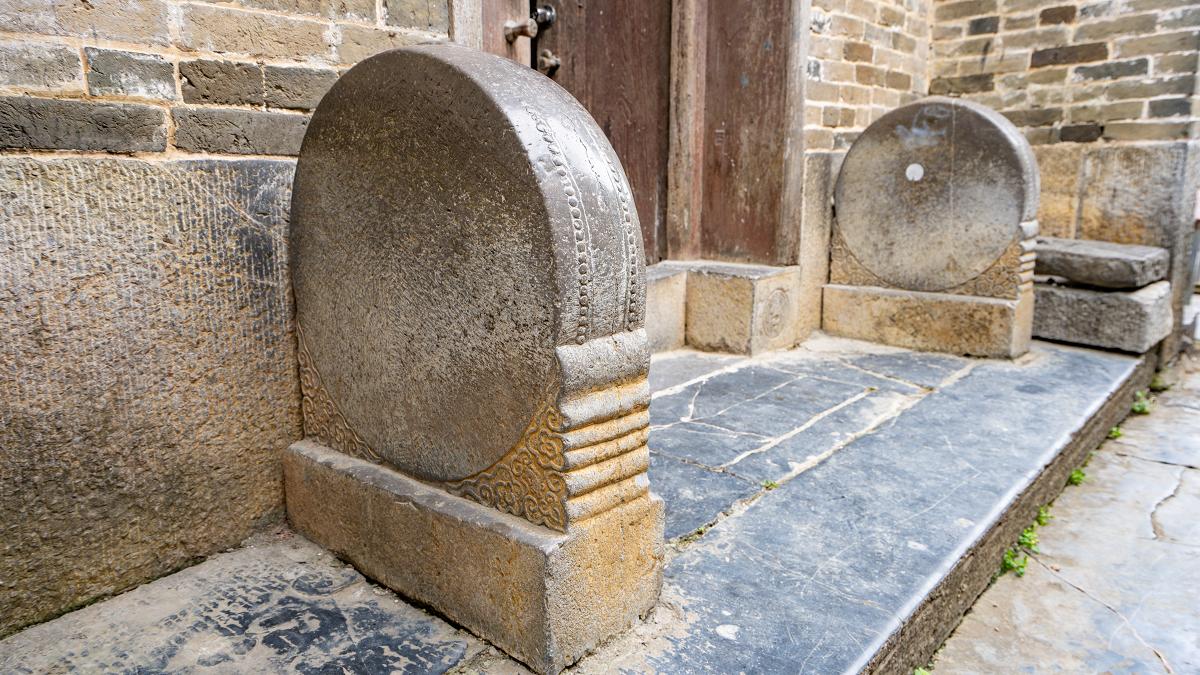
石鼓位于古氏老宅门前,因清朝乾隆年间古家子弟古知翰考中武举而立,为金德街上唯一的一对石鼓,是有功名人家的身份象征。此外,清朝同治年间,这个家庭还出了位贡生古一博,可谓文武兼备,兰桂之家。

Stone Drum is located in front of Gu Family Old House, erected as a result of the matter that Gu Zhihan as a member of Gu Family became a successful military candidate in the imperial examinations at the provincial level during the reign of Emperor Qianlong of the Qing Dynasty. This is the only pair of stone drums in Jinde Street, regarded as a status symbol of the family with scholarly honors. In addition, during the reign of Emperor Tongzhi of the Qing Dynasty, in this family, Gu Yibo became a tribute student, and he was well-educated and trained in military exercises. The family is reputed as the home of talented people.


18 石鼓 FAT09720.jpg


金德街 Jinde Street


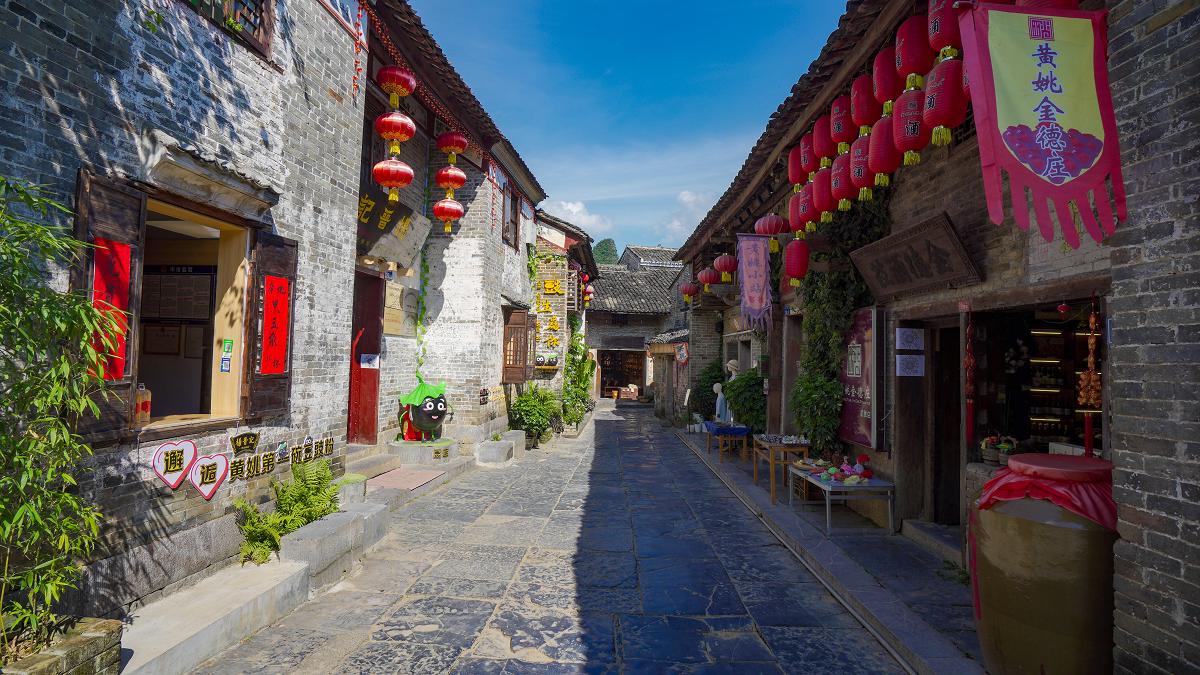
金德街,位于古镇中部,与安乐街相连。在明清鼎盛时期,黄姚商贾云集,铺面林立,商人诚信待人,以德取财,因此得名金德街,“金德”精神也成为黄姚精神的写照。目前它是古镇内保存最完整的一条明清建筑古街,很多影视剧均曾在此拍摄取景,如《新英雄虎胆》、《美丽的南方》和《向往的生活》等。

Jinde Street is located in the middle of the ancient town, connected to Anle Street. In the Ming & Qing Dynasties, it was very prosperous. Many merchants gathered in Huangyao. The street was lined with stores, and the merchants honestly treated others and made money by virtue, hence the name “Jinde Street”. “Jinde” spirit has become a portrayal of Huangyao spirit. At present, Jinde Street is the best-preserved ancient street with the buildings of the Ming & Qing Dynasties in the ancient town. A great number of films and TV series have been shot here, such as, New Intrepid Hero, Beautiful South, and Desired Life.


金德街 发条FAT00063.JPG


安乐街 Anle Street


安乐街,位于古镇中部,因安乐寺而得名,有着安居乐业之意。安乐街的繁华始于清朝嘉庆元年(1796年),是古镇最主要的商贸街区之一,街道两旁铺面林立,热闹非凡。

Anle Street is located in the middle of the ancient town. It is named after Anle Temple, which means that people live a prosperous and contented life. The prosperity of Anle Street began in the 1st year during the reign of Emperor Jiaqing of the Qing Dynasty (1796). Anle Street is the most important commercial blocks in the ancient town, lined with stores, presenting a bustling scene.


青石古街 Qingshiban Street

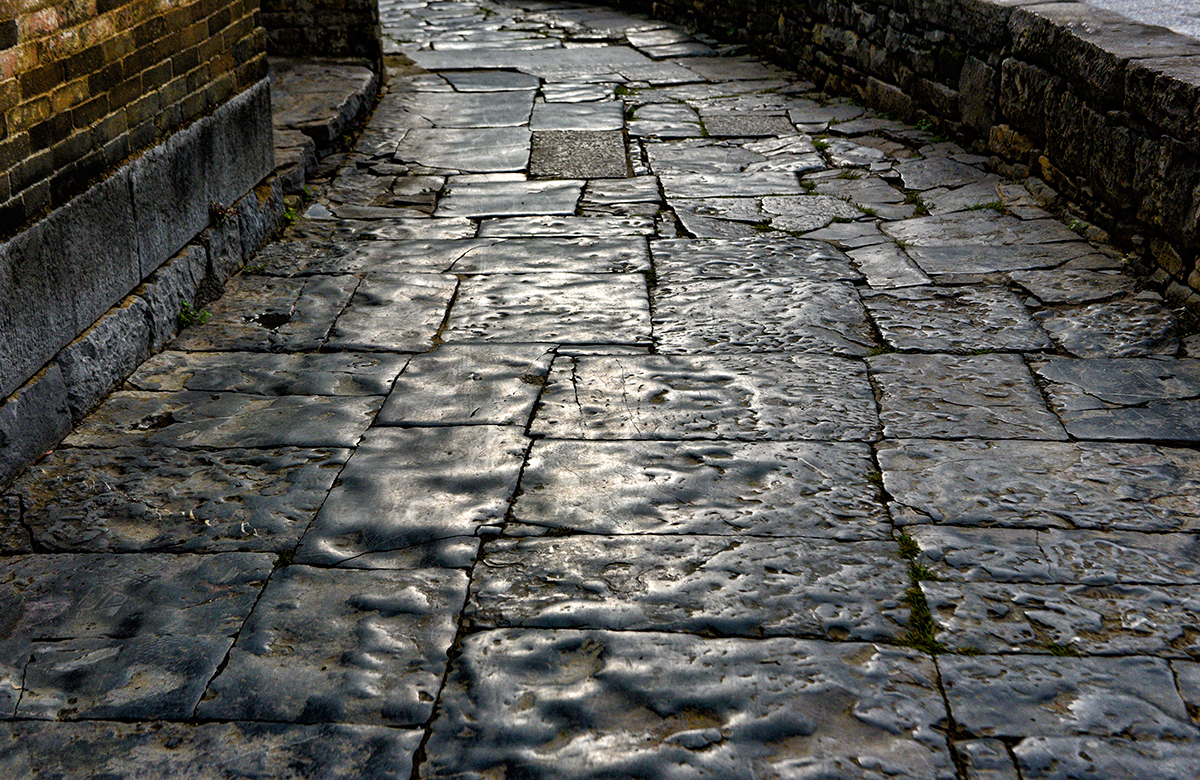
青石古街,铺砌于清朝顺治年间。古镇内共有主街8条,总长约3公里,石板之间不用任何粘合物,全靠准确的尺寸,牢牢地拼接在一起,每条街的下方都布有相互连通的排水道,雨水便沿着排水道排出古镇。街道与街道之间均为丁字路口,寓意丁财两旺。青石板街的构造工艺充分体现了工匠们独具匠心的聪明与才智,被誉为黄姚一绝。

Qingshiban Street was paved during the reign of Emperor Shunzhi of the Qing Dynasty. In the ancient town, there are 8 main streets with a total length of 3 km. No adhesive substance exists among stone slabs which are firmly connected with accurate dimension. Interconnected drainage channels are arranged under each street. Rainwater is discharged from the ancient town along drainage channels. The intersection among streets is T-shaped, with the implied meaning of prosperity in family and wealth. The construction process of Qingshiban Street fully embodies the unique ingenuity and wisdom of the craftsmen, reputed as one wonder of Huangyao.


青石古街.jpg

亦孔之固 Yikongzhigu

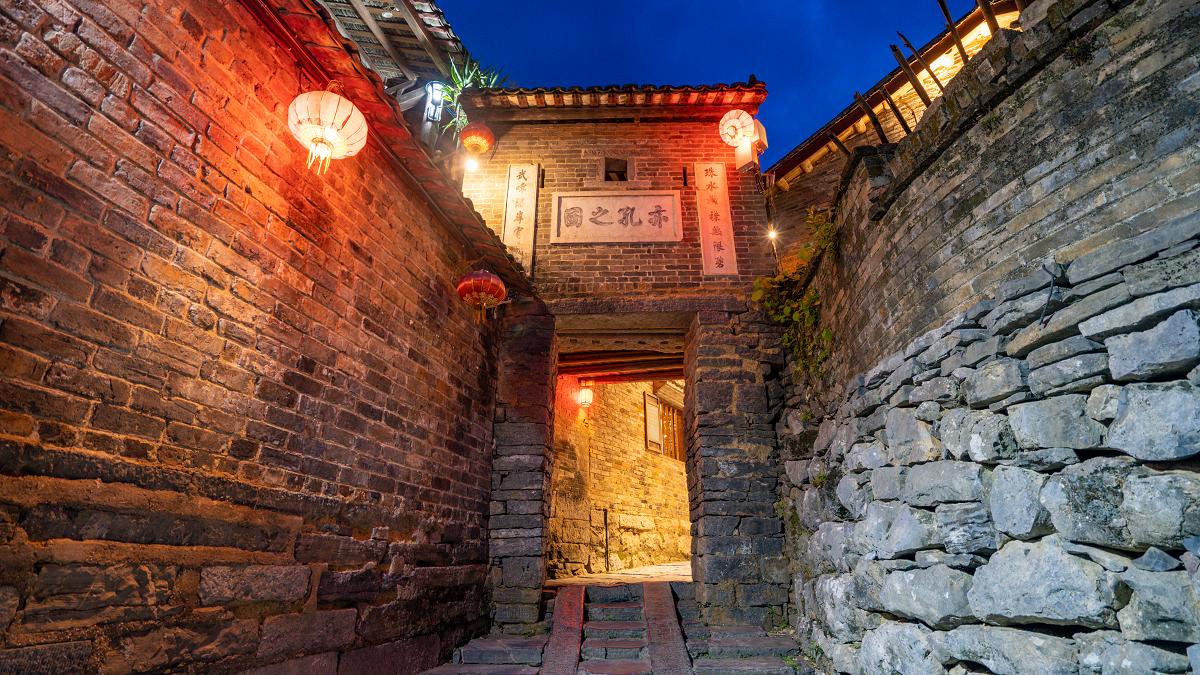
亦孔之固,古镇重要门楼之一。建于清初,得名于《诗经》中“天保定尔,亦孔之固。”意为上天保佑这里的安定,自然非常稳固。该门楼为二层式建筑,上层为楼,用于守望站岗;下层为门,用于通行。在古镇中,这种结构的门楼往往设置在主街的外出口,具有极强的防御功能。

Yikongzhigu is one of important gatehouses in the ancient town. Built in the early Qing Dynasty, it was named according to “Tianbaodinger and Yikongzhigu” in Book of Songs. The meaning is that the god blesses the stability of this place, to achieve steadiness. This gatehouse is a two-storey building. The upper storey is a tower for watching and guarding; the lower storey is a gate, used as a passage. In the ancient town, the gatehouse with this structure is usually set up at the outer exit of the main street, having strong defense functions.


15 亦孔之固 夜景 FAT09544.jpg


龙门榕 Dragon Gate Ficus

龙门榕,树龄800多年,因其虬枝盘错缠绕,形如拱门,且坐落于佐龙桥之畔而得名。树下有一奇石,似鲤鱼上跃,与龙门榕组成“鲤鱼跃龙门”的天然景观,令人称奇。

Dragon Gate Ficus is more than 800 years old. Its twisted branches are just like an arched gate, located beside Zuolong Bridge, hence the name. A strange stone under the tree looks like a carp leaping upwards, forming the natural landscape of “A Carp Jumping over the Dragon Gate” together with Dragon Gate Ficus, which is amazing.


11龙门榕 FAT09639.jpg


宝珠观 Baozhu Taoist Temple

宝珠观,始建于明朝嘉靖三年(1524年),是黄姚古镇代表性古建筑。因背靠宝珠山而得名。宝珠观历代多次重修,目前占地约2亩,其主座为三间两进建筑群,由前殿、大殿、天井、回廊等建筑组合而成。宝珠观内既供奉“北帝君主”---真武大帝,也供奉如来佛祖和观世音菩萨,是一座佛道合一的寺观。宝珠观也是黄姚三月三传统祭祀活动的主要场所。

Built in the 3rd year during Jiajing Period of the Ming Dynasty (1524), Baozhu Taoist Temple is a representative ancient building in Huangyao Ancient Town. It is backed against Baozhu Mountain, hence the name. Baozhu Taoist Temple has been repeatedly rebuilt over the past dynasties. At present, it covers a land area of about 2 mu. The main building is the three-bay & two-courtyard building cluster, composed of front hall, main hall, patios, winding corridors, etc. Great Emperor Zhenwu as “North Monarch”, Tathagata and Avalokiteshvara are enshrined in Baozhu Taoist Temple. It is a temple integrating Buddhism with Taoism. Baozhu Taoist Temple is the main venue for the traditional sacrificial activities of Huangyao on the 3rd day of the 3rd lunar month.


宝珠观 FAT07059.jpg


古戏台 Ancient Stage

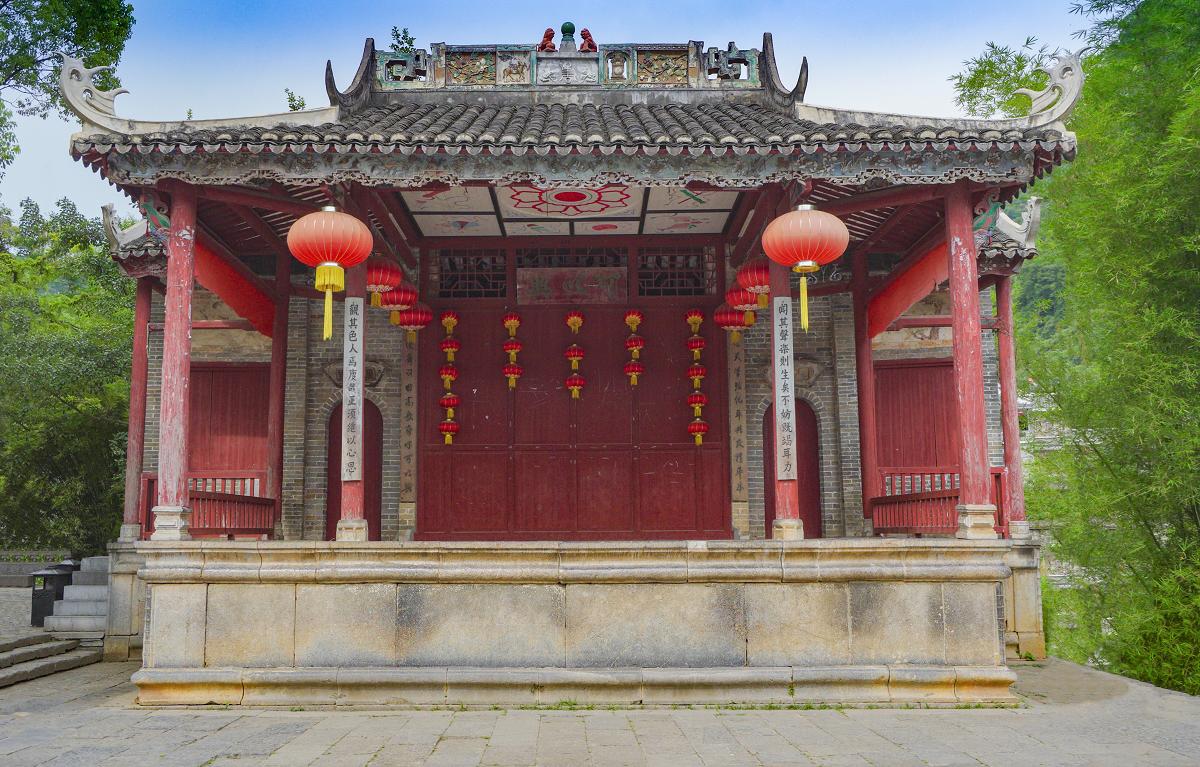
古戏台,始建于明朝嘉靖三年(1524年),是一座单檐歇山顶八柱亭阁式戏台,也是黄姚古镇唯一的古戏台。这座戏台包括前台和后厢两部分,平面呈“凸”字形,装饰精巧美观,名家题联风雅,是黄姚古镇中具有代表性的历史建筑。戏台上演的传统剧种有桂剧、彩调。抗战时期,我国著名戏剧家欧阳予倩曾在这里登台演出。

Built in the 3rd year during Jiajing Period of the Ming Dynasty (1524), Ancient Stage is a single-eave eight-pillar pavilion-type stage with the gable-and-hip roof, regarded as the only ancient stage in Huangyao Ancient Town. The stage includes front stage and rear wing room. The plane is shaped like “Tu” as a Chinese Character. With exquisite decoration and elegant couplets by famous personages, this is the representative historical building in Huangyao Ancient Town. The traditional operas performed on the stage involve Guangxi Opera and Caidiao. During the Anti-Japanese War Period, Ouyang Yuqian as the famous dramatist of China gave performance on the stage.


古戏台 FAT00089.jpg


睡仙榕 Sleeping Immortal Ficus

睡仙榕,树龄超过500年。相传,“八仙”到此游历时,流连于这里的奇山秀水,不禁开怀畅饮,喝得酩酊大醉。其中吕洞宾倒头睡在这棵树上,一觉醒来,这棵树也随着他的睡姿长成了倒卧状,因此而得名。

Sleeping Immortal Ficus is more than 500 years old. According to the legend, when “eight immortals” came here, they wandered among wonderful mountains & rivers, and couldn’t help drinking and getting drunk. Among them, Lu Dongbin fell asleep on this tree. When he woke up, this tree grew into a sleeping shape with his sleeping position, hence the name.


西门楼 Ximeng Gate

西门楼,建于清代,原名太平门。清代学者康有为认为,社会是循着“据乱世-昇平世-太平世”的规律发展的,因此昇平门更体现出人们对蒸蒸日上生活的期盼。门联“昇恒有象天街胜,平正无偏道路遵”引用了《诗经》“如月之恒,如日之昇”的说法,大意是前方的街市会更加美好,脚下的道路将无比坦荡。

Shengping Gate was built in the Qing Dynasty, originally named as Taiping Gate. As the scholar of the Qing Dynasty, Kang Youwei considered that, the society was developed according to the law of “troubled times – development times – peace times”, so Shengping Gate embodied the people’s desire for thriving life. The couplet that “the sun & moon can imply the victory and all things follow the righteous road” is originated from the saying that “the moon is constant and the sun is rising” in Book of Songs. The meaning is that the front street is more brilliant, and the road under the feet is incomparably magnanimous.